Although elbow dysplasia in dogs is an irreversible hereditary disease, having your puppy checked for it can help lessen its effects.
Elbow dysplasia is the second most common cause of elbow lameness in dogs. Some people call this osteoarthritis, but actually dysplasia refers to an actual developmental defect, usually genetic.

If left untreated, this usually results in osteoarthritis down the road. True elbow dysplasia needs to be diagnosed after the growth plates have closed, after 4-12 months old. Some patients may not show lameness until later in life, when arthritis really kicks in. If caught early enough, as soon as they are symptomatic, surgery can be done to remove damaged tissue, and fix elbow joint. However, even surgery is not a cure. This may help slow down progression of arthritis, however, arthritis will still form.
Elbow dysplasia, a degenerative joint disease (DJD) complex, is defined by the Orthopedic Foundation for Animals (OFA) as involving three key locations where an abnormality in bone growth may occur:
When an OFA result solely shows DJD, it is generally considered that lesions related to coronoid process disease are present. Most cases of elbow dysplasia can be explained by this.
Data from the Orthopedic Foundation for Animals (OFA) show that over 79 breeds of dogs are affected with elbow dysplasia. To assist breeders in enhancing the genetic health of dog breeds, the OFA analyzes dogs for inherited medical disorders. It is a voluntary screening process that involves an examination and paperwork from your personal veterinarian. The OFA receives the results and provides a certification score. Breeders can prevent inherited disease by using the statistics to guide their breeding decisions. To be screened and become a part of the OFA, dogs do not need to be purebred.
OFA records show that the Chow and Bulldog breeds have the greatest rates of elbow dysplasia. Interestingly, elbow dysplasia has never been documented in Beagles or Pyrenean Shepherds.
OFA assigns a grade based on the degree of alterations in the joint if it isn’t normal. Elbows fall into the following categories:
The degree of degenerative joint degeneration shown on radiographs is the basis for these grading. Joint abnormalities cause the bony degenerative changes. Evaluations of the elbow should begin at age two. Normal wear and tear on your dog’s elbow joints over time may cause changes in the bone called osteoarthritis, which would mask any inherited developmental issues.
A flaw in the elbow joint’s ultimate development in a puppy causes elbow dysplasia. Three bones mesh together to form the complex elbow joint: the humerus, which is the large bone that descends from the shoulder, the radius, and the ulna, which are the two smaller forearm bones. Arthritis can develop and cause lameness if there is a deviation from the normal alignment of these bones that create the elbow joint.
Dogs with minor elbow dysplasia might not exhibit lameness until later in life, while severe dysplasia can be severely crippling. Dogs that are male are more commonly impacted. Dogs who are overweight or excessively active run the risk of sustaining joint problems. Between 30 and 80 percent of canines are thought to be afflicted bilaterally, which complicates diagnosis. These dogs may have a reduced range of motion and an overall shortened stride rather than the head bobbing that is typically associated with lameness in the front legs. Manipulation will cause pain in both legs. It is usually advisable to radiograph the other leg in case it is also afflicted if your dog is lame in one of its front legs.
The dog may exhibit swelling in the elbow joint of its front limb if it has severe elbow dysplasia. An almost fused joint will feel firm to the touch due to bony changes. Warmth, fluid accumulation, and inflammation are possible in the early stages, but they will go away with time.
A lameness test, which involves flexing and stretching the elbow joint and observing your dog’s movements, is the first step in the diagnosis process. It’s likely that your veterinarian will advise elbow joint X-rays. An extreme flexed-joint X-ray view is necessary for OFA examination, but your veterinarian may also get alternative views to assess the severity of the issue. A CT scan or arthroscopy may be suggested in addition to referring a patient to a board-certified veterinary if the diagnosis is unclear.
While medical care can help your dog with painkillers, joint supplements, bracing and rehabilitation programs to build muscle and reduce joint strain are all possible components of medical therapy.
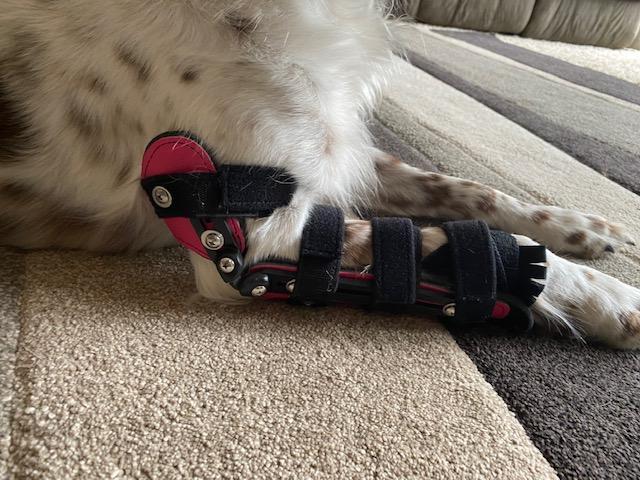
Not everyone can afford elbow replacement surgery, due to the cost. This is where our Posh Dog Elbow brace can be very helpful. We have worked both with patients pos-op after surgery, to help support and maintain normal movement and support post-op, as well as for patients that could not afford the surgery (or their dog was not a surgical candidate). Some patients come to us with arthritic changes already happening in the elbow, and they are not great surgical candidates for that reason as well, so bracing may be a great alternative. When looking for an elbow brace, especially for dysplasia, you must find a custom product that will help aid in offloading/act as a shock absorber. This is exactly what Posh Braces do, and why we work with many rehab practitioners as well as surgeons. Taking the pressure off the elbow can help relieve the symptoms of elbow dysplasia, and hopefully slow down the production of arthritis, similar to surgery. We are here to support your dog through this process, both with helping you measure for our elbow brace, as well as helping you with the fitting process.
Don’t let elbow dysplasia ruin your dog’s quality of life, call Posh for more information you can contact us via our contact form our visit our Facebook page.
Articles from the Posh Dog Knee Brace team — a group effort with our licensed veterinary technicians and brace specialists, sharing 15+ years of experience helping dogs recover from CCL/ACL injuries and mobility challenges.
Hey guys, my name is Nikki, and I am the Lead Veterinary Technician with Posh Dog Knee Braces. Today let’s talk about Elbow Braces, and when your dog may need one. First of all, make sure you have a firm diagnosis from a Veterinarian that there is in fact an issue in the elbow. We suggest this prior to ordering any of our braces, just to be sure the issue is not something else. Neck pain can also show up as limping in the front leg, so make sure your veterinarian has gone over the entire body before diagnosing one of the following issues.
First issue, and the most common, is Osteochondrosis Dessecans, or OCD. You may hear OCD said a lot in reference to younger dogs that grew too fast. This can happen in the shoulder, knee, and hock/ankle, as well as the elbow. We see this In large breed puppies receiving too much energy/protein and calcium in the diet. Genetics, rapid growth, trauma and hormones may also be a factor. This can be treated with surgery to remove the cartilage, however, bracing can provide some pain relief and support in the meantime.
Second is elbow dysplasia. This is basically arthritis in the elbows, and can be painful. Bracing can alleviate some of the strain and pressure on the elbow, allowing the patient to use the sore leg again.
Another issue we see in the elbow is Degenerative Joint disease. This can also cause multiple joint issues, such as CCL tears and hip issues. Support of the joint with an elbow brace will definitely help in these cases.
Chronic Joint instability is another issue, where we need to stabilize the joint to prevent motion and pain. The more a joint moves abnormally, the more chance of early on set arthritis forming.
Elbow Luxation is another issue, although not as common. The brace in this case will help keep things in alignment, and alleviate some of the discomfort with this condition.
We have also had patients that had Tricepts Tendon Avulsion surgery, and braced them post op with lots of success. This is usually due to a trauma, but keeping the elbow stable and preventing movement can be key for healing.
Lastly, prevention of elbow hygromas. These are those swollen areas that can sometimes be filled with fluid on the back of a dog’s elbow. Usually due to laying on hard surfaces, like concrete, for long periods. Having protection on that elbow can really help.
Below is a recap of things the elbow brace can really help with, please let us know if you have any questions!
If you are interested or have questions about our Posh Dog Elbow Brace you can contact us via our contact form or visit our Facebook Page.
Articles from the Posh Dog Knee Brace team — a group effort with our licensed veterinary technicians and brace specialists, sharing 15+ years of experience helping dogs recover from CCL/ACL injuries and mobility challenges.
Hey guys, let’s talk about your dog limping front leg issues today, and reasons this may happen. This can be as simple as a sliver or foreign body in the paw to trauma. If you can’t find anything externally causing your dog to limp, it is important to seek a veterinarian, especially if the limping persists. Some common reasons are: strains or tears in ligement or tendon/muscle, something in paw, insect bite/sting, trauma/broken bones, vascular issues, lymes disease, inflammatory condition, osteoarthritis.
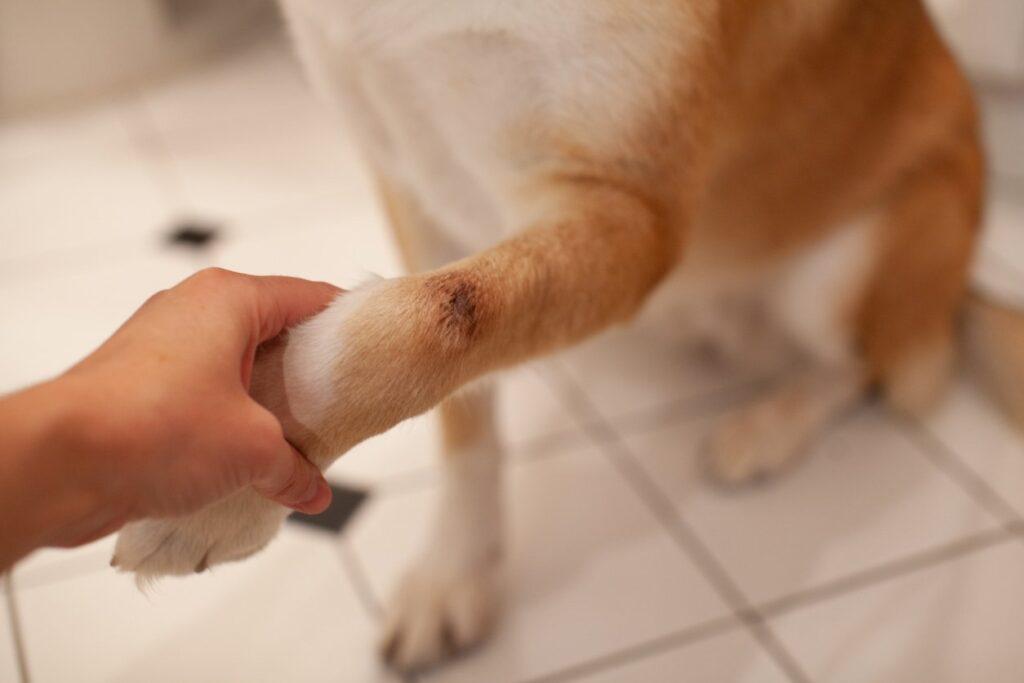
Now, depending on where the issue is happening may give us more information on what to do to help. For instance, your veterinarian will usually begin with the toes and work their way up to the neck/spine. Sometimes we need to give the veterinarian any information needed to be helpful. Such as, did you see your dog’s injury? Did this happen suddenly, acutely?
Was it something that is getting slowly worse day by day? Did your dog jump out of something like the car or back of a truck? Did your dog slip on ice or flooring, causing the front legs to go out to the side? Did your dog get it’s foot caught in something and try to yank it out? Have you had your dog on flea and tick prevention during the tick season? Have you seen any ticks on your dog?
All of these are really good questions to ask yourself and remember to tell your veterinarian, to help with diagnosing your dog. Things like a tick you found a week ago could mean your veterinarian needs to titer test your dog, to make sure he is ok and does not have lymes. Or if you didn’t think about the fact that your dog jumped down from the deck or bed, and now seems to be limping.
It could be that your dog is a large breed, and during growing developed OCD, Osteochondritis, in the shoulder, which will need surgery to fix. Or, perhaps you have an older dog who is showing pain, and could have arthritis showing up in the elbow or shoulder area. These are all good reasons to give your Veterinarian all the information you can, so that they can correctly diagnose.
We do have an elbow brace here at posh dog knee braces, that can help to stabilize any issues in the elbow joint, and relieve pain, if it is found to be an issue in the elbow. Let us know if you have any questions!
If you are interested in purchasing a Posh Dog Knee Brace for your dog limping front leg you can order your brace from our store, if you would like to join our Facebook community click here.
Articles from the Posh Dog Knee Brace team — a group effort with our licensed veterinary technicians and brace specialists, sharing 15+ years of experience helping dogs recover from CCL/ACL injuries and mobility challenges.
Hi guys, this is Nikki, lead veterinary technician with Posh Dog Knee Braces. Today, let’s discus osteoarthritis (OA) in dogs. Osteoarthritis is the most common form of arthritis in dogs, affecting about 25% of our dog populations. This is a chronic, not acute, disease that is due to loss of joint cartilage (our buffers), thickening of the joint, and bone formation around the joint leading to pain and limping. A lot of our OA patients have other developmental issues or disease, which predisposes them to having OA. This includes Cruciate disease, hip dysplasia, elbow dysplasia, OCD, patella luxation.
Sometimes, there may not be a reason that this occurs, and a patient just develops for no known reason. Some factors that can make this worse include obesity, gender, breed, exercise, and diet.
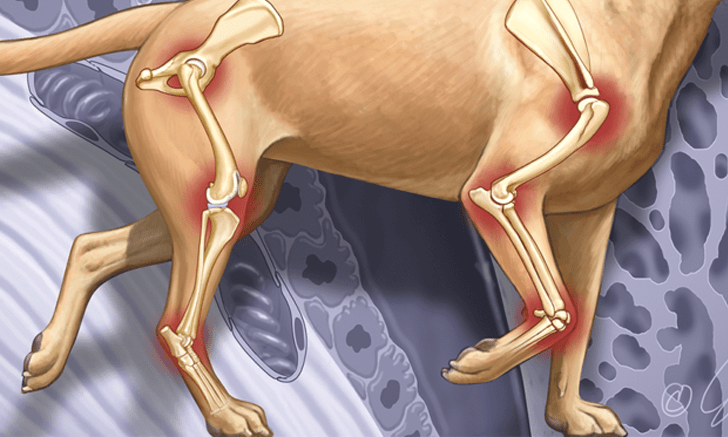
Signs of OA are sometimes reluctance to walk or exercise, acting stiff, limping, bunny hoping while running. Pain on palpation, possible aggression or discomfort is also usually present. They hurt and ache.
This is why it is always good to have an xray with limping patients over 6 years old, to rule out other things that can cause limping such as OA.
Treatment of OA includes weight and diet control, such as feeding Raw diet or diets with better protein, less carbs. Limiting the higher impact activities, such as running or jumping, replace with leash walks and range of motion activities. Physical therapy can really help build back those lost muscles, such as swimming. Laser therapy can also really help.
Supplements with fatty acids, such as fish oils, or green lipped muscle have shown to really improve quality. Adequan injections are one of the only leading products right now specifically formulated to fight OA, and prevent things from getting worse, I strongly recommend. Bracing may also be needed, to help alleviate the pressure on the joint, and act as a support and shock absorber, especially if it was due to CCL disease. Bracing may also help build back lost muscle, and alleviate the pain with walks.
Lastly, some form of anti-inflammatory may be recommended, but there are several natural anti-inflammatories that may be tummy safe, such as CBD oil or white willow bark.
Dogs that have undergone surgery, such as TPLO, have been shown in many studies to have more 77% more OA just 8 weeks post op than before on radiographs. So, if a patient has had TPLO, there is a much higher chance that dog will develop arthritis later on.
Thanks, and please visit poshdogkneebrace.com with any questions, or visit our Facebook page we are happy to help!
Read reviews check out our Google Reviews online. Click Here
Articles from the Posh Dog Knee Brace team — a group effort with our licensed veterinary technicians and brace specialists, sharing 15+ years of experience helping dogs recover from CCL/ACL injuries and mobility challenges.