Custom & Supportive Dog Braces for Injury & Recovery
Custom Support | Ready-to-Wear Support | Professional Guidance
Page 1 of 1
Canine Knee Anatomy and Common Injuries: Why a Brace Can Be a Lifesaver
Our dogs are built for running, jumping, and exploring the world with boundless energy. Their knees, though seemingly simple, are complex joints that bear a significant amount of stress. Understanding the basic anatomy of your dog’s knee and the common injuries that can occur is crucial for recognizing potential problems and appreciating how supportive measures like a knee brace can play a vital role in their well-being.
A Look Inside: Canine Knee Anatomy 101
The canine stifle joint, which is analogous to the human knee, is a complex hinge joint responsible for flexion (bending) and extension (straightening) of the hind limb. It’s formed by the articulation of three main bones:
Femur: The thigh bone, located above the stifle.
Tibia: The larger of the two lower leg bones, located below the stifle.
Patella: The kneecap, a small bone that sits in a groove at the front of the femur.
Several crucial soft tissues provide stability and enable smooth movement within the stifle joint:
Ligaments: Tough bands of connective tissue that connect bone to bone. Key ligaments in the canine knee include:
Cranial Cruciate Ligament (CCL): This ligament, similar to the human Anterior Cruciate Ligament (ACL), prevents the tibia from sliding forward relative to the femur. It’s a primary stabilizer of the knee.
Caudal Cruciate Ligament (CaCL): This ligament prevents the tibia from sliding backward relative to the femur.
Collateral Ligaments (Medial and Lateral): These ligaments provide side-to-side stability to the knee joint.
Menisci: Two C-shaped pieces of cartilage located between the femur and tibia. They act as shock absorbers, distribute weight evenly, and contribute to joint stability.
Joint Capsule: A fibrous sac that encloses the joint, containing synovial fluid which lubricates and nourishes the cartilage.
Muscles and Tendons: Muscles surrounding the knee, such as the quadriceps and hamstring groups, and their connecting tendons, play a vital role in movement and stability.
Common Canine Knee Injuries: When Support Becomes Essential
Given the complexity and the forces it endures, the canine knee is susceptible to various injuries. Understanding these common issues highlights why external support like a knee brace can be so beneficial:
Cranial Cruciate Ligament (CCL) Rupture: This is arguably the most common orthopedic injury in dogs. It often occurs due to a sudden twist or trauma, but can also be the result of chronic degeneration. A torn CCL leads to instability in the knee joint, causing pain, lameness, and eventually osteoarthritis.
Patellar Luxation: This condition involves the kneecap (patella) slipping out of its normal groove on the femur. It can range from mild and intermittent to severe and persistent. Patellar luxation can cause pain, clicking or popping in the knee, and difficulty bearing weight.
Collateral Ligament Injuries: Tears or sprains of the medial or lateral collateral ligaments can occur due to trauma, causing pain and instability on the sides of the knee joint.
Meniscal Tears: Damage to the menisci often occurs in conjunction with a CCL rupture. Torn menisci can cause pain, clicking, and limited range of motion.
Osteoarthritis (Degenerative Joint Disease): While not an acute injury, osteoarthritis is a chronic condition that can develop as a result of previous injuries, wear and tear, or genetic predisposition. It involves the breakdown of cartilage in the joint, leading to pain, stiffness, and reduced mobility.
Why a Knee Brace Can Be a Valuable Tool
In the face of these common knee injuries, a canine knee brace can provide crucial support and aid in both conservative management and post-surgical recovery:
Stability: For conditions like CCL tears or ligament sprains, a brace can provide external stability to the joint, reducing abnormal movement and strain on the injured structures. This can help manage pain and prevent further damage.
Pain Reduction: By limiting excessive motion and providing compression, a brace can help alleviate pain associated with inflammation and instability.
Support During Healing: Post-surgery, a brace can protect the healing tissues, support proper alignment, and control the range of motion as the joint recovers.
Conservative Management: In some cases of mild injuries or for dogs who are not surgical candidates, a brace can be part of a conservative management plan to provide ongoing support and improve comfort.
Improved Mobility: By providing stability and reducing pain, a brace can help dogs maintain a better quality of life and participate in controlled exercise as recommended by their veterinarian.
Important Note: While a knee brace can offer significant benefits, it’s not a substitute for proper veterinary care. Accurate diagnosis and a comprehensive treatment plan, which may include surgery, medication, and physical therapy, are essential. A knee brace should always be used under the guidance of your veterinarian or a veterinary rehabilitation specialist to ensure proper fit and application for your dog’s specific condition.
Understanding the intricate anatomy of your dog’s knee and the common injuries that can affect it highlights the importance of providing appropriate support when needed. A canine knee brace, when used correctly as part of a comprehensive treatment plan, can be a valuable tool in helping your furry friend recover from injury and maintain their mobility and quality of life.
For more information about our brace you can contact us at via our contact page or visit us on Facebook.
Articles from the Posh Dog Knee Brace team — a group effort with our licensed veterinary technicians and brace specialists, sharing 15+ years of experience helping dogs recover from CCL/ACL injuries and mobility challenges.
Chilly Paws & Protected Joints: Caring for Your Dog During a Cold Front
As the temperature drops and the winter wind picks up, us humans grab our heavy coats and turn up the heat. But for a dog recovering from a CCL injury or wearing a Posh Dog Knee Brace, a cold front means more than just a shiver—it can mean stiff joints and extra sensitivity.
Cold weather can cause muscles to tighten and joints to ache, making it even more important to stay diligent with your dog’s recovery routine. Here is how to keep your pup cozy and their brace-wear effective during a freeze.
1. Warm Up Their Joints Before the Walk
Just like an athlete (or a lead guitarist!) needs to stretch before a set, your dog needs a “pre-game” warm-up when it’s cold. Before heading outside, encourage some light movement indoors.
The Routine: Have them walk a few laps around the living room or do some gentle “sit-to-stands” to get the blood flowing to the stifles. This makes the transition to the cold air much easier on their injured leg.
2. Brace Maintenance in Winter Weather
The Posh Dog Knee Brace is built for durability, but cold air and moisture require a little extra attention:
Check the Fit: Cold weather can sometimes cause a slight change in your dog’s coat (thickening) or even minor weight fluctuations. Ensure the straps are still snug but comfortable.
Keep it Dry: If you’re walking through frost, slush, or winter rain, make sure to wipe down the brace after your walk. Moisture trapped against the skin can cause irritation or “hot spots,” especially when the air is dry.
3. Mind the Traction
Cold fronts often bring damp or icy surfaces. A dog in a knee brace is already working on their balance; a slippery porch or sidewalk is their worst enemy.
Pro-Tip: Ensure your “potty break” path is clear of ice. Consider using dog boots with rubber soles if the ground is freezing, as these provide extra grip to prevent the dreaded “slip and splay” that can re-injure a CCL.
4. Optimize Indoor Recovery
When it’s too cold to stay out long, focus on high-quality indoor rest.
Orthopedic Support: Make sure your dog’s bed is off the cold floor. An orthopedic bed helps distribute weight evenly and keeps the braced joint warm.
Heat Therapy: After an outdoor walk, a warm (not hot!) compress on the affected hip and thigh can help relax the muscles that may have tensed up in the cold.
5. Shorten the Sets
During a cold front, “short and frequent” is better than one long excursion. Keep bathroom breaks quick and focused. The goal is to maintain mobility without letting the joint get chilled and stiff.
The Bottom Line: A cold front doesn’t have to stall your dog’s joint recovery. With the support of their Posh Dog Knee Brace and a little extra warmth from you, they’ll be ready to “rock” the backyard again in no time.
Stay warm, stay safe, and keep those tails wagging!
Articles from the Posh Dog Knee Brace team — a group effort with our licensed veterinary technicians and brace specialists, sharing 15+ years of experience helping dogs recover from CCL/ACL injuries and mobility challenges.
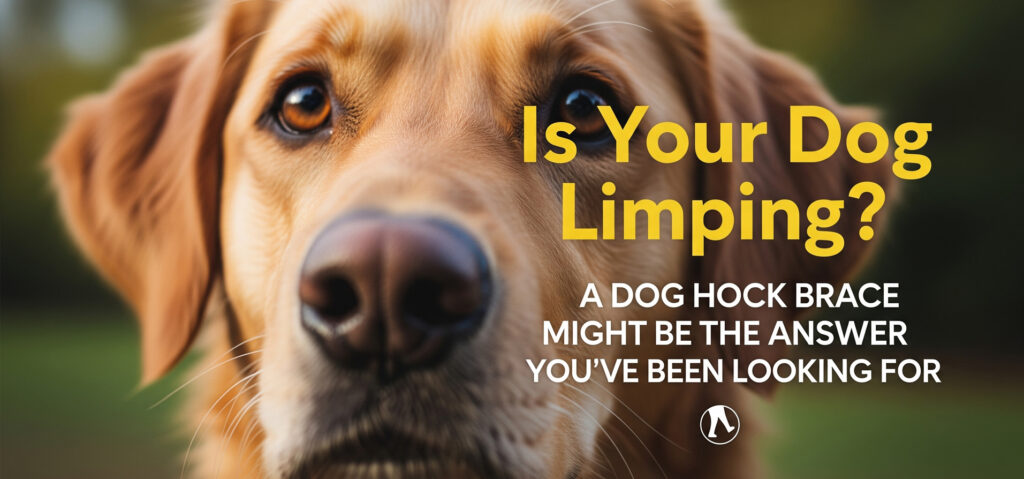
A Dog Hock/Ankle Brace Might Be the Answer You’ve Been Looking For
As a dog owner, there’s nothing more heartbreaking than seeing your beloved companion in pain. That little limp on the ankle, the reluctance to jump on the couch, the way they favor one leg over the other – these are all signs that something isn’t right. While many people immediately think of a knee (ACL) injury, the problem might actually be in a different, equally crucial joint: the hock.
The ankle/hock, often referred to as the ankle, is the joint in a dog’s hind leg that corresponds to the human ankle. It plays a vital role in shock absorption and propulsion, allowing your dog to run, jump, and play. When this joint is injured, it can severely impact their mobility and quality of life.
At Posh Dog Knee Brace, we’re passionate about providing solutions that help your dog regain their happy, active lifestyle. While our name highlights our expertise in knee braces, we also understand that other joints require specialized support. That’s why we’re proud to offer a premium dog hock brace designed to provide stability, comfort, and relief for hock injuries.
What is a Dog Hock/Ankle Brace and How Does It Work?
Think of a dog hock/ankle brace as a custom-fitted orthotic for your dog’s ankle. It’s a supportive device made from durable, yet flexible materials that wraps around the hock joint. Its primary purpose is to provide compression and stability, limiting excessive movement in the joint while still allowing for a natural range of motion.
The benefits of a well-designed hock brace are numerous:
Support for Ligament and Tendon Injuries: The hock joint is supported by a complex network of ligaments and tendons. Injuries like sprains or strains can cause instability and pain. A hock brace provides external support, helping to stabilize the joint and reduce strain on the injured tissues as they heal.
Post-Surgical Support: For dogs who have undergone surgery on their hock, a brace can be a crucial part of the recovery process. It helps protect the surgical site, provides stability, and allows for a more controlled and comfortable rehabilitation.
Relief for Arthritis: Like humans, dogs can develop arthritis in their joints. The compression and warmth provided by a hock brace can help increase blood flow, reduce inflammation, and alleviate the pain associated with degenerative joint disease.
Enhanced Mobility for Chronic Conditions: For older dogs or those with chronic hock issues, a brace can provide the extra support they need to walk, stand, and move with greater ease and confidence.
Signs Your Dog Might Need a Hock/Ankle Brace
How do you know if your dog’s limp is a hock issue and not a knee problem? While a proper veterinary diagnosis is essential, here are some common signs to watch for:
Swelling: A swollen hock joint is a clear indicator of inflammation or injury.
Reluctance to Bear Weight: If your dog is consistently holding their leg up or refusing to put weight on it, especially after activity, it’s a major red flag.
Limping: A limp that originates in the back leg, specifically with the dog favoring the lower part of the leg, points toward a hock or paw issue.
Licking or Chewing: Your dog may lick or chew at the area in an attempt to soothe the pain.
Difficulty Getting Up: Trouble rising from a lying or sitting position can be a sign of joint pain in the hind legs.
Why Choose Posh Dog Knee Brace for Your Dog’s Hock/Ankle Brace?
SAt Posh Dog Knee Brace, we don’t just sell products; we offer solutions crafted with a deep understanding of canine anatomy and a genuine love for dogs. Our hock braces are designed with the same commitment to quality, comfort, and effectiveness as our knee braces.
Anatomically Correct Design: Our braces are contoured to the unique shape of a dog’s hock, ensuring a snug, comfortable fit that won’t slip or chafe.
High-Quality, Breathable Materials: We use materials that are durable enough to withstand daily wear and tear, yet breathable to prevent skin irritation and overheating.
Easy to Use: Our braces are designed for simple application and removal, making it stress-free for both you and your dog.
Expert Support: Our team is here to help you every step of the way, from choosing the right size to answering any questions you may have about your dog’s recovery.
Don’t let a hock injury sideline your best friend. A well-designed dog hock brace from Posh Dog Knee Brace can provide the support they need to heal, manage pain, and get back to doing what they do best: enjoying life by your side. If you suspect your dog has a hock issue, consult your veterinarian and then explore our range of supportive braces. Together, we can help your dog walk, run, and play without pain. determine the underlying cause of your dog’s discomfort and ensure that a brace is the right course of action. With proper care and support, your canine companion can continue to enjoy an active and happy life.
For more information about our brace you can contact us via our contact page or visit us on Facebook.
Articles from the Posh Dog Knee Brace team — a group effort with our licensed veterinary technicians and brace specialists, sharing 15+ years of experience helping dogs recover from CCL/ACL injuries and mobility challenges.