When your dog injures a knee, everything changes overnight.
The zoomies stop. The stairs become intimidating. Even getting up from a nap can look like hard work. Whether the diagnosis is a cruciate ligament injury, patellar instability, or post-surgical recovery, one thing becomes clear very quickly:
Healing a knee takes more than time.
Rehabilitation is where true recovery happens — not just rest, not just medication, but a structured plan that helps your dog rebuild strength, stability, and confidence.
Let’s walk through what that really looks like.
In the early days after a knee injury, rest is critical. The joint needs protection. Inflammation needs to calm down. Pain needs to be managed.
But prolonged inactivity has its own risks.
Muscles begin to weaken surprisingly fast. When the muscles surrounding the knee lose strength, the joint becomes even more unstable. That instability can slow healing — or worse, increase the risk of further damage.
Rehabilitation bridges the gap between “injured” and “functional.” It focuses on restoring:
Without a guided recovery plan, many dogs plateau. They may improve slightly but never regain full strength or stability.
A well-designed recovery program targets several key areas.
Early therapy helps reduce inflammation so your dog can move more comfortably. Less pain means better participation in exercises — and better participation means faster progress.
After injury or surgery, joints can stiffen. Gentle range-of-motion work keeps the knee flexible and prevents scar tissue from limiting mobility.
The knee doesn’t work alone. It relies heavily on surrounding muscles — especially the quadriceps and hamstrings. Strengthening these muscles provides natural support that reduces strain on healing tissues.
Dogs recovering from knee injuries often lose proprioception — the body’s sense of position and movement. That’s why they may seem wobbly or unsure on uneven surfaces. Targeted exercises help retrain coordination and reduce the likelihood of missteps.
A weak, unstable joint is vulnerable. Rehabilitation strengthens protective structures, helping safeguard both the injured leg and the opposite limb.
Every dog’s rehabilitation plan should be customized. However, most comprehensive programs include a combination of the following elements:
In the beginning, strict activity restriction is essential. That usually means:
As healing progresses, activity is increased gradually — not all at once. The goal is controlled, purposeful movement.
Rehabilitation exercises evolve over time.
Early Stage:
Mid Stage:
Advanced Stage:
Each phase builds on the previous one. Skipping ahead too quickly can undo weeks of progress.
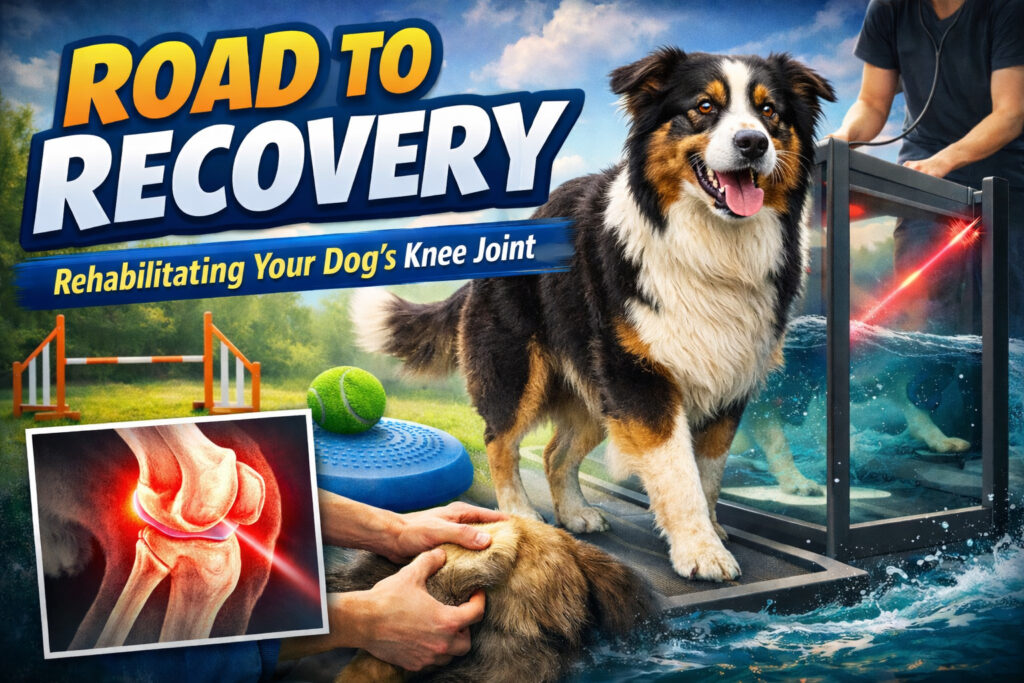
Hydrotherapy is a favorite in canine rehabilitation — and for good reason.
Water supports body weight, reducing impact on the knee while allowing muscles to work. Swimming or underwater treadmill sessions help build strength and improve range of motion without excessive strain.
For many dogs, it’s one of the safest ways to reintroduce exercise.
Hands-on techniques can make a noticeable difference. Massage helps:
Other therapies such as laser treatments may support tissue healing and inflammation control. Some dogs also respond well to acupuncture as part of a broader pain-management plan.
Clinic visits are important, but what happens at home matters just as much — if not more.
Your veterinarian or canine rehabilitation therapist will likely provide:
Consistency is everything. Small, steady improvements over time lead to meaningful recovery.
While some mild cases can be managed with basic at-home exercises, many dogs benefit greatly from working with a certified canine rehabilitation therapist.
These specialists assess:
They design customized programs based on your dog’s specific injury, surgical procedure (if applicable), age, and overall health.
Having expert oversight reduces guesswork and helps prevent common setbacks.
Rehabilitation typically moves through distinct stages:
The focus is minimizing inflammation and protecting the joint. Activity is extremely limited.
Light exercises are introduced to maintain mobility and prevent stiffness.
Muscle rebuilding becomes the priority. Balance and coordination work increase.
Activity levels slowly expand. Controlled play may resume under supervision. Each phase requires patience. Rushing the timeline often leads to reinjury.
Knee rehabilitation isn’t just physical — it’s mental.
Active dogs can become frustrated during restricted activity. You may notice:
Providing enrichment through puzzle toys, calm training sessions, or scent games can help keep their mind engaged while their body heals.
Your attitude also matters. Dogs read our energy. Staying calm, consistent, and encouraging can help them stay motivated.
Rehabilitation doesn’t deliver overnight results. It unfolds in small milestones:
Progress may feel slow at times, but steady consistency almost always wins.
Skipping exercises or returning to full activity too early can set recovery back weeks. Trust the process.
A knee injury can feel overwhelming in the beginning. But with a structured rehabilitation plan, many dogs regain excellent function and return to happy, active lives.
The key ingredients are:
Healing a knee isn’t about simply waiting — it’s about actively rebuilding strength, stability, and confidence step by step.
And when you finally see your dog moving comfortably again, you’ll know every careful, steady day of rehabilitation was worth it. For more information about our brace you can contact us via or contact form or visit us on our Facebook.