Most dog owners think about slippery floors — but few think about flooring transitions. The small lip between tile and hardwood. The metal strip in a doorway. The raised threshold leading to a patio.
To us, they’re barely noticeable. To your dog’s knees, they can be a daily stress test.
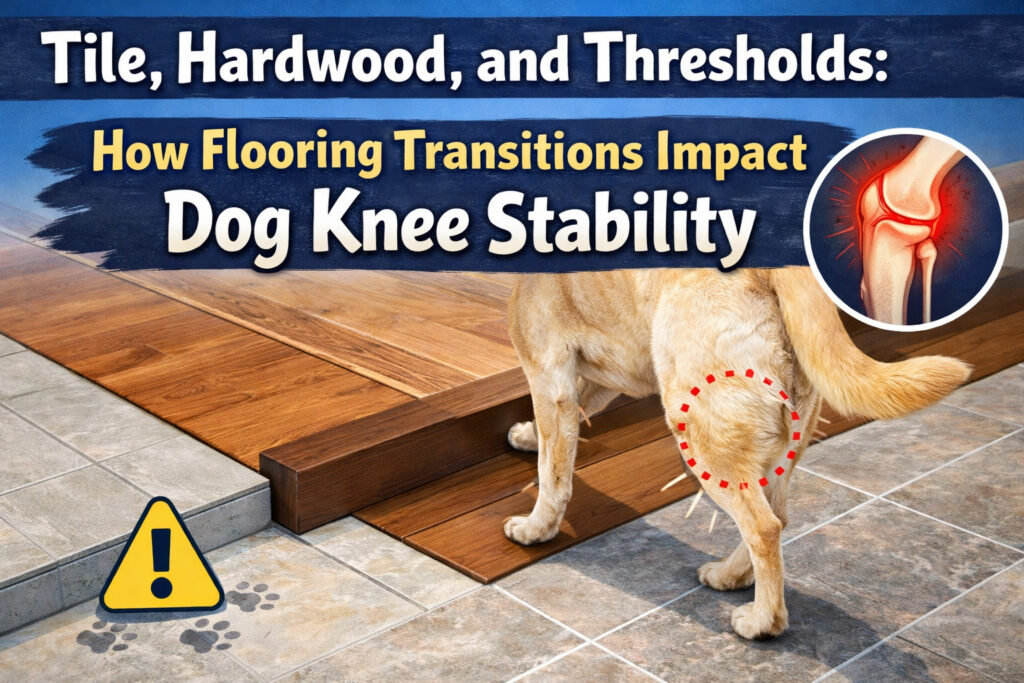
Dogs move fast. They don’t slow down to evaluate surface changes the way we do. When your dog runs from carpet to tile or hardwood to laminate, the sudden shift in traction can cause:
Over time, these repeated micro-adjustments can strain the CCL (ACL equivalent) — especially in active or larger dogs.
Raised door strips and uneven transitions are particularly risky because they:
For dogs healing from a previous CCL tear, these small obstacles can increase the chance of re-injury or strain on the opposite leg.
Take a walk through your house and look for these trouble spots:
You may notice your dog hesitates, shifts weight awkwardly, or slightly slides when crossing them.
You don’t need a renovation to protect your dog’s knees. Try:
Small adjustments can significantly reduce torque and instability in the knee joint.
Dog knee injuries are often the result of cumulative strain — not just dramatic accidents. Flooring transitions create subtle instability that can add up over time.
By identifying and correcting these hidden hazards, you’re not just improving traction — you’re protecting long-term joint health and giving your dog a safer environment to move confidently every day.
If you would like more information about our Posh Dog Knee Brace, please contact us through our contact form and be sure to visit us on Facebook to stay updated on tips, support, and new products for your dog’s joint health and recovery.