Custom & Supportive Dog Braces for Injury & Recovery
Custom Support | Ready-to-Wear Support | Professional Guidance
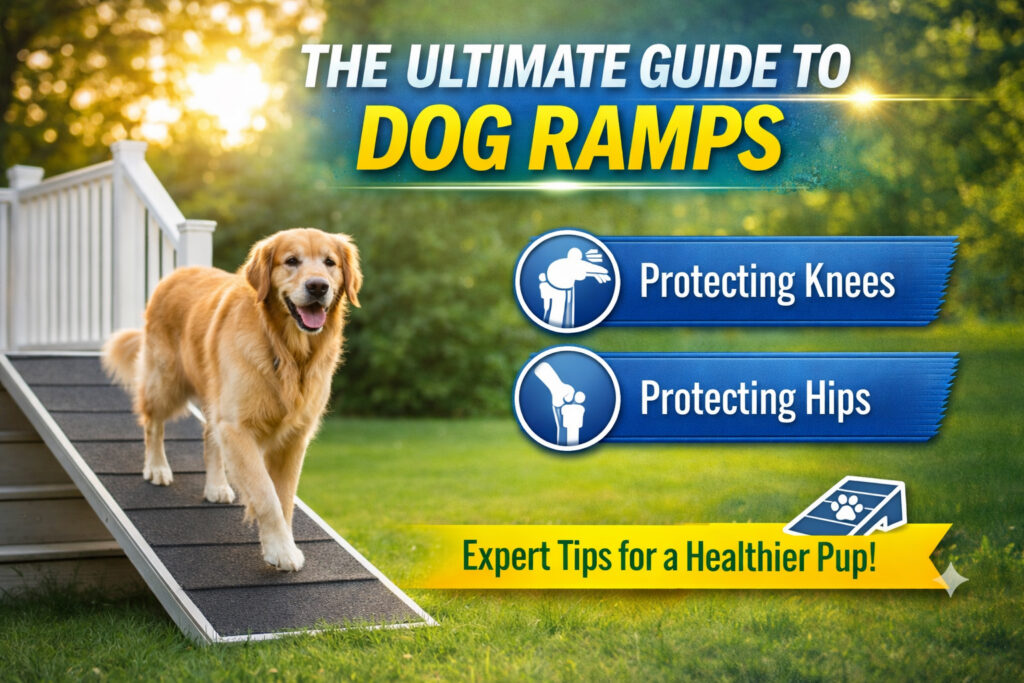
Dog Ramps the Ultimate Guide : Protecting Knees and Hips from Stair Strain
Post Published on June 22, 2026
As devoted dog parents, we constantly look for ways to keep our furry family members happy, healthy, and comfortable. Often, we focus on diet, exercise, and regular vet check-ups. But what about the repetitive strain of everyday movements that can silently damage their joints? We’re talking about stairs, jumping on and off furniture, and getting in and out of the car, ramps should be something to think about.
While these might seem like minor activities, the cumulative impact of repeated high-impact movements can significantly contribute to joint issues over time, particularly for breeds prone to hip and elbow dysplasia, patellar luxation, or those recovering from injuries like ACL tears.
Enter the humble yet mighty dog ramp. More than just a convenience, a dog ramp is a preventative and rehabilitative tool that can genuinely extend your dog’s comfort and mobility, protecting their precious knees and hips from unnecessary strain.
Why Stairs and Jumps Are Secret Joint Stressors
Think about the mechanics of a dog navigating stairs or leaping. Each jump or step involves:
Impact: The sudden force of landing on hard surfaces.
Twist & Torque: The natural twisting motion on joints, especially when turning on stairs or landing awkwardly.
Repetition: Doing this multiple times a day, every day, adds up.
For young, healthy dogs, their bodies are typically resilient enough to handle this. However, even in their prime, these actions create micro-traumas. As dogs age, or if they have pre-existing conditions, these activities become increasingly detrimental.
Breeds at Higher Risk:
Large & Giant Breeds: Labradors, Golden Retrievers, German Shepherds, Great Danes, Bernese Mountain Dogs (prone to hip/elbow dysplasia).
Long-Bodied Breeds: Dachshunds, Corgis, Basset Hounds (prone to spinal issues like IVDD).
Small & Toy Breeds: Chihuahuas, Poodles, Pomeranians (prone to patellar luxation).
Any Dog with Existing Joint Issues: Arthritis, recovering from surgery (e.g., TPLO, TTA), or mobility challenges.
The Unsung Hero: How Dog Ramps Help
Dog ramps offer a gradual incline, eliminating the harsh impact and twisting motions associated with jumping and stair climbing. This simple change provides a multitude of benefits:
Prevents Injury: For puppies and young, active dogs, ramps help prevent injuries before they start, especially in breeds predisposed to joint problems.
Reduces Pain: For dogs with arthritis, hip dysplasia, or other joint conditions, ramps allow them to access elevated surfaces without pain or discomfort.
Aids Recovery: Post-surgery, ramps are crucial. They facilitate controlled, low-impact movement, supporting the healing process and preventing re-injury by eliminating risky jumps.
Maintains Independence: An older dog might give up trying to get on the couch or into the car if it’s too painful. A ramp allows them to maintain their independence and continue enjoying their favorite spots and activities.
Spinal Protection: For long-bodied breeds, ramps are vital for preventing spinal strain, which can lead to severe issues like IVDD.
Safety for Handlers: Lifting a large, heavy, or injured dog can be difficult and even dangerous for human caregivers. Ramps provide a safer alternative for everyone.
Choosing the Right Dog Ramp: A Comprehensive Guide
Not all dog ramps are created equal. The “best” ramp depends on your dog’s size, your specific needs, and where it will be used.
Key Factors to Consider:
Length & Incline:
Longer is Better: A longer ramp provides a gentler incline, which is always easier and safer for your dog’s joints, especially for older or injured dogs.
General Rule: For every foot of height you need to reach (e.g., a 2-foot high car seat), aim for a ramp that’s at least 3-4 feet long. A 1:2 or 1:3 ratio (height to length) is a good starting point.
Traction/Surface:
Non-Slip is Non-Negotiable: The ramp surface must provide excellent grip, even in wet conditions. Look for sandpaper-like textures, carpeted surfaces, rubberized treads, or deep grooves.
Avoid Smooth Plastic: Smooth plastic ramps can be very slippery, especially for dogs with long nails or weak legs, posing a serious fall risk.
Weight Capacity:
Always Check: Ensure the ramp can safely support your dog’s weight, plus a significant buffer. A ramp buckling under your dog could cause a serious injury.
Portability & Storage (for Car Ramps):
Foldable/Telescoping: For travel or car use, look for ramps that fold in half or telescope down for compact storage.
Lightweight: Consider the weight if you’ll be frequently moving it in and out of your car.
Stability:
Rock-Solid: The ramp must be sturdy and not wobble or slide when your dog walks on it. Look for secure locking mechanisms if it’s foldable, and non-slip rubber feet.
Types of Ramps for Different Needs:
Car Ramps (Vehicle Ramps):
Features: Often foldable, telescoping, and lightweight. Many have a lip or safety catch to secure to your car bumper.
Consider: The height of your vehicle, the available space for storage, and the ramp’s weight.
Bed Ramps:
Features: Tend to be more aesthetically pleasing, sometimes resembling furniture. They are usually fixed in place.
Consider: The height of your bed, the decor of your bedroom, and the space it will occupy.
Couch Ramps (Sofa Ramps):
Features: Shorter and less steep than bed ramps, designed to reach typical sofa heights.
Consider: The height of your sofa and ensuring it’s stable and doesn’t tip.
Stair Ramps (Indoor/Outdoor):
Features: These are less common as full stair replacements but can be used for a few steps. More often, ramps are used instead of stairs to access decks or porches.
Consider: The length and slope needed to span the stairs or deck height comfortably.
Training Your Dog to Use a Ramp
Even the most perfect ramp is useless if your dog won’t use it! Here’s how to introduce it positively:
Positive Association: Place the ramp flat on the ground initially. Lure your dog over it with high-value treats and praise. Make it a fun game!
Gradual Incline: Once comfortable, prop one end up slightly (e.g., against a low step or curb) and repeat the treat-luring process.
Full Height: Gradually increase the height until it’s at its intended position. Continue using treats, praise, and a happy, encouraging voice.
Consistency: Use the ramp every time. Don’t let them jump sometimes and use the ramp others, as this sends mixed signals.
Patience is Key: Some dogs will take to it immediately, others may need a few days or even weeks. Never force your dog onto the ramp.
The Long-Term Benefits
Investing in a high-quality dog ramp is an investment in your dog’s long-term health and happiness. By proactively protecting their joints from daily wear and tear, you can potentially:
Delay the onset of arthritis.
Lessen the severity of existing joint conditions.
Improve recovery times post-injury or surgery.
Ensure a better quality of life as they age.
Keep your dog enjoying your shared adventures for years to come.
Don’t wait until your dog is limping or showing signs of pain. Introduce ramps early as a preventative measure. Their knees and hips will thank you!
Ready to learn more about how to support your dog’s mobility? If you’re interested in a custom knee brace or need more personalized advice on choosing the right ramp, we’re here to help! Reach out to us via our contact form or send us a message on our Facebook page.
Articles from the Posh Dog Knee Brace team — a group effort with our licensed veterinary technicians and brace specialists, sharing 15+ years of experience helping dogs recover from CCL/ACL injuries and mobility challenges.