Post Published on July 1, 2026
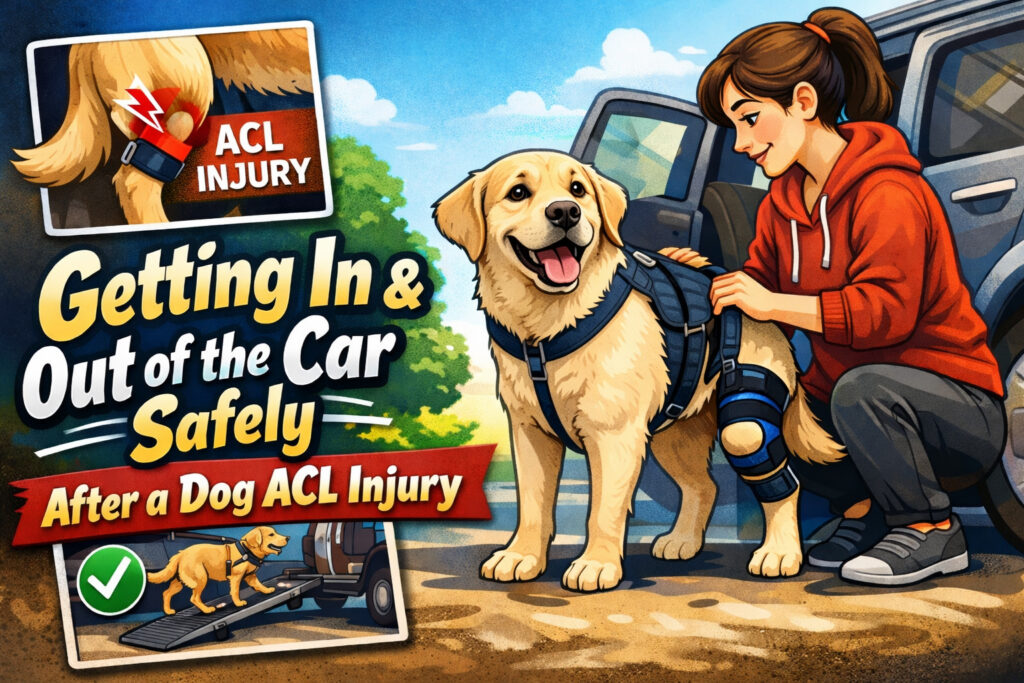
When your dog is recovering from an ACL injury (also known as a CCL tear), even simple, everyday tasks can suddenly feel overwhelming. One of the most common challenges pet parents face is helping their dog get in and out of the car safely.
Whether you’re heading to a vet follow-up, physical therapy appointment, or just taking a short ride, improper movement during car entry or exit can delay healing—or worse, cause re-injury. The good news? With the right approach and a little preparation, you can protect your dog’s knee and make car rides safe again.
The canine ACL is properly called the cranial cruciate ligament (CCL). It plays a critical role in stabilizing your dog’s knee joint. When it tears—partially or completely—it causes pain, instability, and inflammation.
In many cases, dogs undergo surgical repair such as:
Others may follow a conservative management plan depending on size, severity, and veterinarian recommendations.
Regardless of the treatment route, one rule remains the same: controlled, supported movement is critical during recovery. Jumping in and out of a vehicle is one of the riskiest uncontrolled movements a healing dog can make.
Before injury, most dogs launch themselves into vehicles without hesitation. After a CCL tear, that same motion creates:
Even after surgery, the internal structures are still healing for weeks. The bone needs time to fuse (in surgical cases), and surrounding muscles must rebuild strength.
One bad jump can:
That’s why controlled entry and exit isn’t optional—it’s essential.
The golden rule: No jumping. At all.
This applies to:
Even if your dog looks better, ligament healing and bone remodeling take time. Always follow your veterinarian’s timeline before allowing independent movement.
A ramp is one of the safest and most effective tools during ACL recovery.
Why ramps are ideal:
What to look for:
Take time to train your dog to use the ramp slowly. Use treats, calm praise, and a leash for stability.
Pro tip: Always support with a harness while your dog walks up or down, especially during the first few weeks.
A rear-support harness (sometimes called a recovery sling) allows you to assist your dog’s back end as they move.
This is especially helpful for:
The harness allows you to:
Never lift by the collar or under the abdomen alone—this can create additional stress or discomfort.
Once inside, your dog’s safety isn’t finished.
Car interiors can be slippery. Leather seats, plastic cargo areas, and loose blankets can all cause sliding, which twists the healing knee.
Safer setup:
For smaller dogs, a secure travel crate may offer the most stability during healing.
Most dogs are more excited getting out of the car than getting in. That burst of energy can cause sudden jumping.
Before opening the door:
Never open the hatch and allow your dog to bolt. Descending creates even more strain than going up, because gravity adds impact force to the knee joint.
Dogs recovering from ACL surgery fatigue faster than usual. Muscle atrophy happens quickly during restricted activity.
Signs your dog may need more support:
If you notice this, increase support during car transfers and shorten outings.
Studies show that many dogs who tear one CCL will eventually injure the other. Overcompensation plays a big role.
When helping your dog in and out of the car:
Your goal is symmetry and slow movement.
Preparation reduces stress—for both of you.
Before leaving:
If possible, avoid high-clearance vehicles during recovery. Even backing up to a curb to reduce height can help.
Even small dogs shouldn’t jump after an ACL injury. While it may look less dramatic, their knees experience the same biomechanical stress relative to their body size.
Use:
Never allow repetitive small jumps, such as hopping from seat to seat.
This depends on:
For surgical repairs like TPLO or TTA, many dogs require strict movement control for 8–12 weeks.
Some dogs—especially large breeds—benefit from using ramps permanently to reduce long-term joint stress.
Contact your veterinarian if you notice:
Early intervention prevents setbacks.
Car rides often mean something exciting—parks, family visits, adventures. After injury, your dog may associate car entry with discomfort.
Stay calm. Move slowly. Keep experiences positive but controlled.
Your energy influences theirs.
ACL recovery isn’t just about surgery or rest—it’s about the hundreds of small movements your dog makes every day.
Getting in and out of the car may seem minor, but it’s one of the highest-risk moments during healing. Eliminating jumping, adding support, and planning ahead dramatically reduce complications.
The goal isn’t just short-term healing.
It’s long-term joint health, confidence, and mobility.
With patience, preparation, and smart tools, you can safely navigate car rides and keep your dog on track toward a strong, stable recovery.
If you are interested in a posh dog knee brace you can contact us via our contact form or check out our facebook page.
Articles from the Posh Dog Knee Brace team — a group effort with our licensed veterinary technicians and brace specialists, sharing 15+ years of experience helping dogs recover from CCL/ACL injuries and mobility challenges.