Post Published on July 20, 2026
Summer is one of the best seasons to spend quality time outdoors with your dog. Longer days, sunny weather, and more opportunities for adventure make it tempting to head outside whenever you have free time. However, when temperatures rise, choosing the right time of day for a walk becomes more than just a matter of convenience—it becomes a matter of your dog’s health and safety.
Whether your dog is a playful puppy, an energetic adult, a senior companion, or recovering from an ACL injury or arthritis, understanding the difference between morning and afternoon walks can help prevent overheating, protect sensitive paw pads, and reduce stress on their joints.
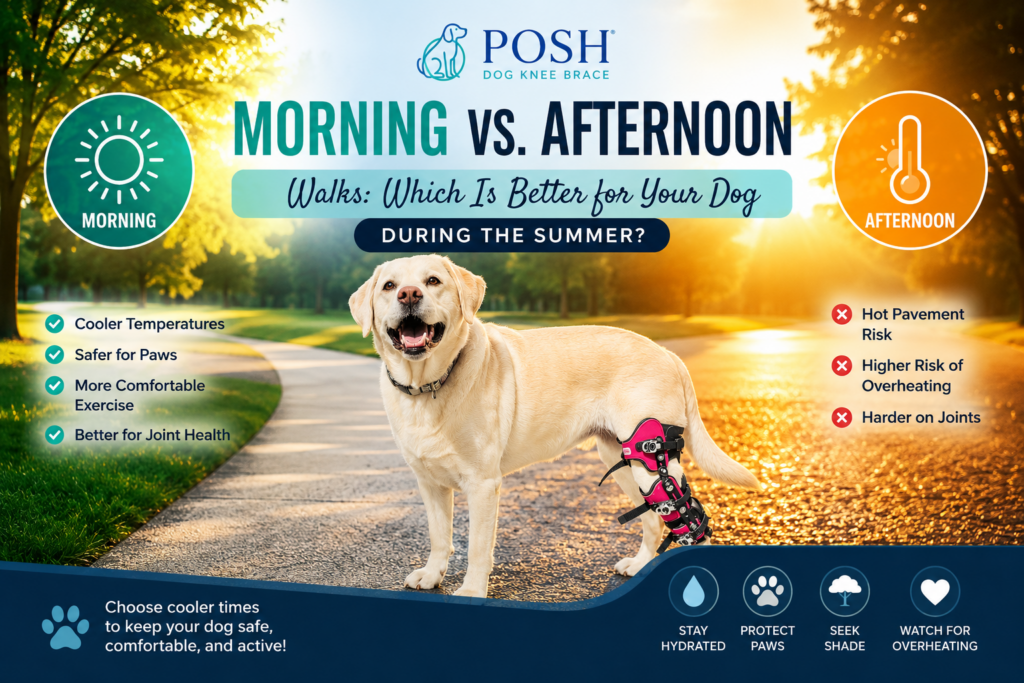
Dogs don’t regulate body temperature the same way humans do. While people cool themselves by sweating, dogs primarily rely on panting and releasing small amounts of heat through their paw pads. When outdoor temperatures climb, especially with high humidity, it becomes much harder for dogs to cool themselves effectively.
What many pet owners don’t realize is that the air temperature isn’t the only concern. Asphalt, concrete, and sidewalks absorb heat throughout the day and can become much hotter than the surrounding air. Even when the weather feels comfortable to you, the ground beneath your dog’s paws may be hot enough to cause burns or discomfort.
Choosing the right time to walk can significantly reduce these risks.
For most dogs, early morning is the safest and healthiest time to exercise during the summer months.
Cooler Temperatures
Temperatures are generally at their lowest shortly after sunrise. Cooler air makes it easier for your dog to breathe comfortably and regulate their body temperature while exercising.
This is especially beneficial for:
Cooler Walking Surfaces
Sidewalks and pavement haven’t yet absorbed hours of sunlight, making them much safer for sensitive paw pads. Cooler surfaces also reduce stress on joints, especially for dogs with arthritis or knee injuries.
More Comfortable Exercise
Dogs tend to have more energy in cooler weather. Morning walks often allow for longer distances and more enjoyable sniffing adventures without the fatigue caused by excessive heat.
Better Mental Stimulation
Starting the day with a walk provides both physical exercise and mental enrichment. Exploring new scents, hearing birds, and interacting with their environment helps reduce boredom and can improve behavior throughout the day.
Afternoons are often the hottest part of the day, making them the least desirable time for outdoor exercise during the summer.
Increased Risk of Heat Exhaustion
As temperatures rise, dogs can quickly overheat. Signs of heat exhaustion include:
If your dog begins showing any of these symptoms, move them immediately to a cool area, offer fresh water, and contact your veterinarian right away.
Hot Pavement Can Burn Paw Pads
Many pet owners underestimate just how hot pavement becomes.
When the air temperature reaches approximately 85°F (29°C), asphalt may exceed 130°F (54°C). At these temperatures, paw pad burns can occur within seconds.
A simple way to test the pavement is the “seven-second test.” Place the back of your hand on the pavement for seven seconds. If it’s too hot for your hand, it’s too hot for your dog’s paws.
Increased Joint Fatigue
Dogs recovering from orthopedic injuries, including ACL or CCL tears, may tire more quickly in hot weather. Heat increases overall fatigue, which can affect coordination and muscle support around injured joints.
Fatigued muscles provide less stability, increasing the risk of slips, awkward movements, or further injury.
Sometimes work schedules or family commitments make afternoon walks necessary. If you must walk your dog during warmer hours, taking a few precautions can make the outing much safer.
Choose shaded routes whenever possible. Parks with tree cover or grassy trails remain cooler than sidewalks or parking lots.
Keep walks shorter than usual. Instead of one long walk, consider several brief potty breaks and save longer exercise sessions for early morning or later in the evening.
Always carry fresh water and offer frequent drinking breaks.
Walk on grass whenever possible instead of asphalt or concrete.
Watch your dog’s body language carefully. Slowing down, excessive panting, seeking shade, or refusing to continue walking are all signs it’s time to head home.
If mornings aren’t possible, evening walks after the sun has begun to set can be another excellent choice.
Before heading out, remember that pavement may still hold heat from the day. Perform the seven-second pavement test before allowing your dog to walk on sidewalks.
Evening walks also provide a relaxing opportunity for dogs to unwind before bedtime and can help reduce excess energy.
Dogs recovering from ACL surgery, wearing a custom knee brace, managing arthritis, or dealing with other mobility conditions require extra attention during the summer.
Heat places additional stress on the cardiovascular system and muscles. As muscles become fatigued, they provide less support for injured joints.
For dogs with knee injuries or arthritis:
Many dogs recovering from orthopedic injuries benefit from maintaining gentle daily activity while avoiding excessive heat that could delay recovery.
Hydration is just as important as timing.
Before every walk:
You can also help your dog stay cool by providing frozen treats, cooling mats, shaded rest areas, or even a quick rinse with cool (not ice-cold) water after outdoor activity.
When it comes to summer walks, timing truly makes a difference.
Morning walks generally provide the coolest temperatures, safer walking surfaces, and the most comfortable conditions for dogs of all ages. Evening walks are another excellent alternative once the day’s heat begins to fade.
Afternoon walks aren’t always avoidable, but they require extra caution, shorter durations, and close attention to your dog’s comfort and safety.
By adjusting your walking routine during the warmer months, you can help prevent heat-related illnesses, protect your dog’s paws, reduce stress on their joints, and ensure they continue enjoying the outdoors all summer long.
A little planning goes a long way toward keeping every walk a safe, healthy, and enjoyable adventure—no matter the season.
If you are interested in a Posh Dog Knee Brace you can contact us via or contact form or check us out on Facebook.
Articles from the Posh Dog Knee Brace team — a group effort with our licensed veterinary technicians and brace specialists, sharing 15+ years of experience helping dogs recover from CCL/ACL injuries and mobility challenges.