Post Published on March 30, 2026
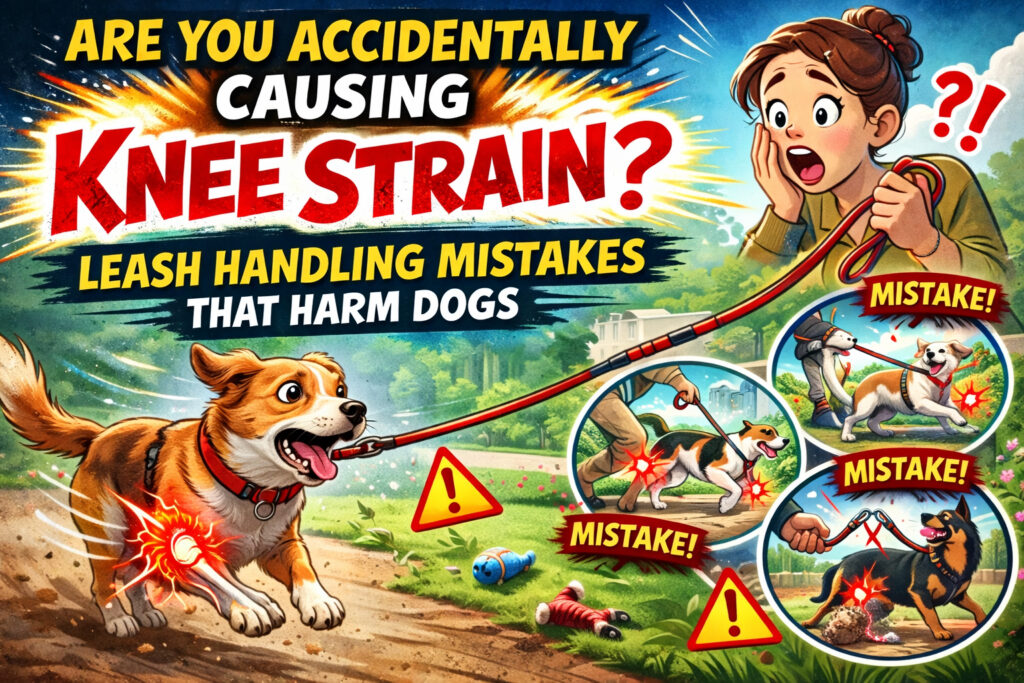
When we think about protecting our dogs’ knees, we usually picture slippery floors, rough play, or high-impact activities like jumping in and out of trucks. But what if one of the biggest contributors to knee strain is something you use every single day?
Your leash.
Leash walking seems simple. Clip it on. Head outside. Enjoy the stroll. But subtle leash handling mistakes can place repetitive strain on your dog’s knees—especially the stifle joint (the equivalent of the human knee). Over time, these small, daily forces can contribute to inflammation, soft tissue strain, and even ligament injuries.
If you’re committed to protecting your dog’s mobility and long-term joint health, this guide will help you spot and fix common leash mistakes that could be harming your dog without you even realizing it.
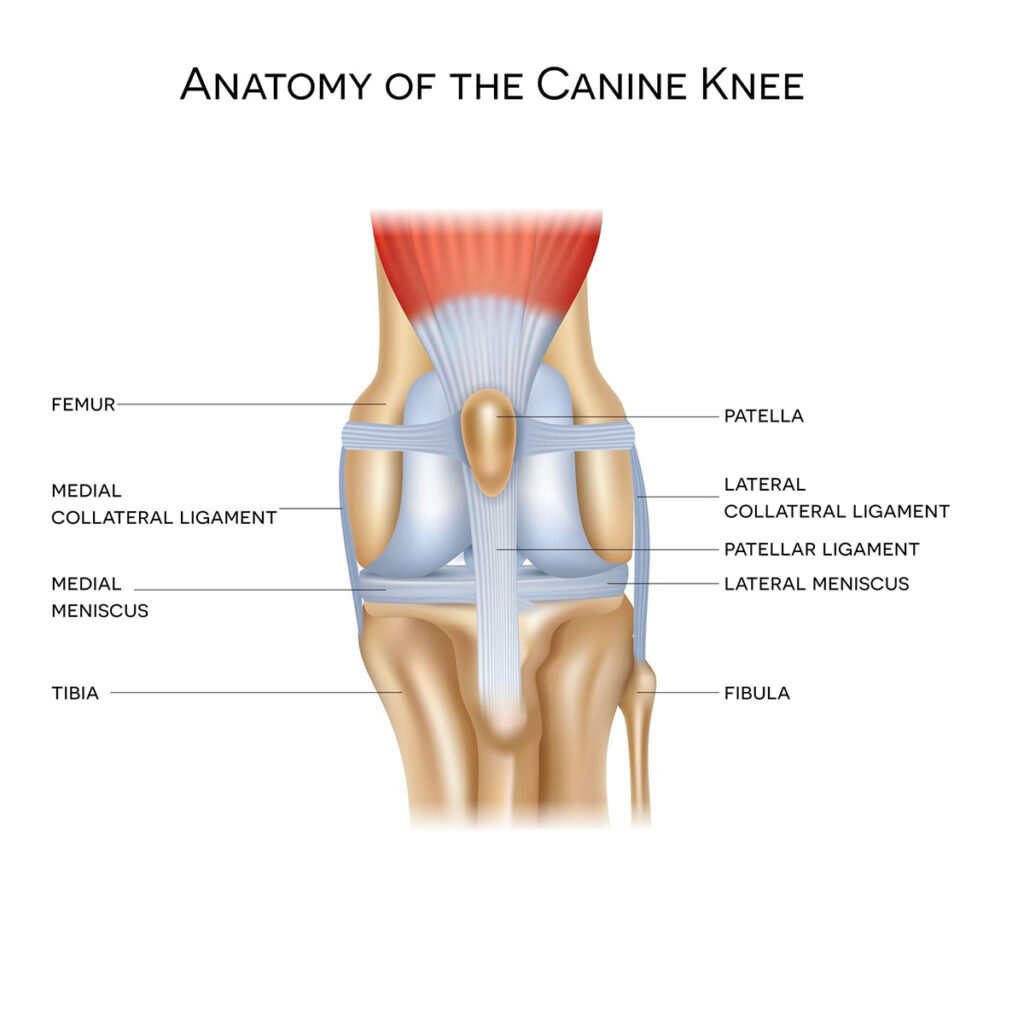
Before we talk about leash handling, it helps to understand what’s happening inside your dog’s leg.
The canine knee—called the stifle joint—relies heavily on soft tissues for stability, including the cranial cruciate ligament (CCL). Unlike humans, dogs carry about 60% of their body weight on their front limbs, but their rear legs generate powerful forward propulsion. When a leash interferes with natural movement patterns, the knees often absorb the consequences.
Sudden stops, lateral twisting, forced changes in direction, and constant pulling all create unnatural forces through the stifle joint. Over time, these repeated micro-stresses can add up.
Now let’s look at where leash handling plays a role.
Even if your dog isn’t actively pulling, a constantly taut leash subtly alters their gait. Instead of moving naturally, your dog braces against forward pressure. This shifts weight distribution and increases joint loading—particularly in the knees and hips.
Over months or years, that repeated strain can contribute to chronic inflammation or ligament fatigue.
Fix it: Practice loose-leash walking where the leash forms a relaxed “J” shape. The goal isn’t rigidity—it’s fluid movement.
Quick leash corrections create sharp, abrupt force that travels through your dog’s body.
When you jerk a leash, your dog instinctively plants their feet to resist. That sudden bracing action often causes twisting forces through the knees. If this happens repeatedly, especially in high-energy dogs, it can increase wear on stabilizing ligaments.
Even if you’re not intentionally correcting, accidentally snapping the leash when distracted can have the same effect.
Fix it:
Your dog’s joints will thank you.
Excited lunging is one of the biggest contributors to knee strain.
When your dog lunges forward:
If your dog lunges toward squirrels, other dogs, delivery trucks, or people regularly, those explosive starts and stops can create significant joint stress.
Over time, that repeated force increases the risk of:
Fix it:
Certain equipment can amplify joint stress instead of reducing it—especially if it changes how your dog distributes weight.
For example:
If your dog already has mild joint instability, poor equipment choices can worsen compensation patterns.
Fix it:
When in doubt, observe your dog walking from behind—are their hips swaying excessively? Are their knees rotating inward? Small alignment clues reveal big joint stress.
Leash tension plus slippery surfaces is a dangerous combination.
If your dog slips slightly while the leash is taut, the stabilizing ligaments in the knee must work overtime to prevent a fall. That micro-instability, especially repeated over time, can increase strain on the CCL.
This is especially important in:
Fix it:
Controlled steps are safer steps.
Some owners unconsciously “steer” their dogs by pulling them sideways.
But lateral pulling creates rotational torque through the stifle joint. Dogs aren’t designed to pivot sharply under external force. Sudden sideways redirection forces the knee to stabilize against unnatural angles.
Better approach:
Instead of pulling sideways, use body positioning. Turn your own body first. Encourage your dog to follow naturally. This reduces joint torque and encourages healthier movement patterns.
Leash-related knee strain rarely appears overnight.
Watch for subtle changes:
These may indicate early joint stress or instability.
Addressing leash habits early can prevent more serious injuries later.
Here’s what many owners don’t realize:
It’s rarely one big event.
Knee injuries often result from repeated micro-trauma over time. Daily lunging. Constant pulling. Minor slips. Abrupt corrections. Over months, those small forces add up.
This is especially true in:
Smart leash handling becomes part of preventive care—not just obedience training.
Here’s a simple checklist you can use starting today:
✔ Keep leash slack whenever possible
✔ Avoid jerking or snapping corrections
✔ Reduce repetitive lunging
✔ Choose equipment that promotes natural movement
✔ Slow down on slippery surfaces
✔ Use body positioning instead of forceful steering
✔ Monitor subtle gait changes
These small adjustments dramatically reduce unnecessary joint stress.
If your dog already shows signs of knee instability, mild CCL strain, or early joint weakness, modifying leash habits may not be enough.
External support during activity can:
Especially during rehabilitation or prevention phases, supportive bracing can protect the joint while you improve training and handling habits.
Mobility protection isn’t just about recovery—it’s about prevention.
Walks should:
But improper leash handling can quietly undermine all of that.
The good news? Small, intentional changes in how you handle the leash can dramatically reduce strain and protect your dog’s knees long-term.
You love your dog. You walk them to keep them healthy. You want them active and happy for years to come.
But even well-meaning habits can unintentionally place stress on sensitive joints.
By becoming aware of leash tension, lunging patterns, abrupt corrections, and equipment choices, you can transform daily walks from a hidden risk into a powerful tool for joint protection.
Protect the knees. Protect the zoomies. Protect the years ahead.
If you’re ever unsure whether your dog’s gait looks balanced or whether they may need additional support during activity, consult with your veterinarian and consider solutions designed specifically for canine knee stability.
Because mobility isn’t just about movement—it’s about freedom. For more information about our Posh brace contact us via our contact page or follow us on Facebook.
Articles from the Posh Dog Knee Brace team — a group effort with our licensed veterinary technicians and brace specialists, sharing 15+ years of experience helping dogs recover from CCL/ACL injuries and mobility challenges.