Post Published on March 9, 2026
Hi everyone! My name is Nikki, and I’m the Lead Veterinary Technician with Posh Dog Knee Braces. Today I want to talk about something extremely important for dog owners, especially during the warmer months when we all love getting outdoors with our pets. Swimming in rivers, lakes, and ponds can be a fun activity for both dogs and their humans, but there is a hidden danger that many pet owners are unaware of. That danger is something called blue-green algae, often simply referred to as blue algae.
This type of algae can be incredibly toxic and even deadly for dogs. Every summer, veterinary clinics see tragic cases involving dogs that were exposed to this toxin after swimming in or drinking from contaminated water. Unfortunately, many dog owners have never heard about this risk until it’s too late. My goal with this blog is to help educate you about blue algae, explain why it’s so dangerous, and give you some practical tips to help keep your dog safe while still enjoying summer adventures.
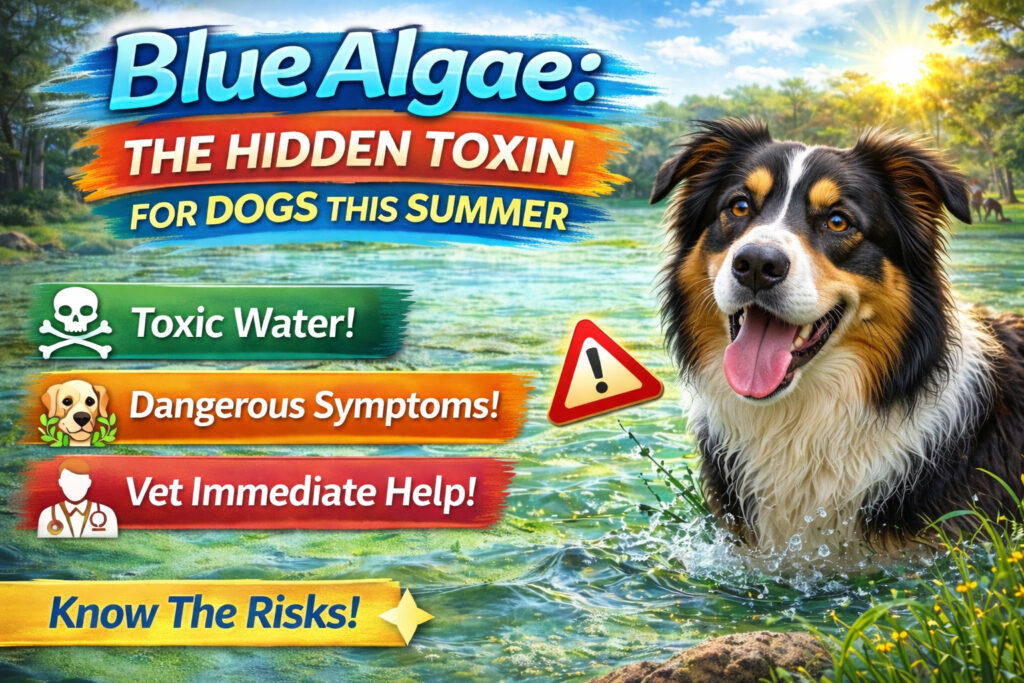
Blue-green algae is not actually algae in the traditional sense. It is a type of bacteria known as cyanobacteria that thrives in warm, nutrient-rich water. These bacteria can grow rapidly and form what are called algal blooms, which are dense layers that appear on the surface of water.
These blooms often occur in stagnant or slow-moving bodies of water, such as ponds, lakes, and certain areas of rivers. When conditions are right—typically warm temperatures, sunlight, and excess nutrients in the water—the bacteria multiply very quickly. This is why blooms are most commonly seen during the summer months, especially from July through August, although they can occur earlier or later depending on the climate.
One of the most dangerous things about blue-green algae is that it can produce powerful toxins that are extremely harmful to animals and humans. Dogs are particularly vulnerable because they often drink the water they swim in, and they may lick algae off their fur after leaving the water.
The toxins produced by blue-green algae attack the body very quickly. In many cases, symptoms begin appearing within minutes to hours after exposure. The toxins can affect several major organs, including the liver and nervous system, which is why poisoning from blue algae can progress rapidly and become life-threatening in a short amount of time.
Dogs that ingest contaminated water may experience symptoms such as:
In severe cases, dogs may go into organ failure or cardiac arrest. Sadly, once symptoms progress, treatment options can be limited and outcomes are often poor.
Over the course of my veterinary career, I have personally witnessed dozens of beautiful dogs lost to this toxin, and it is absolutely heartbreaking every single time. Many of these families had no idea the water their dog swam in contained a deadly hazard.
Blue algae tends to develop in areas where water is warm, calm, and nutrient-rich. This means it often appears in places that might otherwise look peaceful and inviting.
Common locations include:
Sometimes blooms appear as a green, blue-green, or even reddish film on the surface of the water. It may look like paint spilled across the top of the water, pea soup, or thick green scum. However, not all blooms are easy to recognize. Some may simply appear as cloudy or discolored water.
This is why it’s extremely important to avoid letting your dog swim in water that has visible algae or moss, unless you know the area is regularly tested and confirmed to be safe.
Even the most beautiful and remote lakes can contain toxic algae during certain times of the year. Just because the water looks clear or natural does not necessarily mean it is safe.
Many people assume this issue only happens in large lakes or natural bodies of water. Unfortunately, that is not always the case. Blue algae can develop almost anywhere that stagnant water collects, even in areas close to home.
I once worked with a family that had a small pug who tragically died after exposure to blue algae in their own backyard. The source of the contamination was something they had completely forgotten about—an old fish tank that had been left outside.
Over time, rainwater collected inside the tank, creating a small stagnant pool. Eventually, the conditions allowed blue algae to develop in the water. Their dog drank from it, and by the time the family realized something was wrong, it was already too late.
When the water was tested afterward, it came back positive for blue algae toxins.
This heartbreaking situation shows that dangerous algae blooms can occur in places we might never think to check. Any container, pond, or standing water source can potentially become a breeding ground under the right conditions.
The good news is that with awareness and caution, many cases of blue algae poisoning can be prevented. Here are some simple but important steps you can take to protect your dog.
If you see green scum, mats of algae, or water that looks discolored or thick, do not allow your dog to swim or drink from it.
Many parks and local authorities test popular lakes and swimming areas during the summer months. If a harmful algae bloom is detected, warnings are usually posted.
When hiking or visiting lakes and rivers, always bring clean drinking water for your dog. This reduces the chance they will drink from natural water sources.
If your dog swims in natural water, rinse them with fresh water afterward. This helps remove any algae that might be stuck in their fur and prevents them from licking it off.
Check your yard for items that may collect rainwater, such as buckets, containers, old tanks, kiddie pools, or clogged gutters. Empty these regularly to prevent stagnant water from forming.
If you believe your dog may have been exposed to blue algae, seek veterinary care immediately. Time is extremely critical in these situations.
Even if your dog only drank a small amount of water, it is better to err on the side of caution. Early treatment may improve the chances of survival.
Try to prevent your dog from licking their fur and, if possible, rinse them with clean water while heading to the veterinarian.
Summer adventures with your dog are some of the best memories we can make. Whether it’s hiking, camping, or swimming, spending time outdoors is wonderful for both you and your pet.
However, awareness of potential dangers like blue algae can make all the difference. Taking a few extra precautions can help ensure your dog stays safe while still enjoying the water.
Swimming can absolutely still be a fun activity—just make sure the area is safe and monitored. Avoid stagnant water with visible algae, stay informed about local conditions, and always keep fresh water available for your dog.
As a veterinary technician, I have seen firsthand how devastating blue algae poisoning can be for families. Losing a beloved pet is never easy, and it is especially heartbreaking when it happens so suddenly.
The purpose of sharing this information isn’t to scare anyone away from outdoor fun—it’s simply to help spread awareness. Many dog owners have never heard of blue algae until tragedy strikes.
If this blog helps even one person avoid that situation and keep their dog safe, then it is worth sharing.
So this summer, enjoy the sunshine, the lakes, and the adventures with your furry companions—but remember to play it safe and stay aware of your surroundings.
Your dog is counting on you.
Stay safe out there! 🐾
For more information about any of our products please contact us via our contact form or visit us on Facebook.
— Nikki
Lead Veterinary Technician
Posh Dog Knee Braces
Articles from the Posh Dog Knee Brace team — a group effort with our licensed veterinary technicians and brace specialists, sharing 15+ years of experience helping dogs recover from CCL/ACL injuries and mobility challenges.