Post Published on November 9, 2026
If you’ve noticed your dog limp after resting, struggle to get up from a nap, take a few tentative, limping steps, and then slowly start walking normally again, you aren’t alone. This common phenomenon is often called “start-up stiffness.”
While it can be heartbreaking to watch your furry best friend struggle, understanding why this happens is the first step toward helping them feel comfortable again. Here is a breakdown of why dogs limp after resting, when to worry, and how you can help.
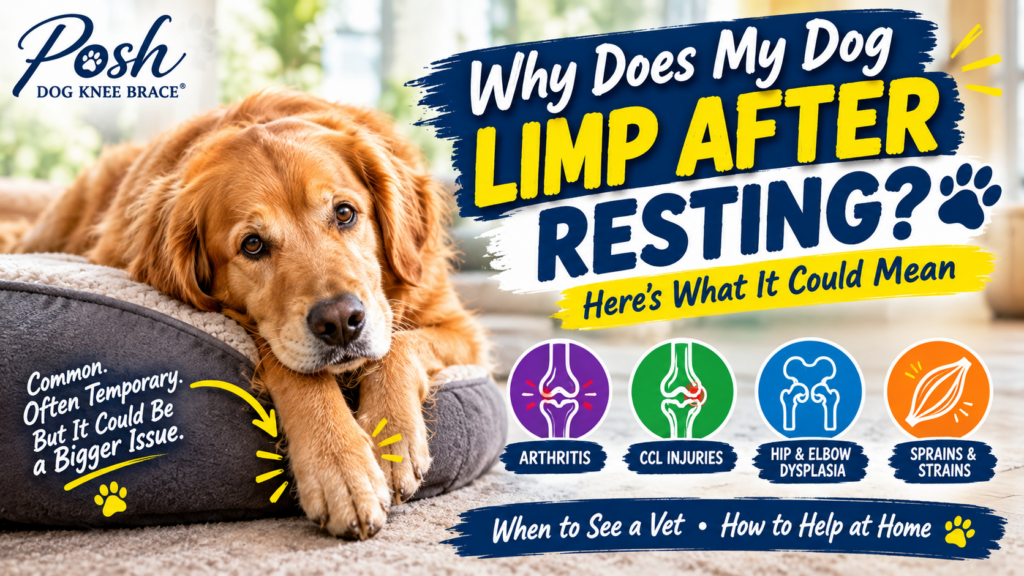
When a dog rests, their joints cool down, and inflammatory fluids can pool in areas of injury or wear. Once they stand up, those first few steps stretch tight tissues and force stiff joints to move, causing temporary pain.
Here are the most common reasons behind this behavior:
1. Canine Osteoarthritis
Just like humans, dogs get arthritis as they age. Osteoarthritis is the gradual breakdown of protective cartilage inside the joints. When a dog is active, joint fluid lubricates the area. During rest, that lubrication decreases, causing a painful, grinding sensation during their first few steps until the joint “warms up” again.
2. Cruciate Ligament Injuries (CCL Tears)
A dog’s Cranial Cruciate Ligament (CCL) is equivalent to the human ACL in the knee. If a dog has a partial or full CCL tear, the knee joint becomes highly unstable. After a long period of lying down, the sudden weight placed on that unstable knee causes your dog to limp after resting or hold the back leg completely off the ground.
3. Hip or Elbow Dysplasia
This is a genetic condition where the ball-and-socket joints of the hip or elbow do not fit together perfectly. Over time, this misalignment causes friction, severe inflammation, and early-onset arthritis, making getting up from a resting position incredibly uncomfortable.
4. Soft Tissue Sprains and Strains Did your dog zoom around the yard a little too hard yesterday? They might have minor muscle soreness or a mild ligament sprain. Just like an athlete waking up sore the day after a grueling workout, a dog’s muscles tighten up during sleep, leading to temporary lameness when they first wake up.
A minor muscle strain might resolve on its own with a few days of rest, but if your dog continues to limp after resting, chronic conditions like arthritis require professional management. You should schedule a veterinary visit if you notice any of the following:
While you should always consult your vet before starting any treatment plan, there are several adjustments you can make at home to ease your dog’s discomfort:
Final Thoughts: Seeing your dog limp after resting is a clear signal that their body is asking for a little extra care. By identifying the root cause with your veterinarian, you can build a management plan that keeps your pup happy, comfortable, and active for years to come. For more information about our brace you can contact us via our contact form or check out of Facebook for customer reviews.