Post Published on October 12, 2026
If your dog freezes when wearing their brace for the first time, don’t panic. You’ve spent weeks researching, took precise measurements, and finally received your custom Posh Dog Knee Brace. You carefully put it on your dog, stand back to admire the fit, and… your dog turns into a statue. They completely freeze, refuse to move a muscle, or look at you with total betrayal. If they do take a step, they might lift the leg up like a robot or try to walk backward.
First, take a deep breath: This “statue behavior” is completely normal, incredibly common, and does not mean the brace hurts.
To a dog, a custom rigid brace feels like a brand-new sensory experience. They don’t immediately realize it’s there to support them; they just know something is hugging their leg, and their natural instinct is to freeze until they figure it out. Here is how to break the spell and guide your pup through their first fitting.
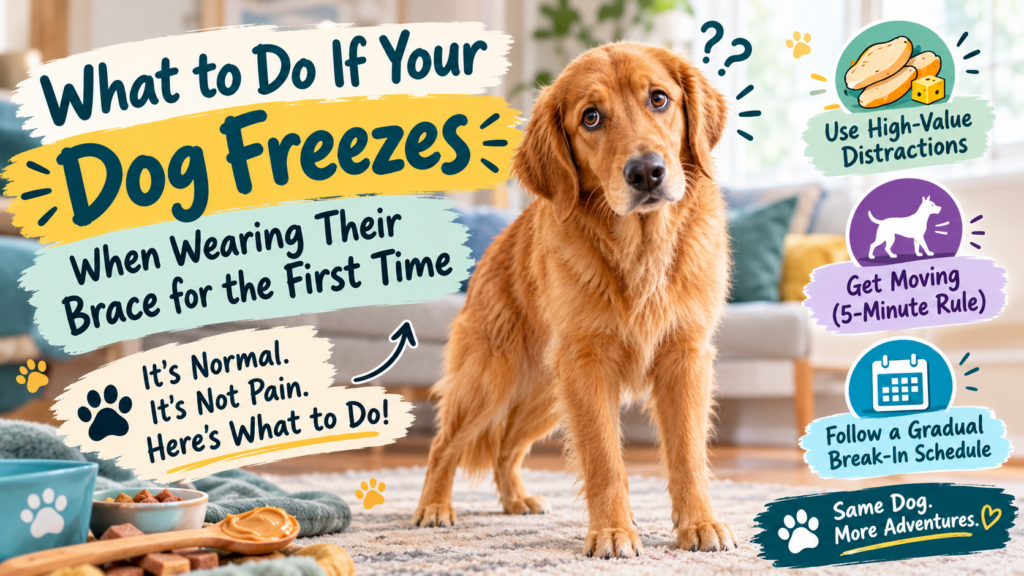
When a dog first feels the secure compression of an orthopedic brace, their nervous system misinterprets the sensation. Because the brace places gentle pressure on the skin and muscles, your dog’s brain thinks something is trapping or holding their leg.
Freezing or lifting the leg up exceptionally high is just their way of testing the boundaries. It is almost never a sign of physical pain. In fact, once they take just a few steps, they will quickly realize that the painful “slipping” sensation inside their knee is gone.
If your dog freezes when wearing their brace, do not try to physically push or pull them forward. This will only increase their anxiety and make them resist the brace. Instead, you need to trick their brain into focusing on something much better than their leg.
The faster you can get your dog to stop thinking about the brace and start moving, the faster their brain will adapt to the new sensory input.
Do not expect your dog to wear their custom brace all day on day one. Bracing requires a patient, incremental adjustment period to allow their skin and muscles to adapt to the rigid structure.
The Bottom Line: Don’t let a rocky first five minutes discourage you — it’s completely normal when your dog freezes when wearing their brace for the first time. Your dog just needs a little time, a lot of encouragement, and some premium treats to realize that their new custom brace is actually their ticket back to a pain-free, active life. Next read: How to Stop Your Dog’s High-Impact Leaps During CCL Recovery
Want to learn more about the Posh Dog Knee Brace? If your dog is dealing with a CCL or ACL injury, we’d love to help — reach out through our contact form at https://poshdogkneebrace.com/contact/ and our team will get back to you. You can also find us on Facebook at https://www.facebook.com/poshdogkneebrace to connect with our community of dog parents.
Articles from the Posh Dog Knee Brace team — a group effort with our licensed veterinary technicians and brace specialists, sharing 15+ years of experience helping dogs recover from CCL/ACL injuries and mobility challenges.