Post Published on August 3, 2026
As summer comes to an end, families begin preparing for a new school year. While parents are busy buying school supplies and getting back into a routine, there’s one family member who often gets overlooked—your dog.
For many dogs, summer is the happiest time of the year. The kids are home, there’s constant activity, more walks, backyard playtime, and plenty of attention. Then suddenly, the house becomes quiet. The kids head back to school, parents return to work, and your dog may find themselves spending several hours alone for the first time in months.
This sudden change in routine can be confusing and stressful for many dogs. Fortunately, with a little preparation, you can help your furry family member transition smoothly into the school-year schedule.
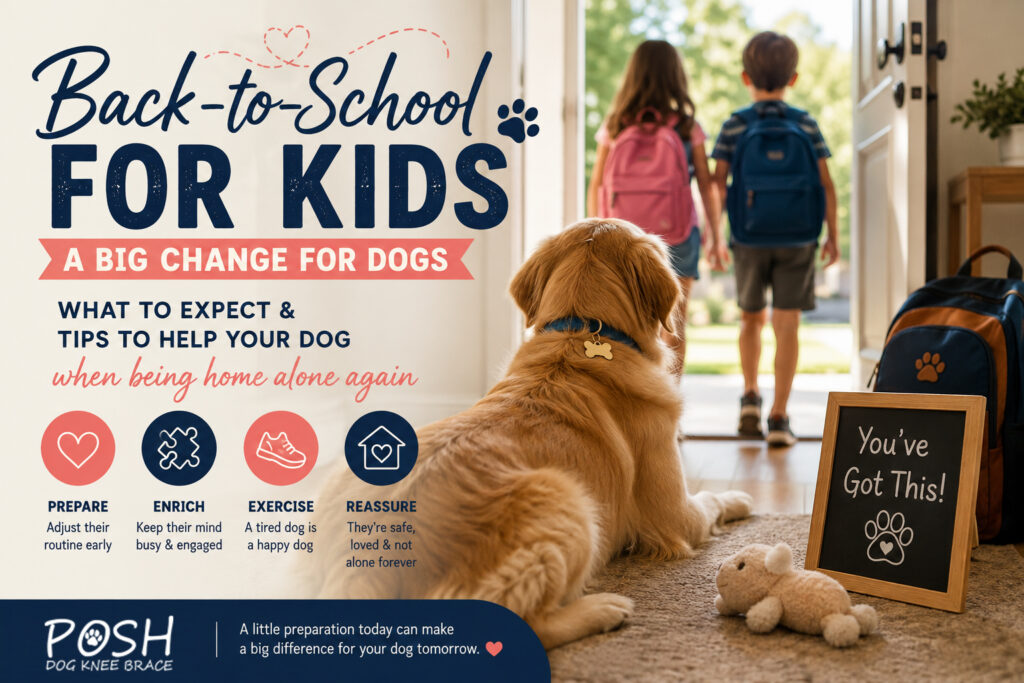
Dogs thrive on routine. During summer break, they become accustomed to:
When those daily interactions suddenly disappear, some dogs may experience:
Not every dog will struggle, but even confident dogs notice when their favorite people are suddenly gone for several hours each day.
Rather than waiting until the first day of school, begin easing your dog into the new routine about one to two weeks beforehand.
Practice leaving the house for gradually longer periods. This helps your dog understand that being alone is temporary and that you’ll always return.
You can also begin waking up earlier, feeding meals at school-year times, and taking walks according to the upcoming schedule.
Small changes made ahead of time often prevent major stress later.
Many owners accidentally increase anxiety by making a big event out of leaving.
Instead of emotional goodbyes:
The goal is to make departures feel completely normal.
Mental stimulation can prevent boredom while your dog is home alone.
Great enrichment ideas include:
Keeping your dog’s brain active can help reduce stress and destructive behavior.
A tired dog is generally a calmer dog.
Before school or work:
Even 20 to 30 minutes of activity can help your dog relax during the day.
Some dogs feel more comfortable with familiar sounds.
Consider leaving:
This can help mask outdoor noises and make the home feel less empty.
Some dogs develop true separation anxiety rather than simply missing their family.
Signs may include:
If these behaviors become severe, consult your veterinarian or a certified dog behavior professional as early intervention often leads to better outcomes.
If your dog is healing from a torn ACL (CCL), TPLO surgery, arthritis, or another orthopedic condition, the return to school can present additional challenges.
Without family members around to monitor activity, some dogs may become overly excited when everyone returns home, increasing the risk of re-injury.
Maintain any rehabilitation plan recommended by your veterinarian, continue prescribed exercise restrictions, and consider supportive mobility devices if appropriate. Dogs using a custom knee brace should continue wearing it according to their veterinarian’s or rehabilitation specialist’s recommendations to help support healing and stability during activity.
When the kids return from school, spend a few minutes reconnecting with your dog.
Try:
This helps reinforce that good things happen when everyone comes home.
Just like children need time to settle into a new school routine, dogs need time to adapt to changes in their daily lives.
With patience, consistency, and a little planning, most dogs adjust within a few weeks and become comfortable with the quieter daytime schedule again.
Your dog’s happiness depends on more than just exercise—it depends on routine, enrichment, and knowing their family always comes back home.
As you prepare backpacks, lunches, and school schedules, don’t forget to prepare your four-legged family member, too. A little extra attention now can make the back-to-school season easier for everyone—especially your loyal best friend.
As your family settles into a new back-to-school routine, don’t forget to make sure your dog has the support they need, too—especially if they’re recovering from a CCL injury, arthritis, or another mobility issue. A custom Posh Dog Knee Brace can help provide stability and confidence so your dog can continue enjoying daily walks, playtime, and life with your family. If you’d like to learn more about whether a custom brace is right for your dog, visit our Contact Us page or connect with us on Facebook. Our team is always happy to answer your questions and help you find the best solution for your four-legged family member.
Articles from the Posh Dog Knee Brace team — a group effort with our licensed veterinary technicians and brace specialists, sharing 15+ years of experience helping dogs recover from CCL/ACL injuries and mobility challenges.