Post Published on September 8, 2026
Dogs may not be able to tell us how they feel with words, but they communicate constantly through their body language, facial expressions, and behavior. Learning to recognize these signals can help you understand your dog better and strengthen the special bond you share.
So, how do you know when your dog is truly happy?
While every dog has their own personality, there are several common signs of happiness in dogs that can help you recognize when your furry friend is feeling comfortable, content, and loved.
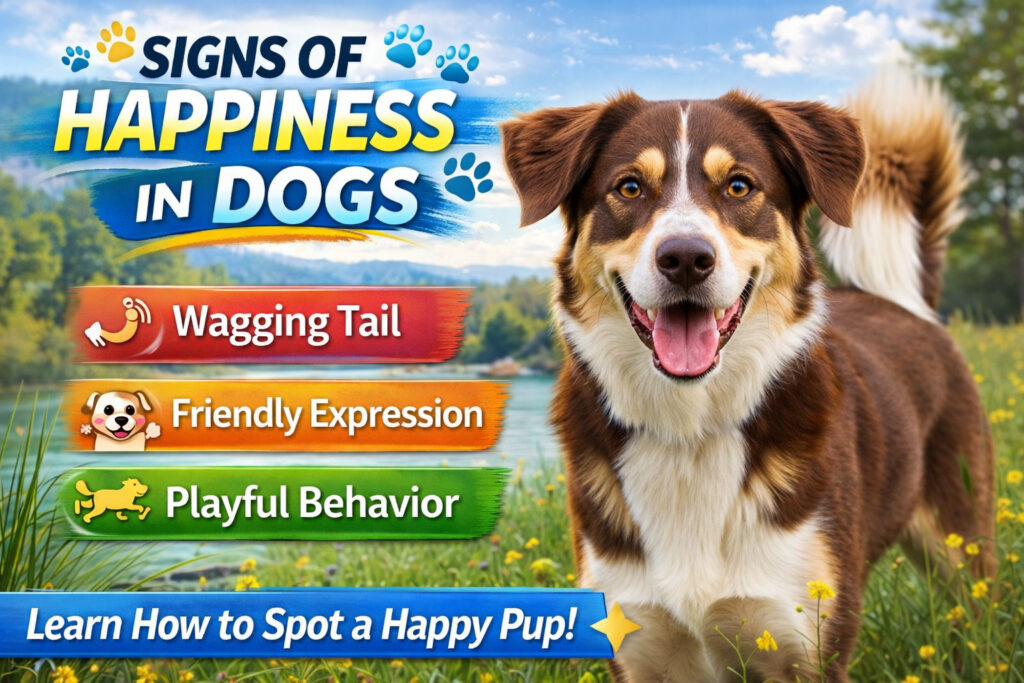
A wagging tail is one of the most recognizable signs of a happy dog—but context matters.
A loose, relaxed tail wag accompanied by a relaxed body often indicates that your dog is comfortable and happy. You may even see their entire back end wiggling with excitement when they greet you!
However, not every tail wag means happiness. A stiff, rapid, or high-held tail can indicate excitement, anxiety, alertness, or overstimulation.
Look at your dog’s whole body, rather than relying on their tail alone.
A happy dog typically looks comfortable in their body.
You may notice your dog standing, sitting, or lying down with relaxed muscles and an easy posture. Their weight may be evenly distributed, and they won’t appear tense or stiff.
A dog who is comfortable enough to stretch out, roll onto their side, or take a deep, relaxing nap is often showing that they feel safe in their environment.
Your dog’s eyes can tell you a lot about how they’re feeling.
Happy and relaxed dogs often have bright, alert eyes with a soft gaze. Their eyelids may appear slightly relaxed rather than wide and tense.
When your dog looks at you with soft, relaxed eyes, especially while their body is loose and their tail is gently wagging, it can be a wonderful sign that they feel comfortable and connected to you.
Playfulness is one of the easiest signs of a happy dog to recognize.
A happy dog may:
The classic play bow, where your dog’s front legs stretch forward while their rear end stays up, is a common invitation to play.
When your dog wants to interact and have fun, they’re often showing that they feel good and secure.
Your dog’s ears can provide another clue about their emotional state.
When a dog is happy and comfortable, their ears are generally relaxed and positioned naturally for their breed. They may be slightly forward when they’re interested in something.
It’s important to remember that ear position varies significantly between breeds. A German Shepherd and a Basset Hound won’t necessarily display happiness with their ears in the same way.
That’s why it’s best to consider ear position alongside the rest of your dog’s body language.
When your dog rolls onto their back and exposes their belly, it can be a sign that they feel comfortable and trust you.
Some dogs love having their belly rubbed, while others simply enjoy lying on their backs because it feels comfortable.
However, don’t automatically assume every belly-up position means, “Rub my belly!” A dog may also roll over as a submissive or appeasing behavior.
Look for other signs of relaxation, such as a loose body, soft eyes, and a relaxed mouth.
Dogs have plenty of ways to “talk” without barking.
Some dogs make adorable little grunts, sighs, groans, or soft vocalizations when they’re comfortable and content. You may hear a big sigh when your dog settles down beside you after a long day.
Of course, vocalizations can mean different things depending on the situation, so consider what else your dog is doing at the same time.
A dog who is excited about mealtime may show their happiness through their appetite.
Running to their food bowl, eagerly waiting for dinner, or happily accepting treats can all be normal signs of enthusiasm.
However, appetite alone isn’t a reliable measure of happiness. Changes in eating habits can sometimes indicate stress, illness, pain, or other health concerns.
If your dog’s appetite suddenly changes, especially when accompanied by other behavioral changes, it’s a good idea to consult your veterinarian.
Does your dog follow you from room to room?
For many dogs, this is simply their way of staying close to the person they love.
A happy, bonded dog may want to be wherever you are—whether you’re cooking dinner, watching television, working around the house, or simply relaxing.
Some dogs are naturally more independent, while others are your constant four-legged shadow. Both can be perfectly normal.
A happy dog’s mouth often looks soft and relaxed.
You may see their mouth slightly open with their tongue resting naturally. Their facial muscles will generally appear loose rather than tight or tense.
A relaxed mouth combined with soft eyes, a loose body, and a gently wagging tail can be a strong indication that your dog is comfortable and content.
A dog’s emotional well-being is closely connected to their physical comfort.
Dogs who are experiencing pain or mobility problems may become less playful, reluctant to exercise, or less interested in activities they normally enjoy. Knee and joint problems, including cranial cruciate ligament (CCL) injuries, can affect how comfortable a dog feels during everyday activities.
That’s why paying attention to changes in your dog’s movement and behavior is so important.
A dog who is comfortable, supported, and able to participate in the activities they enjoy is more likely to stay active and engaged with their family.
Whether it’s a favorite toy, a walk around the neighborhood, a game of fetch, a belly rub, or simply curling up beside you on the couch, happiness for dogs often comes down to feeling safe, loved, comfortable, and connected.
Your dog may not be able to say, “I’m happy,” but they’re probably telling you in a dozen different ways every day.
All you have to do is learn how to listen.
Because a happy dog isn’t just a wagging tail—it’s a relaxed body, bright eyes, playful spirit, and the unmistakable joy of being with the people they love.
If your dog is dealing with a knee injury, mobility challenges, or you simply want to learn more about how a Posh Dog Knee Brace may help support your dog’s active lifestyle, we’re here to help! Our team is happy to answer your questions and help you determine whether a Posh brace may be a good option for your dog. Contact us through our Contact page to speak with our team, or follow along on Facebook for helpful tips, educational information, customer stories, and updates from Posh Dog Knee Brace. We’re here to help you keep your best friend comfortable, supported, and enjoying life on all four paws!
Articles from the Posh Dog Knee Brace team — a group effort with our licensed veterinary technicians and brace specialists, sharing 15+ years of experience helping dogs recover from CCL/ACL injuries and mobility challenges.