Posh Dog Knee Brace

Help Your Dog Recover Without Surgery

Custom braces for injury recovery, stability, and comfort

Page 2 of 6

Best Dog Knee Brace for Torn ACL (2026 Guide)

The best dog knee brace for a torn ACL is typically a custom-fit brace, because it provides superior joint stability, better comfort, and more effective long-term support than off-the-shelf options. For many dogs, a custom brace can be a reliable, non-surgical solution that reduces pain and improves mobility during recovery.
Best Dog Knee Brace for Torn ACL 2026 Guide

Understanding ACL (CCL) Injuries in Dogs

A torn ACL (also called a CCL injury in dogs) is one of the most common causes of rear leg limping. It can happen suddenly or develop over time, and without proper support, it often leads to pain, instability, and reduced mobility.

Many pet owners are now exploring non-surgical options, especially when surgery is too expensive, risky, or not ideal for their dogโ€™s age or health.

๐Ÿ” What to Look For in the Best Dog ACL Brace

When choosing the best dog knee brace for a torn ACL, these factors matter most:

โœ… Custom Fit vs Off-the-Shelf

  • Custom braces are molded specifically to your dogโ€™s leg
  • Off-the-shelf braces come in standard sizes and may not fit perfectly

๐Ÿ‘‰ A better fit = better stability and faster recovery support


โœ… Stability and Joint Support

The brace should:

  • Prevent excessive movement
  • Support the knee joint during walking
  • Help reduce strain on the injured ligament

โœ… Comfort and Adjustability

Look for:

  • Soft padding
  • Adjustable straps
  • Lightweight materials

Your dog should be able to wear the brace daily without discomfort.


โœ… Vet Approval or Clinical Backing

High-quality braces are often:

  • Recommended by veterinarians
  • Designed with biomechanics in mind

โœ… Cost vs Long-Term Value

While custom braces cost more upfront, they often:

  • Last longer
  • Work more effectively
  • Reduce the need for expensive surgery
  • surgery

๐Ÿ† Top Dog Knee Brace Options (Comparison)

๐Ÿฅ‡ 1. Custom Dog Knee Braces (Best Overall)

Best for: Moderate to severe ACL tears, long-term use
Price Range: Mid to high

Pros:

  • Tailored specifically to your dog
  • Maximum joint stability
  • Better recovery outcomes
  • Long-lasting durability

Cons:

  • Higher upfront cost
  • Requires measurements or fitting

๐Ÿ‘‰ Many pet owners choose options like Posh Dog Knee Brace as an affordable custom solution designed to support mobility without surgery.


๐Ÿ’ฒ 2. Off-the-Shelf Dog Knee Braces (Budget Option)

Best for: Mild injuries, short-term support
Price Range: Low

Pros:

  • Lower cost
  • Quick to purchase
  • Easy to use

Cons:

  • Less precise fit
  • Reduced stability
  • May shift or slip during movement

๐Ÿ’ก Why Many Owners Choose a Custom Dog Knee Brace

Custom dog knee braces are designed specifically for your dogโ€™s leg structure, which makes them significantly more effective for moderate to severe ACL injuries.

They help:

  • Stabilize the joint
  • Reduce pain during movement
  • Improve confidence when walking
  • Support recovery without invasive procedures

For many families, this makes a custom brace one of the best alternatives to ACL surgery.


๐Ÿ”— When to Consider a Brace Instead of Surgery

A dog knee brace may be the better option if:

  • Your dog is older
  • Surgery is too expensive
  • Your dog has health risks
  • The injury is partial or manageable

๐Ÿถ Final Thoughts

Choosing the best dog knee brace for a torn ACL comes down to fit, support, and long-term effectiveness. While off-the-shelf options may work for mild cases, a custom brace offers the highest level of stability and comfortโ€”making it the preferred choice for many dog owners looking to avoid surgery.

For more information about our Posh Brace you can contact us via our contact form or visit us on Facebook.

โ“ Frequently Asked Questions (FAQ)

How long does a dog need to wear a knee brace?

Most dogs wear a knee brace for several weeks to a few months, depending on the severity of the injury and how well they respond to treatment.

Can a dog recover from an ACL tear without surgery?

Yes, many dogs can recover without surgery using a combination of rest, weight management, and a high-quality knee brace that stabilizes the joint.

Are custom dog knee braces worth it?

Yes, custom braces are often worth it because they provide a better fit, improved support, and more reliable long-term results compared to generic options.

Do dog knee braces really help with pain?

Yes, by stabilizing the knee joint, braces reduce strain on the ligament and surrounding tissue, which helps decrease pain and improve mobility.


Can Zoomies Cause an ACL Tear in Dogs? What Every Owner Should Know

If youโ€™ve ever watched your dog suddenly bolt across the yard, spin in wild circles, and ricochet off the couch like a furry rocket โ€” youโ€™ve witnessed the legendary zoomies. Officially known as Frenetic Random Activity Periods (FRAPs), zoomies are completely normal and usually adorable.

But hereโ€™s the question many dog parents quietly worry about:

Can zoomies actually cause an ACL tear in dogs?

Letโ€™s break down what really happens during those high-speed bursts โ€” and what every owner should know to protect their pupโ€™s knees.

First, What Is an ACL Tear in Dogs?

In dogs, the ligament we commonly call the โ€œACLโ€ is technically known as the cranial cruciate ligament (CCL). It stabilizes the knee joint and prevents the shin bone from sliding forward.

When this ligament tears or ruptures, it causes:

  • Sudden limping
  • Difficulty bearing weight
  • Knee swelling
  • Trouble getting up or jumping
  • Sitting with one leg kicked out to the side

CCL tears are one of the most common orthopedic injuries in dogs.

Soโ€ฆ Can Zoomies Actually Cause a Tear?

The short answer: Zoomies alone usually donโ€™t cause a healthy ligament to tear.

However, zoomies can be the moment when a weakened or degenerating ligament finally gives out.

Hereโ€™s why:

1. Most CCL Tears Are Degenerative

Unlike human ACL injuries (which are often sudden sports injuries), dogs typically experience slow ligament degeneration over time. The ligament gradually weakens due to:

  • Genetics
  • Conformation (leg structure)
  • Weight
  • Chronic inflammation
  • Breed predisposition

By the time the ligament tears, it was often already compromised.

2. Zoomies Create Sudden Torque

During zoomies, dogs:

  • Accelerate quickly
  • Make sharp turns
  • Pivot hard on planted legs
  • Jump and twist mid-air

That sudden torque on a weakened knee can be the final straw. Itโ€™s not that zoomies are โ€œdangerousโ€ โ€” itโ€™s that they can expose an underlying issue.

Breeds at Higher Risk

Some breeds are more prone to CCL injuries, including:

  • Labrador Retrievers
  • Golden Retrievers
  • Rottweilers
  • Boxers
  • Pit Bulls
  • Newfoundlands

If you have one of these breeds, itโ€™s especially important to monitor knee health.

Signs Your Dogโ€™s Knee May Already Be Weak

Before a full tear, you might notice:

  • Occasional โ€œskippingโ€ or limping that improves
  • Stiffness after rest
  • Hesitation to jump
  • Slower sit-to-stand transitions
  • Mild swelling around the knee

These subtle signs often get dismissed โ€” until a zoomie episode turns into a full rupture.

Does This Mean You Should Stop Zoomies?

Absolutely not.

Zoomies are:

  • A natural emotional release
  • A sign of happiness
  • A normal part of dog behavior

But there are smart ways to reduce injury risk.

How to Reduce the Risk of CCL Tears

๐Ÿพ 1. Maintain Healthy Weight

Excess weight significantly increases strain on the knee joint.

๐Ÿพ 2. Improve Traction

Slippery floors are a major risk factor. Consider:

  • Area rugs
  • Non-slip runners
  • Paw grip products

๐Ÿพ 3. Strengthen Supporting Muscles

Strong thigh muscles help stabilize the knee and reduce ligament stress.

๐Ÿพ 4. Manage High-Impact Surfaces

Hard, uneven terrain increases torque. Grass is generally safer than tile or polished concrete.

๐Ÿพ 5. Provide Preventative Support

If your dog has shown early instability, structured joint support and stabilization can help protect the knee during activity.

The Other Knee Is at Risk Too

Hereโ€™s something many owners donโ€™t realize:

When one CCL tears, the opposite knee has a high likelihood of tearing within 1โ€“2 years.

Why?

  • Compensatory weight shifting
  • Underlying genetic or structural factors
  • Similar degeneration in the second ligament

Protecting the healthy leg becomes critical after the first injury.

When to Call the Vet

Seek veterinary evaluation immediately if:

  • Your dog wonโ€™t bear weight
  • The knee appears swollen
  • Pain is obvious
  • Limping lasts more than 24โ€“48 hours

Early intervention can prevent further joint damage and arthritis progression.

The Bottom Line

Zoomies donโ€™t create ACL (CCL) injuries out of nowhere.

But they can be the moment when a weakened ligament finally tears.

Instead of fearing zoomies, focus on:

  • Joint health
  • Muscle strength
  • Proper weight
  • Stable footing
  • Early signs of instability

That way, your dog can keep racing in joyful circles โ€” safely.

If your dog has already experienced a CCL injury or youโ€™re seeing early signs of instability, proactive knee support can make a significant difference in mobility and long-term joint protection.

Because every dog deserves to zoom โ€” without the setback. ๐Ÿพ For more information about our brace you can contact us via our contact form or visit us on Facebook.


Are You Accidentally Causing Knee Strain? Leash Handling Mistakes That Harm Dogs

When we think about protecting our dogsโ€™ knees, we usually picture slippery floors, rough play, or high-impact activities like jumping in and out of trucks. But what if one of the biggest contributors to knee strain is something you use every single day?

Your leash.

Leash walking seems simple. Clip it on. Head outside. Enjoy the stroll. But subtle leash handling mistakes can place repetitive strain on your dogโ€™s kneesโ€”especially the stifle joint (the equivalent of the human knee). Over time, these small, daily forces can contribute to inflammation, soft tissue strain, and even ligament injuries.

If youโ€™re committed to protecting your dogโ€™s mobility and long-term joint health, this guide will help you spot and fix common leash mistakes that could be harming your dog without you even realizing it.
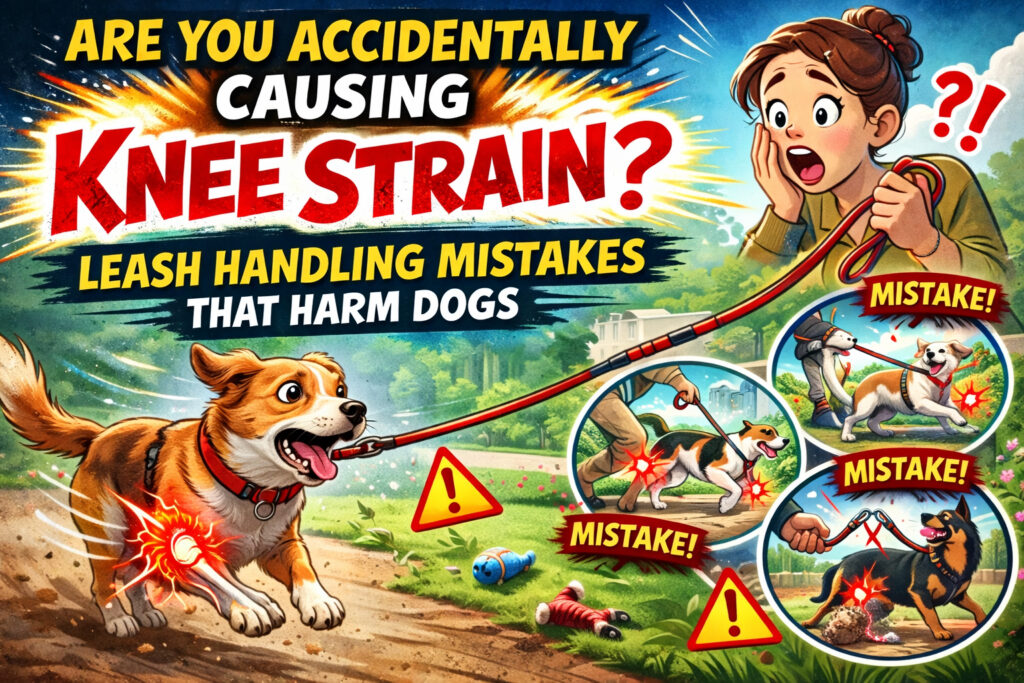
Are You Accidentally Causing Knee Strain Leash Handling Mistakes That Harm Dogs

Understanding How the Canine Knee Works

Before we talk about leash handling, it helps to understand whatโ€™s happening inside your dogโ€™s leg.

The canine kneeโ€”called the stifle jointโ€”relies heavily on soft tissues for stability, including the cranial cruciate ligament (CCL). Unlike humans, dogs carry about 60% of their body weight on their front limbs, but their rear legs generate powerful forward propulsion. When a leash interferes with natural movement patterns, the knees often absorb the consequences.

Sudden stops, lateral twisting, forced changes in direction, and constant pulling all create unnatural forces through the stifle joint. Over time, these repeated micro-stresses can add up.

Now letโ€™s look at where leash handling plays a role.
Are You Accidentally Causing Knee Strain Leash Handling Mistakes That Harm Dogs

Mistake #1: Constant Tension on the Leash

Even if your dog isnโ€™t actively pulling, a constantly taut leash subtly alters their gait. Instead of moving naturally, your dog braces against forward pressure. This shifts weight distribution and increases joint loadingโ€”particularly in the knees and hips.

Why it matters:

  • Dogs may shorten their stride.
  • Rear legs may rotate slightly inward or outward.
  • The knee absorbs more shock during each step.

Over months or years, that repeated strain can contribute to chronic inflammation or ligament fatigue.

Fix it: Practice loose-leash walking where the leash forms a relaxed โ€œJโ€ shape. The goal isnโ€™t rigidityโ€”itโ€™s fluid movement.

Mistake #2: Jerking or โ€œCorrectingโ€ with Sudden Snaps

Quick leash corrections create sharp, abrupt force that travels through your dogโ€™s body.

When you jerk a leash, your dog instinctively plants their feet to resist. That sudden bracing action often causes twisting forces through the knees. If this happens repeatedly, especially in high-energy dogs, it can increase wear on stabilizing ligaments.

Even if youโ€™re not intentionally correcting, accidentally snapping the leash when distracted can have the same effect.

Fix it:

  • Use smooth, consistent guidance instead of abrupt corrections.
  • Anticipate distractions before your dog lunges.
  • Train with direction changes rather than force.

Your dogโ€™s joints will thank you.

Mistake #3: Letting Your Dog Lunge Repeatedly

Excited lunging is one of the biggest contributors to knee strain.

When your dog lunges forward:

  1. The front legs plant abruptly.
  2. The body momentum continues forward.
  3. The rear legs scramble to stabilize.
  4. The knees absorb torque.

If your dog lunges toward squirrels, other dogs, delivery trucks, or people regularly, those explosive starts and stops can create significant joint stress.

Over time, that repeated force increases the risk of:

  • Soft tissue strain
  • Microtears in ligaments
  • Inflammation in the stifle joint

Fix it:

  • Work on impulse control training.
  • Increase mental stimulation before walks to reduce excess energy.
  • Use controlled direction changes rather than bracing against your dogโ€™s pull.

Mistake #4: Using the Wrong Equipment for Your Dogโ€™s Body Type

Certain equipment can amplify joint stress instead of reducing itโ€”especially if it changes how your dog distributes weight.

For example:

  • Front-clip harnesses may cause unnatural lateral twisting if not fitted properly.
  • Retractable leashes can encourage sudden sprints followed by abrupt stops.
  • Very short leashes may force your dog into an unnatural gait.

If your dog already has mild joint instability, poor equipment choices can worsen compensation patterns.

Fix it:

  • Choose properly fitted equipment that supports natural alignment.
  • Avoid gear that encourages sprint-and-stop behavior.
  • Ensure harnesses donโ€™t restrict shoulder or rear limb motion.

When in doubt, observe your dog walking from behindโ€”are their hips swaying excessively? Are their knees rotating inward? Small alignment clues reveal big joint stress.

Mistake #5: Walking on Slippery Surfaces with Tension

Leash tension plus slippery surfaces is a dangerous combination.

If your dog slips slightly while the leash is taut, the stabilizing ligaments in the knee must work overtime to prevent a fall. That micro-instability, especially repeated over time, can increase strain on the CCL.

This is especially important in:

  • Polished concrete sidewalks
  • Wet pavement
  • Tile entryways
  • Boat docks

Fix it:

  • Keep the leash loose on slick surfaces.
  • Slow your pace.
  • Allow your dog to place their feet deliberately.

Controlled steps are safer steps.

Mistake #6: Overpowering Directional Changes

Some owners unconsciously โ€œsteerโ€ their dogs by pulling them sideways.

But lateral pulling creates rotational torque through the stifle joint. Dogs arenโ€™t designed to pivot sharply under external force. Sudden sideways redirection forces the knee to stabilize against unnatural angles.

Better approach:
Instead of pulling sideways, use body positioning. Turn your own body first. Encourage your dog to follow naturally. This reduces joint torque and encourages healthier movement patterns.

Mistake #7: Ignoring Early Signs of Knee Fatigue

Leash-related knee strain rarely appears overnight.

Watch for subtle changes:

  • Slower rising after walks
  • Occasional skipping of a rear leg
  • Mild stiffness after rest
  • Sitting off to one side
  • Reluctance to jump into the car

These may indicate early joint stress or instability.

Addressing leash habits early can prevent more serious injuries later.

The Cumulative Effect of Micro-Strain

Hereโ€™s what many owners donโ€™t realize:

Itโ€™s rarely one big event.

Knee injuries often result from repeated micro-trauma over time. Daily lunging. Constant pulling. Minor slips. Abrupt corrections. Over months, those small forces add up.

This is especially true in:

  • Active breeds
  • Overweight dogs
  • Dogs with mild conformation imbalances
  • Dogs recovering from previous injuries

Smart leash handling becomes part of preventive careโ€”not just obedience training.

Building Knee-Friendly Walking Habits

Hereโ€™s a simple checklist you can use starting today:

โœ” Keep leash slack whenever possible
โœ” Avoid jerking or snapping corrections
โœ” Reduce repetitive lunging
โœ” Choose equipment that promotes natural movement
โœ” Slow down on slippery surfaces
โœ” Use body positioning instead of forceful steering
โœ” Monitor subtle gait changes

These small adjustments dramatically reduce unnecessary joint stress.

When Extra Support Makes Sense

If your dog already shows signs of knee instability, mild CCL strain, or early joint weakness, modifying leash habits may not be enough.

External support during activity can:

  • Reduce excessive joint motion
  • Improve alignment
  • Minimize strain during walks
  • Provide confidence and stability

Especially during rehabilitation or prevention phases, supportive bracing can protect the joint while you improve training and handling habits.

Mobility protection isnโ€™t just about recoveryโ€”itโ€™s about prevention.

Your Daily Walk Should Build Strengthโ€”Not Cause Strain

Walks should:

  • Improve cardiovascular health
  • Build muscle support around the knee
  • Encourage controlled movement
  • Strengthen joint stability

But improper leash handling can quietly undermine all of that.

The good news? Small, intentional changes in how you handle the leash can dramatically reduce strain and protect your dogโ€™s knees long-term.

Final Thoughts

You love your dog. You walk them to keep them healthy. You want them active and happy for years to come.

But even well-meaning habits can unintentionally place stress on sensitive joints.

By becoming aware of leash tension, lunging patterns, abrupt corrections, and equipment choices, you can transform daily walks from a hidden risk into a powerful tool for joint protection.

Protect the knees. Protect the zoomies. Protect the years ahead.

If youโ€™re ever unsure whether your dogโ€™s gait looks balanced or whether they may need additional support during activity, consult with your veterinarian and consider solutions designed specifically for canine knee stability.

Because mobility isnโ€™t just about movementโ€”itโ€™s about freedom. For more information about our Posh brace contact us via our contact page or follow us on Facebook.


A Practical Guide to Dog Leg Wraps: When to Use Them, How They Help, and What to Avoid

When your dog starts limping, licking a sore spot, or showing signs of joint discomfort, your first instinct is to help them feel betterโ€”fast. One tool many pet owners reach for is a leg wrap. Simple in appearance but powerful when used correctly, dog leg wraps can provide support, protection, and relief in a variety of situations.

But not all dog leg wraps are the sameโ€”and using one incorrectly can do more harm than good. If youโ€™re considering wrapping your dogโ€™s leg, hereโ€™s what you need to know before you start.

The Versatile Dog Leg Wrap Support, Comfort, and Healing

What Exactly Is a Dog Leg Wrap?

A dog leg wrap is a flexible bandage or supportive material placed around part of your dogโ€™s limb. Depending on the goal, it may offer light stabilization, gentle compression, or wound protection.

Dog Leg Wraps are commonly made from:

Self-Adhering Bandage (Cohesive Wrap)

These wraps stick to themselves but not to your dogโ€™s fur, which makes them easy to apply and remove. Theyโ€™re often used for light support or to secure padding in place.

Gauze

Breathable and absorbent, gauze is typically used directly over a wound before applying an outer wrap.

Elastic Compression Bandage

These provide firmer compression and support but require careful application. Too much tension can restrict circulation.

Soft Cloth or Padding Wraps

Cloth materials are sometimes used to hold dressings in place or offer mild support without significant compression.

The key is matching the material to the purpose.

When Are Dog Leg Wraps Helpful?

A dog leg wrap isnโ€™t a cure-allโ€”but in the right situation, it can make a meaningful difference.

1. Supporting Minor Injuries

For mild sprains or soft tissue strains, a wrap can offer gentle stability and help reduce excessive motion. This may ease discomfort during short periods of activity or rest.

2. Protecting Wounds

If your dog has a cut, abrasion, or post-surgical incision (as directed by your veterinarian), a wrap can shield the area from dirt and debris while keeping dressings secure.

3. Managing Swelling

Compression can sometimes help limit fluid buildup in cases of mild inflammation. This must be done carefully and monitored closely.

4. Comfort for Chronic Joint Issues

Dogs with arthritis or ongoing joint stiffness may benefit from light support during rest or limited movement. However, long-term joint instability often requires more structured support than a basic wrap can provide.

5. Preventing Licking or Chewing

Some dogs fixate on irritated areas. A properly applied wrap may serve as a temporary barrier while the underlying issue heals.

Different Types of Dog Leg Wraps for Different Goals

Not all leg wraps serve the same function. Choosing the right approach matters.

Support Wraps

These are designed to provide mild stabilization to joints that feel weak or sore. They are typically used short-term and under veterinary guidance.

Wound Protection Wraps

These consist of a sterile dressing placed over the wound, covered by padding, and secured with a cohesive outer layer.

Compression Wraps

Used to reduce swelling, these must be applied with consistent, even pressure. Improper compression can quickly become dangerous. If your dog has a ligament injury, chronic instability, or a history of knee problems, a structured braceโ€”not a simple wrapโ€”may be more appropriate. Wraps are typically temporary solutions rather than long-term support systems.

How to Apply a Dog Leg Wrap Safely

Correct application is critical. A poorly wrapped leg can restrict circulation, increase swelling, or create pressure sores.

Step 1: Speak With Your Veterinarian

Before wrapping an injured leg, confirm the diagnosis. A wrap may be helpful for a mild strainโ€”but not for a fracture, ligament tear, or dislocation.

Step 2: Prepare Your Supplies

Youโ€™ll typically need:

  • Sterile dressing (if covering a wound)
  • Padding or gauze
  • Cohesive wrap or elastic bandage
  • Blunt-tip scissors

Step 3: Clean and Dry the Area

If thereโ€™s a wound, gently clean it as instructed by your veterinarian and apply a sterile dressing.

Step 4: Start Low and Wrap Upward

Begin at the lowest part of the limb and wrap upward with even, overlapping layers (about 50% overlap per turn). Wrapping upward supports circulation.

Step 5: Maintain Gentle, Even Pressure

The wrap should be snugโ€”but not tight. A good rule of thumb: you should be able to comfortably slide two fingers between the wrap and your dogโ€™s leg.

Step 6: Secure Without Over-Tightening

Use the wrapโ€™s self-adhesive property or medical tape. Avoid pulling too tightly at the end.

Step 7: Check the Toes

After wrapping, look at your dogโ€™s toes:

  • Are they warm?
  • Are they pink (not pale or bluish)?
  • Is there swelling above or below the wrap?

If anything looks abnormal, remove the wrap immediately.

Step 8: Monitor Frequently

Check the wrap at least twice daily. Remove and reapply if it becomes wet, dirty, loose, or starts to slip.

Common Mistakes to Avoid

Even experienced dog owners can make wrapping errors. Watch out for these:

  • Wrapping too tightly โ€“ This can cut off circulation and cause serious tissue damage.
  • Leaving wraps on too long โ€“ Skin needs airflow. Long-term wrapping without monitoring can cause sores.
  • Using the wrong material โ€“ Elastic compression bandages require more skill than cohesive wraps.
  • Ignoring increased swelling โ€“ Swelling above or below the wrap is a red flag.
  • Using wraps as a substitute for diagnosis โ€“ A limp without a clear cause should be evaluated.

Wraps are supportive toolsโ€”not standalone treatments.

When to Skip the Dog Leg Wrap and Call the Vet

There are times when wrapping is not appropriate.

Seek veterinary care immediately if your dog has:

  • A suspected fracture or visible deformity
  • Severe pain or inability to bear weight
  • Sudden swelling that worsens quickly
  • Open wounds with heavy bleeding
  • Signs of infection (heat, pus, foul odor, increasing redness)
  • Numb, cold, or blue toes after wrapping

If your dogโ€™s condition doesnโ€™t improve within a day or twoโ€”or worsensโ€”professional evaluation is necessary.

Dog Leg Wraps vs. Structured Bracing: Knowing the Difference

Itโ€™s important to understand that wraps provide temporary, mild support. They are helpful for:

  • Protecting wounds
  • Offering short-term compression
  • Light stabilization

They are not designed to:

  • Replace ligament function
  • Stabilize severe joint instability
  • Provide long-term structural correction

For dogs dealing with significant knee instability, chronic ligament injuries, or recurring joint problems, a more structured support solution may be required. A wrap alone wonโ€™t prevent mechanical instability from progressing.

Final Thoughts

Dog leg wraps can be incredibly useful when used thoughtfully and correctly. They can protect wounds, reduce mild swelling, and provide short-term comfort. However, they must be applied carefully, monitored consistently, and used for the right reasons.

When in doubt, consult your veterinarian before wrapping an injured limb. The right guidance ensures your dog gets reliefโ€”without unintended complications.

Used properly, a simple wrap can support healing and comfort. Used incorrectly, it can delay recovery. The difference lies in understanding when, why, and how to use one.

For more information you can contact us via our contact form or visit us on Facebook.


Canine Knee Anatomy and Common Injuries: Why a Brace Can Be a Lifesaver

Our dogs are built for running, jumping, and exploring the world with boundless energy. Their knees, though seemingly simple, are complex joints that bear a significant amount of stress. Understanding the basic anatomy of your dog’s knee and the common injuries that can occur is crucial for recognizing potential problems and appreciating how supportive measures like a knee brace can play a vital role in their well-being.

Understanding Canine Knee Anatomy and Common Injuries

A Look Inside: Canine Knee Anatomy 101

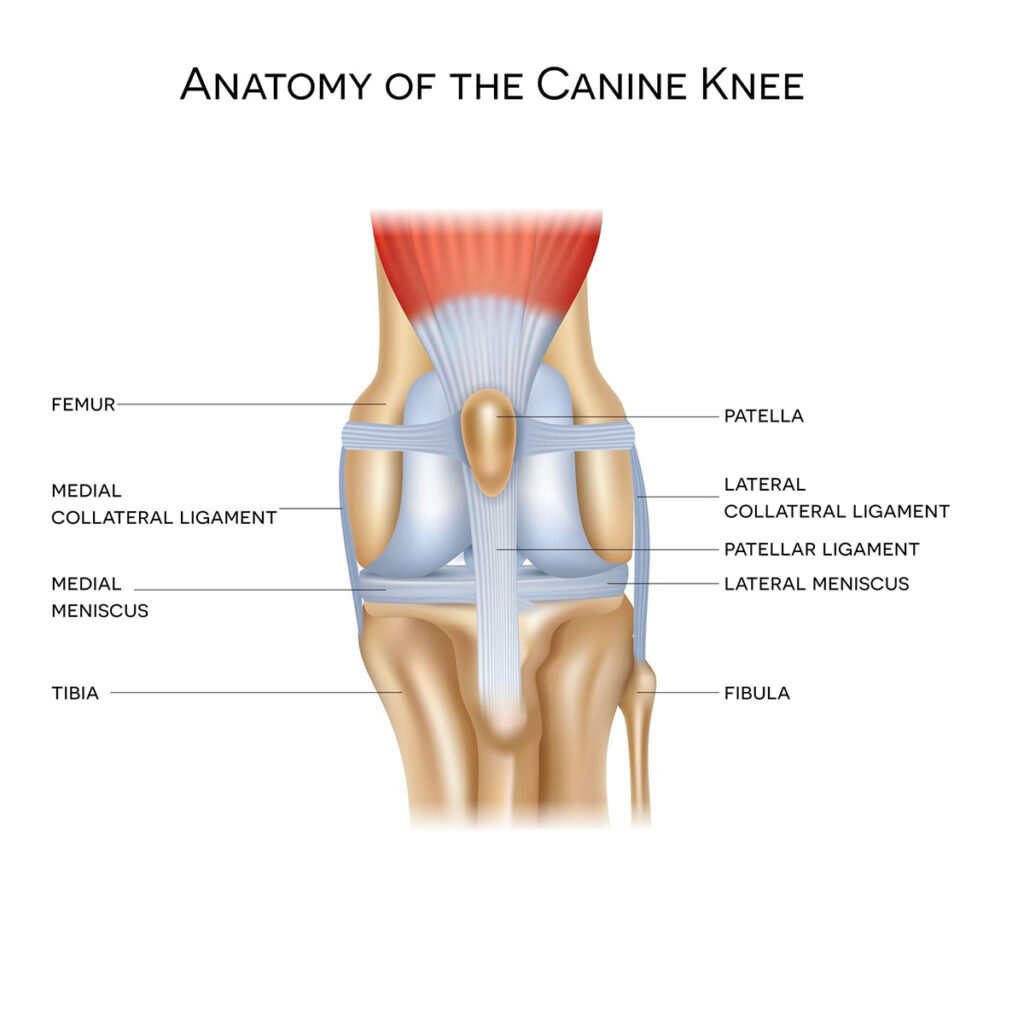
The canine stifle joint, which is analogous to the human knee, is a complex hinge joint responsible for flexion (bending) and extension (straightening) of the hind limb. It’s formed by the articulation of three main bones:

  • Femur: The thigh bone, located above the stifle.
  • Tibia: The larger of the two lower leg bones, located below the stifle.
  • Patella: The kneecap, a small bone that sits in a groove at the front of the femur.

Several crucial soft tissues provide stability and enable smooth movement within the stifle joint:

  • Ligaments: Tough bands of connective tissue that connect bone to bone. Key ligaments in the canine knee include:
    • Cranial Cruciate Ligament (CCL): This ligament, similar to the human Anterior Cruciate Ligament (ACL), prevents the tibia from sliding forward relative to the femur. It’s a primary stabilizer of the knee.
    • Caudal Cruciate Ligament (CaCL): This ligament prevents the tibia from sliding backward relative to the femur.
    • Collateral Ligaments (Medial and Lateral): These ligaments provide side-to-side stability to the knee joint.
  • Menisci: Two C-shaped pieces of cartilage located between the femur and tibia. They act as shock absorbers, distribute weight evenly, and contribute to joint stability.
  • Joint Capsule: A fibrous sac that encloses the joint, containing synovial fluid which lubricates and nourishes the cartilage.
  • Muscles and Tendons: Muscles surrounding the knee, such as the quadriceps and hamstring groups, and their connecting tendons, play a vital role in movement and stability.

Common Canine Knee Injuries: When Support Becomes Essential

Given the complexity and the forces it endures, the canine knee is susceptible to various injuries. Understanding these common issues highlights why external support like a knee brace can be so beneficial:

  • Cranial Cruciate Ligament (CCL) Rupture: This is arguably the most common orthopedic injury in dogs. It often occurs due to a sudden twist or trauma, but can also be the result of chronic degeneration. A torn CCL leads to instability in the knee joint, causing pain, lameness, and eventually osteoarthritis.
  • Patellar Luxation: This condition involves the kneecap (patella) slipping out of its normal groove on the femur. It can range from mild and intermittent to severe and persistent. Patellar luxation can cause pain, clicking or popping in the knee, and difficulty bearing weight.
  • Collateral Ligament Injuries: Tears or sprains of the medial or lateral collateral ligaments can occur due to trauma, causing pain and instability on the sides of the knee joint.
  • Meniscal Tears: Damage to the menisci often occurs in conjunction with a CCL rupture. Torn menisci can cause pain, clicking, and limited range of motion.
  • Osteoarthritis (Degenerative Joint Disease): While not an acute injury, osteoarthritis is a chronic condition that can develop as a result of previous injuries, wear and tear, or genetic predisposition. It involves the breakdown of cartilage in the joint, leading to pain, stiffness, and reduced mobility.

Why a Knee Brace Can Be a Valuable Tool

In the face of these common knee injuries, a canine knee brace can provide crucial support and aid in both conservative management and post-surgical recovery:

  • Stability: For conditions like CCL tears or ligament sprains, a brace can provide external stability to the joint, reducing abnormal movement and strain on the injured structures. This can help manage pain and prevent further damage.
  • Pain Reduction: By limiting excessive motion and providing compression, a brace can help alleviate pain associated with inflammation and instability.
  • Support During Healing: Post-surgery, a brace can protect the healing tissues, support proper alignment, and control the range of motion as the joint recovers.
  • Conservative Management: In some cases of mild injuries or for dogs who are not surgical candidates, a brace can be part of a conservative management plan to provide ongoing support and improve comfort.
  • Improved Mobility: By providing stability and reducing pain, a brace can help dogs maintain a better quality of life and participate in controlled exercise as recommended by their veterinarian.

Important Note: While a knee brace can offer significant benefits, it’s not a substitute for proper veterinary care. Accurate diagnosis and a comprehensive treatment plan, which may include surgery, medication, and physical therapy, are essential. A knee brace should always be used under the guidance of your veterinarian or a veterinary rehabilitation specialist to ensure proper fit and application for your dog’s specific condition.

Understanding the intricate anatomy of your dog’s knee and the common injuries that can affect it highlights the importance of providing appropriate support when needed. A canine knee brace, when used correctly as part of a comprehensive treatment plan, can be a valuable tool in helping your furry friend recover from injury and maintain their mobility and quality of life.

For more information about our brace you can contact us at via our contact page or visit us on Facebook.


Chilly Paws & Protected Joints: Caring for Your Dog During a Cold Front

As the temperature drops and the winter wind picks up, us humans grab our heavy coats and turn up the heat. But for a dog recovering from a CCL injury or wearing a Posh Dog Knee Brace, a cold front means more than just a shiverโ€”it can mean stiff joints and extra sensitivity.

Cold weather can cause muscles to tighten and joints to ache, making it even more important to stay diligent with your dog’s recovery routine. Here is how to keep your pup cozy and their brace-wear effective during a freeze.

Chilly Paws Protected Joints Caring for Your Dog During a Cold Front

1. Warm Up Their Joints Before the Walk

Just like an athlete (or a lead guitarist!) needs to stretch before a set, your dog needs a “pre-game” warm-up when it’s cold. Before heading outside, encourage some light movement indoors.

  • The Routine: Have them walk a few laps around the living room or do some gentle “sit-to-stands” to get the blood flowing to the stifles. This makes the transition to the cold air much easier on their injured leg.

2. Brace Maintenance in Winter Weather

The Posh Dog Knee Brace is built for durability, but cold air and moisture require a little extra attention:

  • Check the Fit: Cold weather can sometimes cause a slight change in your dog’s coat (thickening) or even minor weight fluctuations. Ensure the straps are still snug but comfortable.
  • Keep it Dry: If youโ€™re walking through frost, slush, or winter rain, make sure to wipe down the brace after your walk. Moisture trapped against the skin can cause irritation or “hot spots,” especially when the air is dry.

3. Mind the Traction

Cold fronts often bring damp or icy surfaces. A dog in a knee brace is already working on their balance; a slippery porch or sidewalk is their worst enemy.

  • Pro-Tip: Ensure your “potty break” path is clear of ice. Consider using dog boots with rubber soles if the ground is freezing, as these provide extra grip to prevent the dreaded “slip and splay” that can re-injure a CCL.

4. Optimize Indoor Recovery

When itโ€™s too cold to stay out long, focus on high-quality indoor rest.

  • Orthopedic Support: Make sure your dogโ€™s bed is off the cold floor. An orthopedic bed helps distribute weight evenly and keeps the braced joint warm.
  • Heat Therapy: After an outdoor walk, a warm (not hot!) compress on the affected hip and thigh can help relax the muscles that may have tensed up in the cold.

5. Shorten the Sets

During a cold front, “short and frequent” is better than one long excursion. Keep bathroom breaks quick and focused. The goal is to maintain mobility without letting the joint get chilled and stiff.


The Bottom Line: A cold front doesn’t have to stall your dog’s joint recovery. With the support of their Posh Dog Knee Brace and a little extra warmth from you, theyโ€™ll be ready to “rock” the backyard again in no time.

Stay warm, stay safe, and keep those tails wagging!

For more information contact us via our contact form or visit us on Facebook.


Mastering the Leash: How to Walk Your Dog Safely After Injury or Surgery

The day your veterinarian clears your dog for short, controlled leash walks after a significant injury or surgeryโ€”whether itโ€™s a TPLO, TTA, fracture repair, or recovery from IVDDโ€”feels like a huge victory. Youโ€™re finally moving forward!

But this seemingly simple activity is actually one of the riskiest phases of recovery. An uncontrolled tug, a sudden squirrel sighting, or a slip on the sidewalk can lead to a disastrous setback, potentially undoing weeks or months of careful healing.

Controlled leash walking is not just about letting your dog stretch their legs; it is a vital form of therapeutic exercise, integral to building proper gait, muscle strength, and confidence. This guide will provide you with the essential equipment, techniques, and mindset required to master the post-operative leash walk and ensure a smooth, successful recovery for your best friend.

Mastering the Leash How to Walk Your Dog Safely After Injury or Surgery

Phase 1: Preparation and Essential Equipment

Before you even step out the door, you must ensure you have the right tools to maintain absolute control and support your dogโ€™s body.

1. The Right Leash and Collar/Harness

  • Avoid Retractable Leashes: Retractable leashes are the enemy of recovery. They offer zero control, encourage pulling, and can lead to dangerous sudden lunges. Use a fixed-length, sturdy 4-to-6-foot leash.
  • Harness vs. Collar: For most orthopedic surgeries (especially knee or hip), a well-fitting chest harness is superior to a neck collar. A harness distributes pressure across the chest, preventing any sudden jolt on the neck that could translate down the spine and affect the limb or surgical site. Ensure the harness does not rub the incision.

2. The Must-Have Support Sling

For dogs recovering from hind-leg surgery (like ACL repair) or struggling with severe weakness, a support sling is non-negotiable, particularly in the first 4-8 weeks.

  • Types: This can range from a simple towel folded under their belly to a dedicated rehabilitation sling or dog lift harness with handles.
  • Purpose: The sling acts as a ‘seatbelt.’ It allows you to quickly and easily take some weight off the injured leg, preventing sudden weight-bearing if the dog stumbles, loses balance, or tries to jump. Keep the sling in your hands throughout the entire walk.

3. Foot Protection (When Necessary)

If the weather is icy, snowy, or wet, or if your dog is prone to slipping on wet pavement, use protective, non-slip dog booties. A single slip can cause a major setback, especially if they are hesitant to put weight on the recovering leg.

Phase 2: Mastering the Technique and Environment with a Leash

The goal of a recovery walk is not socialization or exploration; it is controlled, straight-line, deliberate movement.

4. The “Slow and Straight” Mantra

  • Pacing: The pace should be slow and consistent. Rushing encourages a chaotic gait and poor limb use. Slow walking forces the dog to place the foot down properly and use the muscles supporting the joint.
  • No Sharp Turns: Sharp pivots and turns twist the recovering joint, putting dangerous stress on healing tissue. When you need to turn, make a wide, slow, gradual arc. If space is tight, stop, turn the dog in place while supporting them with the sling, and then continue.
  • Straight Line: Stick to straight paths as much as possible. Sidewalks are usually better than meandering park trails.

5. Timing and Duration are Critical

  • Follow Vetโ€™s Orders Exactly: Your vet or certified rehabilitation specialist will prescribe a specific duration (e.g., “5 minutes, 3 times a day”). Do not exceed this time, even if your dog seems eager for more. Fatigue leads to sloppy form, which can cause injury.
  • Quality over Quantity: A perfect 5-minute walk where the dog is using the limb well is infinitely better than a chaotic 20-minute walk where they are pulling and stumbling.
  • Avoid Fatigue: Always end the walk before your dog shows signs of fatigue (e.g., increased limping, lagging, heavy panting).

6. Environmental Control: The Cone of Silence

  • Choose Calm Times: Walk during off-peak hours when you are least likely to encounter other dogs, children, or major distractions. A sudden rush toward another dog could be catastrophic for a recovering limb.
  • Be a Barrier: If a distraction appears, physically block your dog and use high-value treats to gain their focus, moving them away from the stimulus immediately. You must be hyper-vigilant and ready to intervene instantly.
  • Surfaces: Stick to flat, predictable, non-slip surfaces. Avoid stairs, steep hills, sand, gravel, and wet leaves early in the recovery phase. Even surfaces are best.

Phase 3: Focusing on Gait and Weight-Bearing

The ultimate goal of the therapeutic walk is to get your dog to place the recovering limb down correctly and bear weight naturally.

7. Encourage Equal Weight Distribution

  • Observe: Watch your dogโ€™s feet. Are they consistently “toe-touching” (just skimming the ground) or are they actively loading the limb?
  • Tactical Support: If your dog is consistently holding the limb up, gently use the support sling to lift their non-injured leg slightly. This forces the dog to place the recovering leg down to maintain balance. As soon as they place it down, immediately lower the sling. Do this repeatedly and gently until they start trying to use the recovering leg on their own.

8. The Power of Consistency

  • Routine: Maintain a consistent walking schedule. The body responds best to predictable, routine input.
  • Verbal Cues: Use calming, consistent verbal cues like “slow” or “easy” to keep your dog focused on you and the pace.

9. Post-Walk Check-In

After every walk, take a moment to:

  • Check the Incision: Look for any new redness, swelling, heat, or discharge around the surgical site.
  • Check the Paw Pad: Ensure they haven’t rubbed or irritated the paw on the recovering limb due to unusual gait or excessive dragging.
  • Monitor for Pain: Look for signs of increased lameness an hour after the walk or the next morning. If lameness is significantly worse, you need to reduce the walk duration and consult your vet/rehab specialist.

Mastering the post-operative leash walk requires patience, diligence, and a commitment to keeping your dog’s safety as the absolute priority. By controlling the environment, using the right support tools, and focusing on a slow, straight gait, you are actively participating in your dogโ€™s healing, ensuring they not only recover but thrive. For more information about our brace contact us via our contact form or visit us on Facebook.


Hydrotherapy and Dogs: How Water Workouts Can Speed Up Joint Healing

As a dedicated dog owner, witnessing your beloved companion struggle with mobilityโ€”whether from a recent injury, surgery, or chronic conditions like arthritisโ€”can be heartbreaking. While rest and medication are often the first lines of defense, a powerful, gentle, and highly effective tool is rapidly gaining popularity in veterinary medicine: hydrotherapy.

It might sound like a spa treatment, but hydrotherapy is a rigorous, controlled form of exercise performed in water. It’s often prescribed for post-operative recovery, managing chronic joint pain, and improving overall fitness, all while minimizing stress on vulnerable joints.

Here is why hydrotherapy is a game-changer for joint healing and mobility in dogs.

Hydrotherapy and Dogs How Water Workouts Can Speed Up Joint Healing

Why Water is the Ultimate Recovery Tool

The secret to hydrotherapy’s effectiveness lies in the unique properties of water: buoyancy, resistance, and warmth.

1. Buoyancy Reduces Impact ๐ŸŒŠ

The most significant benefit of water is buoyancy. When a dog is submerged, the water supports a significant portion of their body weight.

  • The Science: This reduction in gravity allows dogs to move their limbs through a full range of motion without the painful, jarring impact that happens on land. For a dog recovering from ACL/cruciate ligament surgery or struggling with arthritis, this means they can begin rebuilding muscle strength much earlier in the recovery process.

2. Resistance Builds Muscle Safely ๐Ÿ’ช

While buoyancy relieves pressure, water simultaneously provides gentle, consistent resistance in all directions.

  • The Benefit: As the dog walks or swims, they are pushing against the water, which strengthens muscles surrounding the injured joint (like the knee or hip) without overexertion. This builds the crucial muscle support needed to stabilize the joint and prevent future injuries.

3. Warmth Soothes and Relaxes ๐ŸŒก๏ธ

Most canine hydrotherapy takes place in heated water. This warmth is essential for the healing process.

  • The Result: Warm water increases circulation to the muscles, which helps deliver oxygen and nutrients to the injured area. It also soothes aching muscles and reduces joint stiffness, making movement easier and more comfortable for the dog.

Types of Canine Hydrotherapy

There are two primary ways dogs engage in water-based rehabilitation:

Hydrotherapy MethodDescription & Benefits
Underwater TreadmillThe dog walks on a treadmill housed inside a tank of water. This is highly controlled: the water level and speed can be precisely adjusted to target specific gaits and muscle groups. It’s ideal for rebuilding a normal walking pattern post-surgery.
Swimming or Pool WorkThe dog wears a safety vest and swims in a small pool. This is excellent for non-weight-bearing cardiovascular exercise and achieving maximum range of motion. It’s often used for overall fitness and conditioning.

Who Can Benefit Most?

Hydrotherapy is not just for major injuries; it helps dogs across the spectrum of age and health:

  • Post-Surgical Patients: Dogs recovering from TPLO, TTA, patellar luxation, or fracture repairs.
  • Arthritis Management: Senior dogs who need low-impact exercise to maintain mobility and muscle mass.
  • Neurological Conditions: Dogs with conditions like IVDD (intervertebral disc disease) or nerve damage, helping them retrain motor function.
  • Weight Loss: Overweight dogs who need a safe way to burn calories without straining their joints.

๐Ÿ›‘ Finding a Qualified Practitioner

Hydrotherapy should always be overseen by a certified Canine Rehabilitation Professional (CCRP or CCRA) or a veterinary professional specializing in rehab. This ensures that the sessions are customized to your dog’s specific injury and recovery stage, maximizing benefits and avoiding complications.

If your dog is facing a long recovery or struggling with chronic pain, talk to your veterinarian about incorporating hydrotherapy. It could be the gentle yet powerful push your dog needs to get back on their paws and enjoying life!

For more information about our Posh Brace and how hydrotherapy can help please contact us via our contact form or visit us on Facebook.


Creating a Comfortable Environment for a Dog with Knee Issues: Home Modifications and Supportive Care Tips

Seeing your once agile and playful dog struggle with knee issues can be heartbreaking. Whether they’re recovering from an injury like a CCL tear, managing arthritis, or dealing with a chronic condition like patellar luxation, creating a comfortable and supportive home environment is crucial for their well-being and recovery. By making a few thoughtful modifications and implementing supportive care practices, you can significantly improve their comfort, reduce pain, and promote healing.

Creating a Comfortable Environment for a Dog with Knee Issues

Home Modifications for Enhanced Comfort and Safety for your Dog’s Knee:

The goal of home modifications is to minimize stress on your dog’s knees and prevent further injury. Consider these adjustments:

  • Flooring: Slippery surfaces like hardwood, tile, and laminate can be treacherous for dogs with knee problems. They can lead to slips, falls, and increased strain on the joints.
    • Solutions:
      • Rugs and Mats: Place non-slip rugs and mats in high-traffic areas, especially hallways, around their food and water bowls, and near their bed.
      • Runner Rugs: Use long runner rugs in hallways to provide a secure path.
      • Paw Treads/Grip Socks: Consider non-slip paw treads or socks for your dog to improve their grip on smooth surfaces.
      • Toe Grips: Something like Dr. Busbyโ€™s or similar
  • Elevated Food and Water Bowls: Bending down to eat and drink can put unnecessary strain on your dog’s front and hind legs, including their knees.
    • Solutions: Use elevated food and water bowls that allow your dog to eat and drink without having to lower their head significantly. Choose a height that is comfortable for their size.
  • Comfortable Bedding: A supportive and comfortable bed is essential for resting and relieving pressure on sore joints.
    • Solutions:
      • Orthopedic Dog Beds: Invest in a high-quality orthopedic dog bed made with memory foam or other supportive materials. These beds contour to your dog’s body, distributing weight evenly and reducing pressure points.
      • Bolster Beds: Beds with bolsters can provide extra support and a place for your dog to rest their head and neck, promoting better alignment.
      • Ensure Easy Access: Make sure the bed is easily accessible without requiring your dog to jump or climb.
  • Ramps and Stairs: Jumping on and off furniture or navigating stairs can put significant stress on compromised knees.
    • Solutions:
      • Dog Ramps: Provide ramps for easy access to couches, beds, and even in and out of the car. Choose a ramp with a non-slip surface.
      • Dog Stairs: If ramps aren’t feasible, consider pet stairs with wide, shallow steps that are easier for your dog to navigate. Ensure they are stable and have good traction.
      • Block Access: If your dog insists on jumping, temporarily block access to furniture or areas that require jumping.
  • Secure Outdoor Space: Ensure your outdoor space is safe and minimizes the risk of sudden twists or falls.
    • Solutions:
      • Level Ground: Stick to walks on level surfaces and avoid uneven terrain.
      • Short Leash: Keep your dog on a short leash during walks to prevent sudden lunges or chases.
      • Supervise Outdoor Play: Supervise your dog closely during outdoor playtime and discourage high-impact activities like excessive jumping or roughhousing.
      • No Doggy doors: Doggy doors allow free access to outside, which can delay healing and prevent recovery

Supportive Care Tips for Enhanced Comfort:

Beyond home modifications, providing consistent supportive care can make a significant difference in your dog’s comfort and well-being:

  • Maintain a Healthy Weight: Excess weight puts extra strain on all joints, including the knees. Work with your veterinarian to establish and maintain a healthy weight for your dog through proper diet and controlled exercise.
  • Gentle Exercise: While high-impact activities should be avoided, gentle, low-impact exercise like short, slow walks can help maintain muscle strength and joint mobility. Always follow your veterinarian’s recommendations for exercise.
  • Pain Management: Administer pain medication and anti-inflammatory drugs as prescribed by your veterinarian. Never give your dog human medications.
  • Physical Therapy: Consider incorporating physical therapy exercises recommended by a veterinary rehabilitation specialist. These exercises can help improve strength, flexibility, and range of motion.
  • Heat and Cold Therapy: Your veterinarian may recommend applying heat or cold packs to the affected knee to help reduce pain and inflammation. Follow their specific instructions for application.
  • Massage: Gentle massage around the knee area (avoiding direct pressure on the joint unless instructed) can help improve circulation and relax surrounding muscles.
  • Regular Veterinary Check-ups: Regular check-ups allow your veterinarian to monitor your dog’s condition, adjust treatment plans as needed, and identify any potential complications early on.
  • Patience and Understanding: Remember that your dog may be in pain and less mobile than usual. Be patient and understanding, and avoid forcing them to do anything that causes them discomfort.

Creating a Calm and Stress-Free Atmosphere:

Pain and limited mobility can sometimes lead to anxiety or frustration in dogs. Provide a calm and stress-free environment by:

  • Providing Quiet Resting Spaces: Ensure your dog has a quiet and comfortable place where they can retreat and rest undisturbed.
  • Maintaining a Routine: A predictable routine can help reduce anxiety. Stick to regular feeding times, walks (as appropriate), and rest periods.
  • Avoiding Overstimulation: Limit exposure to overly stimulating environments or activities that might exacerbate their pain or discomfort.

By implementing these home modifications and supportive care tips, you can create a more comfortable and safer environment for your dog with knee issues. Remember to always work closely with your veterinarian to develop a comprehensive care plan tailored to your dog’s specific needs. Your dedication and attention to their comfort will make a significant difference in their quality of life and recovery.

For more information about our Posh brace contact us via our contact form or visit us on Facebook.


From Puppy Pranks to Senior Slumbers: How the Posh Dog Knee Brace Can Support Dogs at Every Life Stage

Our canine companions enrich our lives through every stage, from the boundless energy of puppyhood to the gentle wisdom of their senior years. Just like us, their bodies experience changes and challenges throughout their lives, and the Posh Dog Knee Brace is designed to offer versatile support for their knee health, adapting to their unique needs at every age and activity level.

From Puppy Pranks to Senior Slumber How the Posh Dog Knee Brace Can Support Dogs at Every Life Stage

Puppy Power: Nurturing Healthy Joints During Growth

Puppies are bundles of uncoordinated joy, often engaging in enthusiastic play that can sometimes lead to minor bumps, strains, or even predispose them to certain joint issues later in life. While a knee brace isn’t typically a daily requirement for healthy puppies, it can be a valuable tool in specific situations:

  • Minor Sprains and Strains: During their exuberant explorations, puppies might experience mild knee sprains or strains. A lightweight Posh Dog Knee Brace can provide gentle compression and support during the initial healing phase, limiting excessive movement and encouraging rest without overly restricting their natural puppy wiggles.
  • Predisposition to Joint Issues: Certain breeds are predisposed to conditions like patellar luxation. If your puppy shows early signs or during specific activities, a brace (as recommended by your vet) can offer external support to help stabilize the kneecap and potentially mitigate the severity of the condition as they grow.
  • Post-Injury Support: If a young dog unfortunately experiences a more significant knee injury, a brace can be an integral part of their recovery plan, providing stability and protecting the healing tissues as they regain mobility.

The Active Adult: Maintaining Peak Performance and Preventing Injury

Adult dogs, especially those who are active in sports, hiking, or even just enthusiastic backyard zoomies, put their knees through a lot. The Posh Dog Knee Brace can be a proactive and reactive tool for this life stage:

  • Support During High-Impact Activities (Prophylactic Use – Vet Recommended): For highly athletic dogs or those prone to knee issues, a brace might be recommended by a veterinarian for use during strenuous activities to provide extra stability and potentially reduce the risk of injury.
  • Managing Mild to Moderate Injuries: Sprains, strains, or early signs of ligament issues can benefit from the support and compression of a Posh Dog Knee Brace, aiding in healing and allowing the dog to remain active within controlled limits (as advised by their vet).
  • Post-Exercise Recovery: After intense activity, a brace can provide gentle compression to help reduce swelling and support muscle recovery around the knee joint.
  • Supporting Existing Conditions: For adult dogs diagnosed with conditions like mild patellar luxation or early-stage arthritis, a brace can offer ongoing support and pain management during walks and playtime.

Senior Slumbers: Providing Comfort and Stability and Support in Golden Years

As dogs enter their senior years, wear and tear on their joints can lead to conditions like osteoarthritis, making movement more challenging and sometimes painful. The Posh Dog Knee Brace can significantly improve their comfort and mobility:

  • Pain Management for Arthritis: The gentle compression and support of the brace can help alleviate pain and stiffness associated with arthritis in the knee joint, making walks and daily activities more comfortable.
  • Improved Stability for Weakened Joints: Senior dogs may experience muscle weakness and joint instability. A brace can provide external support, reducing the risk of falls and injuries due to wobbly knees.
  • Support During Gentle Exercise: Maintaining gentle exercise is still important for senior dogs. A brace can provide the necessary support to make short, controlled walks more manageable and enjoyable.
  • Post-Surgery Support (if needed): Even senior dogs may require knee surgery in some cases. A brace can be just as crucial in their post-operative recovery, providing stability and aiding healing.
  • Enhanced Comfort During Rest: Some senior dogs find the gentle compression of a brace comforting even while resting, providing a sense of stability and warmth to the joint.

Versatility Across Breeds and Activity Levels:

The Posh Dog Knee Brace is designed with versatility in mind. With proper sizing and adjustable straps, it can be adapted to fit various breeds and body types. Whether you have a small terrier with a tendency for patellar luxation or a large Labrador recovering from a ligament strain, there’s a Posh Dog Knee Brace that can offer the right level of support.

Important Note: While the Posh Dog Knee Brace offers support for various life stages and situations, it’s crucial to emphasize that it is not a substitute for veterinary care. Any signs of lameness, pain, or discomfort should always be evaluated by a veterinarian for an accurate diagnosis and a comprehensive treatment plan. The Posh Dog Knee Brace is a valuable tool that can complement veterinary care and enhance your dog’s comfort and recovery at any age.

Investing in a Posh Dog Knee Brace is investing in your dog’s well-being throughout their life’s journey. From supporting healthy joint development in puppies to providing comfort and stability in their senior years, our brace is designed to adapt to their changing needs, helping them live a happier, more active, and comfortable life, no matter their age or activity level. For more information about our brace you can contact us via our contact form or visit us on Facebook.


Investing in Your Dog’s Future: The Long-Term Cost-Effectiveness of a Quality Dog Knee Brace

When your furry companion faces a knee injury, your primary concern is their comfort and recovery. However, the financial implications of ongoing treatment can also weigh heavily on your mind. While the initial investment in a high-quality dog knee brace might seem like an added expense, it’s crucial to consider its potential long-term cost-effectiveness compared to other management options like continuous medication, repeated veterinary visits, or even the possibility of future surgeries.

Let’s break down the potential costs and benefits to help you make an informed decision about investing in your dog’s future mobility:

Investing in Your Dogs Future The Long-Term Cost-Effectiveness of a Quality Knee Brace

The Recurring Costs of Ongoing Medication:

For chronic knee conditions like arthritis or the long-term management of a previous injury, veterinarians often prescribe pain relievers and anti-inflammatory medications. While these can provide relief, they come with recurring costs:

  • Monthly Prescription Fills: Depending on the medication and dosage, monthly prescription costs can range from $30 to $100 or more. Over months and years, this can accumulate to a significant sum.
  • Potential Side Effects and Additional Medications: Some long-term medications can have side effects, requiring additional medications to manage them, further increasing costs.
  • Regular Veterinary Check-ups for Monitoring: To ensure the medication is effective and to monitor for potential side effects, regular veterinary check-ups are necessary, adding to the ongoing expense.

The Expense of Repeated Veterinary Visits:

Knee problems often require multiple veterinary visits for diagnosis, treatment adjustments, and monitoring. These costs can quickly add up:

  • Initial Consultation and Examination Fees: Each visit incurs a consultation fee.
  • Diagnostic Tests: X-rays, blood work, and other diagnostic tests to assess the condition and monitor its progression can be costly.
  • Follow-up Appointments: Regular check-ups to assess progress and adjust treatment plans are often necessary.
  • Emergency Visits for Flare-Ups: Unexpected flare-ups of pain or lameness can lead to costly emergency veterinary visits.

The High Cost of Potential Surgery:

For more severe knee injuries like a torn cruciate ligament or persistent patellar luxation, unfortunately surgery is still (not always) often the recommended course of action.  Surgery comes with a significant upfront cost:

  • Surgical Fees: The cost of the surgery itself can range from $5,000 to $7,000 or more, depending on the complexity and location.
  • Anesthesia and Monitoring: Anesthesia and careful monitoring during and after surgery are essential and contribute to the overall cost.
  • Post-Operative Medications and Supplies: Pain relievers, antibiotics, and other post-operative supplies add to the expense.
  • Rehabilitation Therapy: Physical therapy is often crucial for a successful recovery after knee surgery, incurring additional costs per session.
  • Potential for Revision Surgeries: In some cases, complications or re-injury can necessitate costly revision surgeries.

The Long-Term Cost-Effectiveness of a Quality Knee Brace:

A high-quality dog knee brace, while requiring an initial investment, can offer significant long-term cost savings and benefits:

  • Reduced Reliance on Medication: By providing support and stability, a brace can help manage pain and potentially reduce the need for long-term medication, leading to substantial savings on prescription costs.
  • Fewer Veterinary Visits for Chronic Management: A well-managed condition with the aid of a brace may require less frequent veterinary visits for pain management adjustments.
  • Potential to Delay or Avoid Surgery: In some cases of mild to moderate injuries or chronic conditions, consistent support from a brace, combined with conservative management, might help delay or even avoid the need for costly surgery.
  • Support During Post-Operative Rehabilitation: A brace, as part of a post-operative plan, can aid in healing and potentially reduce the need for extensive and costly physical therapy sessions.
  • Prevention of Re-Injury: By providing ongoing support, a brace can help protect the knee joint from further injury, potentially preventing future veterinary costs associated with re-aggravation.
  • Improved Quality of Life and Activity Levels: A comfortable and supportive brace can help your dog maintain a better quality of life and stay more active, potentially reducing the risk of other health issues associated with inactivity.
  • Durability and Longevity: A quality brace made from durable materials is designed to last, providing support for an extended period without the recurring costs associated with medication or frequent veterinary visits.

Making the Investment:

Choosing a high-quality knee brace from a reputable provider ensures you’re investing in a product designed for durability, comfort, and effective support. While the initial cost might be higher than a basic wrap, the long-term benefits in terms of reduced medication expenses, fewer vet visits, and potentially avoiding surgery can make it a cost-effective solution in the long run.

Conclusion:

When considering the best course of action for your dog’s knee problems, it’s essential to look beyond the immediate costs. A quality knee brace can be a valuable investment in your dog’s future health and mobility, potentially saving you significant money on ongoing medication, repeated veterinary visits, and the high cost of surgery. By providing consistent support and aiding in long-term management, a well-chosen knee brace can contribute to a happier, healthier, and more active life for your beloved companion, ultimately proving to be a cost-effective decision. Always consult with your veterinarian to determine the most appropriate treatment plan for your dog’s specific needs. For more information you can contact us via our contact form or visit us on Facebook.


Decoding Dog Lameness: A Visual Guide to Identifying Different Gaits and When a Brace Might Be Necessary

As devoted pet owners, we pride ourselves on knowing our dogs inside and out. But sometimes, subtle changes in their movement can be easily missed. Lameness, or an abnormal gait, is a key indicator of potential pain or injury, and recognizing the nuances can help you seek timely veterinary care and consider supportive options like a knee brace.

This visual guide will help you understand different types of canine gaits and when a closer look โ€“ and potentially a veterinary visit โ€“ is warranted. While we can’t embed actual videos or interactive images directly in this text-based format, we’ll describe what to look for and encourage you to search online for video examples using the terms provided.

Decoding Dog Lameness: A Visual Guide to Identifying Different Gaits and When a Brace Might Be Necessary

Understanding Normal Canine Gait:

Before we delve into abnormal gaits, it’s essential to understand what a healthy dog’s walk and trot look like:

  • Walk: A four-beat gait where each foot moves independently in a regular rhythm (left hind, left front, right hind, right front). The head and neck typically move with a gentle up-and-down motion.
    • Visual Cue: Imagine a smooth, even flow of movement.
  • Trot: A two-beat diagonal gait where the opposite front and hind legs move together (left hind and right front together, then right hind and left front together). The head and neck will have a more pronounced up-and-down movement to maintain balance.
    • Visual Cue: Look for a balanced, rhythmic bounce.

Recognizing Abnormal Gaits (Lameness):

Lameness can range from subtle head bobs to a complete inability to bear weight. Here’s a breakdown of common lameness patterns that might indicate a knee problem:

1. Head Bob:

  • What to Look For: Watch your dog as they trot. If they consistently lift their head when the sound limb strikes the ground, it’s often a sign of forelimb lameness. Conversely, if they lift their head when the lame limb strikes the ground, it’s often a sign of hind limb lameness, potentially involving the knee. The head bob is a compensatory mechanism to shift weight away from the painful limb.
    • Visual Search Term: “dog head bob lameness”
  • Knee Connection: Pain in the knee can cause your dog to shift weight onto their other hind leg, resulting in a head bob that coincides with the affected leg bearing weight.

2. Three-Legged Gait (Non-Weight Bearing Lameness):

  • What to Look For: Your dog completely avoids putting weight on one of their legs. They will hop or carry the affected limb entirely off the ground.
    • Visual Search Term: “dog three legged gait”
  • Knee Connection: Severe knee pain, a complete ligament tear, or a recent post-operative state can cause a dog to completely avoid putting weight on the injured leg.

3. Shorter Stride Length:

  • What to Look For: Compare the length of your dog’s steps with each hind leg. A shorter stride on one side, especially at a trot, can indicate pain or restricted movement in that limb.
    • Visual Search Term: “dog asymmetric stride lameness”
  • Knee Connection: Pain or stiffness in the knee can prevent the leg from extending fully, resulting in a shorter stride.

4. Reduced Range of Motion:

  • What to Look For: Observe the degree to which your dog bends and extends their knee joint during walking and trotting. A noticeably reduced range of motion compared to the other leg could indicate pain, swelling, or mechanical restriction.
    • Visual Search Term: “dog limited knee extension lameness”
  • Knee Connection: Conditions like arthritis, swelling after injury, or post-surgical stiffness can limit the knee’s normal range of motion.

5. Hip Hike or Pelvic Tilt:

  • What to Look For: As your dog walks, you might notice their hip on the affected side lifting higher than the other (“hip hike”) or their pelvis tilting. This is another compensatory mechanism to reduce weight-bearing on the painful hind limb.
    • Visual Search Term: “dog hip hike lameness” or “dog pelvic tilt lameness”
  • Knee Connection: Pain originating in the knee can cause these compensatory movements in the pelvis and hip.

6. Toe-Touching or Subtle Weight Shifting:

  • What to Look For: In milder cases of lameness, your dog might still touch their toes to the ground but put very little weight on the affected limb. You might also notice a subtle shift in their weight distribution while standing.
    • Visual Search Term: “dog subtle hind limb lameness”
  • Knee Connection: Early stages of a knee injury or mild discomfort might present with this subtle weight shifting.

When Might a Brace Be Necessary?

Recognizing these gait abnormalities is the first step. The decision to use a knee brace should always be made in consultation with your veterinarian. However, here are some scenarios where a knee brace might be recommended as part of a comprehensive treatment plan:

  • Post-Surgical Support: After knee surgery (e.g., CCL repair, patellar luxation surgery), a brace can provide stability, protect the healing tissues, and control the range of motion during rehabilitation.
  • Conservative Management of Mild to Moderate Injuries: In some cases of ligament sprains, mild arthritis, or patellar subluxation, a brace can offer support, reduce pain, and improve stability without surgery.
  • Chronic Conditions like Arthritis: For dogs with chronic knee pain due to arthritis, a brace can provide ongoing support, reduce discomfort during activity, and potentially slow down the progression of the condition.
  • Support During Rehabilitation: As part of a physical therapy program, a brace can help support weakened muscles and encourage proper movement patterns.
  • Dogs Not Suitable for Surgery: In some cases where surgery isn’t an option due to age or other health concerns, a brace can provide palliative support and improve quality of life.

Important Considerations:

  • Veterinary Diagnosis is Key: Never self-diagnose your dog’s lameness. A thorough veterinary examination is essential to determine the underlying cause.
  • Proper Fit is Crucial: A poorly fitting brace can be ineffective or even cause further problems. Follow measuring instructions carefully and consider professional fitting if available.
  • Gradual Introduction: Introduce the brace gradually and monitor your dog’s comfort level.

Conclusion:

Becoming familiar with different canine gaits and recognizing subtle signs of lameness can empower you to seek timely veterinary attention for your dog. If a knee problem is diagnosed, understanding when a brace might be a beneficial tool can help you work collaboratively with your veterinarian to create the best possible recovery and management plan for your beloved companion. By being observant and proactive, you can help ensure your dog stays happy, healthy, and moving comfortably for years to come.

For more information you can contact us via our contact form or visit us on Facebook.


Choosing the Right Size: A Comprehensive Guide to Measuring and Fitting Your Dog’s Knee Brace

Investing in a knee brace for your furry companion can be a significant step in their recovery journey. However, just like with any supportive device, the effectiveness of a dog knee brace hinges on a proper fit. A brace that’s too tight can restrict circulation and cause discomfort, while one that’s too loose won’t provide adequate support. This comprehensive guide will walk you through the process of accurately measuring your dog’s leg.ย  At Posh we walk you through this process step by step, ensuring a perfect custom fit for your dog.
Choosing the Right Size A Comprehensive Guide to Measuring and Fitting Your Dogs Knee Brace

Why Accurate Sizing Matters

A well-fitting knee brace is crucial for several reasons:

  • Optimal Support: The brace needs to be snug enough to provide the necessary stability to the joint and surrounding tissues.
  • Comfort: A properly sized brace won’t rub, chafe, or cause unnecessary discomfort, encouraging your dog to tolerate wearing it.
  • Proper Circulation: A brace that’s too tight can impede blood flow, hindering healing and potentially causing further issues.
  • Effectiveness: If the brace is too loose, it won’t stay in place or provide the intended level of support, rendering it ineffective.
  • Safety: A poorly fitting brace can slip and potentially cause tripping or further injury.ย  This is why we do not suggest to purchase a cheaper brace, as those shown made from cheap neoprene, for a severe injury like a CCL tear.

Gathering Your Supplies

Before you begin measuring, gather the following:

  • Soft Measuring Tape: A flexible fabric measuring tape is essential for accurate measurements. Avoid using metal retractable tapes.
  • Treats or a Helper: Having treats on hand or an extra pair of hands can make the process smoother and more enjoyable for your dog.
  • Pen and Paper or a Digital Note: To record the measurements.
  • Your Dog: Ensure your dog is calm and in a standing position on a level surface.

Tips for Accurate Measurements:

  • Measure the Injured Leg: Always measure the leg that will be wearing the brace.
  • Don’t Measure Too Tightly or Too Loosely: The tape should be snug against the fur but not compressing the skin.
  • Double-Check Your Measurements: It’s always a good idea to measure twice to ensure accuracy.
  • Sizing can vary between brands.ย  With Posh We do this process with you, step by step, through a video call to ensure the perfect fit, as our product is a custom knee brace, and not an off the shelf cheaper brand.
  • Consider Breed and Build: Some breeds have naturally thicker or thinner legs, which might influence the best size within a given measurement range.ย  Some dogs, such as daschunds or bull dogs may not have a leg that can be braced.

Trying On the Brace

Once you receive the brace, follow the manufacturer’s instructions carefully for putting it on your dog. Observe your dog’s reaction and check for the following:

  • Snug Fit: The brace should feel secure but not overly tight. You should be able to comfortably slide a finger or two underneath the straps.
  • No Rubbing or Chafing: Check for any areas where the brace might be rubbing against your dog’s skin.
  • Full Range of Motion (Within Limits): Ensure the brace allows for the prescribed range of motion without restriction or discomfort.
  • Your Dog’s Comfort: Observe your dog’s behavior. Are they trying to take the brace off? Are they limping more? A properly fitted brace should not cause increased discomfort.

Adjustments and Monitoring

After the initial fitting, monitor your dog closely for any signs of discomfort or irritation. You may need to make minor adjustments to the straps to ensure a secure and comfortable fit. Regularly check the brace for any signs of wear and tear.ย  Again, Posh will walk you through the fitting, as we want to make sure you and your dog are back in top form.

Conclusion

By taking accurate measurements and carefully consulting the manufacturer, you can select a brace that provides the necessary support for a successful recovery. Remember to always monitor your dog while they are wearing the brace and consult with your veterinarian if you have any concerns about the fit or their comfort. With the right fit, a knee brace can be a valuable asset in your dog’s rehabilitation journey. If you are interested in a one of our braces, you can contact us via or contact page or visit us on Facebook.


Post Surgery Support: How a Knee Brace Aids in Your Dog’s Recovery

Our furry companions are masters at masking discomfort, often hobbling along with a wagging tail even when they’re in pain. When your beloved dog undergoes knee surgery โ€“ whether it’s for a torn cruciate ligament (CCL), patellar luxation, or another orthopedic issue โ€“ ensuring a smooth and successful recovery is paramount. While rest and medication are crucial, a knee brace can be a powerful ally in your dog’s rehabilitation journey.

Think of a knee brace as an external support system for your dog’s recovering joint. Just like humans use braces after knee surgery, these specialized devices offer a range of benefits that can significantly contribute to healing and a faster return to pain-free mobility.
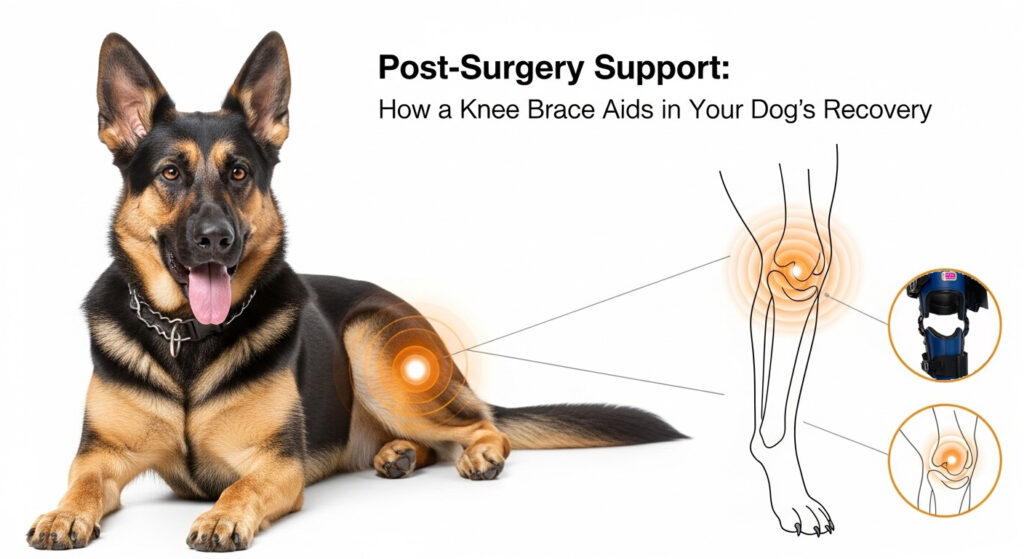
Post Surgery Support How a Knee Brace Aids in Your Dog's Recovery

The Science Behind the Post Surgery Support: How a Knee Brace Works

A well-fitted dog knee brace provides several key advantages during the rehabilitation phase:

  • Stabilization and Support: Immediately post surgery, the knee joint is vulnerable and prone to re-injury. A brace helps to stabilize the joint, limiting excessive or unnatural movements. This support reduces strain on the healing tissues, including ligaments, tendons, and muscles. By controlling the range of motion, the brace encourages proper alignment and prevents further damage.
  • Pain Management: The gentle compression and support offered by a knee brace can help alleviate pain and discomfort. By reducing movement and providing a sense of security, the brace can minimize irritation of the surgical site and surrounding tissues. This can lead to a decrease in reliance on pain medication over time (always under veterinary guidance, of course).
  • Reduced Swelling and Inflammation: Post surgery swelling is a natural part of the healing process, but excessive inflammation can hinder recovery. The compression provided by some knee brace designs can help to encourage lymphatic drainage and reduce swelling around the joint. This improved circulation can also promote the delivery of nutrients to the healing tissues.
  • Controlled Range of Motion: As your dog progresses through their rehabilitation, controlled movement is essential for regaining strength and flexibility. Some knee braces offer adjustable hinges that allow for a gradual increase in the range of motion as the joint heals. This prevents premature overextension or flexion, ensuring a safe and progressive return to activity.
  • Muscle Support and Re-education: Post surgery, the muscles surrounding the knee joint can weaken due to disuse. A knee brace can provide proprioceptive feedback, helping your dog to become more aware of their limb position and encouraging the activation of these supporting muscles. This is crucial for rebuilding strength and stability.
  • Protection Against Re-Injury: Even as your dog starts to feel better, they may be tempted to engage in activities that are still too strenuous. A knee brace acts as a physical reminder to take it easy and provides an extra layer of protection against accidental bumps or twists that could jeopardize the healing process.

Integrating a Knee Brace into Your Dog’s Rehabilitation Plan

It’s crucial to understand that a knee brace is just one component of a comprehensive post surgery rehabilitation plan. It should always be used in conjunction with your veterinarian’s recommendations, which may include:

  • Strict Rest: Limiting activity is essential in the initial stages of recovery.
  • Medication: Pain relievers and anti-inflammatory drugs as prescribed by your vet.
  • Physical Therapy: Gentle exercises and stretches guided by a veterinary rehabilitation specialist to restore strength and range of motion.
  • Controlled Exercise: Gradual introduction of short walks and controlled movements as healing progresses.

Choosing the Right Knee Brace:

Not all knee braces are created equal. It’s vital to choose a brace that is specifically designed for dogs and fits your pet properly. Factors to consider include:

  • Type of Injury and Surgical Procedure: Different braces offer varying levels of support and stabilization.
  • Fit and Comfort: The brace should be snug but not restrictive, allowing for comfortable movement within the prescribed limits.
  • Material and Durability: Look for breathable and durable materials that can withstand regular use.
  • Veterinarian’s Recommendation: Always consult with your veterinarian or a veterinary rehabilitation specialist before purchasing a knee brace. They can help you choose the most appropriate option for your dog’s specific needs.

Patience and Consistency are Key:

Using a knee brace effectively requires patience and consistency. Follow your veterinarian’s instructions carefully regarding when and how long to use the brace. Gradually wean your dog off the brace as their strength and stability improve, always under veterinary guidance.

Conclusion:

A knee brace can be an invaluable tool in your dog’s post surgery rehabilitation. By providing support, reducing pain and swelling, and promoting controlled movement, it can significantly contribute to a smoother and more successful recovery. Remember that it’s part of a larger healing process, and working closely with your veterinarian and being patient will give your furry friend the best chance of returning to their happy, active life.

If you are interested in a Posh Brace you can contact us via our contact page or visit us on Facebook.


Posh Dog Knee Brace: 5 Case Studies on How We Help Dogs Heal

“Is your beloved dog struggling with a knee injury? Do you worry about expensive surgery, long recovery times, or the stress on your furry family member? At Posh Dog Knee Brace, we understand. We’ve dedicated ourselves to creating a comfortable, supportive, and effective alternative to surgery for dogs with knee issues. Our custom-fit braces are designed to help your dog get back to doing what they love most: running, playing, and being a happy, healthy part of your family.

But don’t just take our word for it. Today, we’re sharing five incredible stories of dogs and their families whose lives have been transformed by the Posh Dog Knee Brace. These are real dogs, with real stories of healing and hope.”
Posh Dog Knee Brace 5 Case Studies on How We Help Dogs Heal

Case Study #1: Ram – The Bilateral Warrior

“Meet Ram, a powerful and spirited dog who was diagnosed with bilateral CCL tears โ€“ a tear in both of his knees. His family was faced with the daunting prospect of two separate surgeries and months of recovery. The Posh Dog Knee Brace offered a different path. We custom-fit Ram with two braces, one for each knee, providing the stability and support he needed to begin his journey of healing.

With his braces, Ram’s family saw a dramatic improvement in his mobility almost immediately. He could walk without pain, and eventually, he was able to run and play again. Ram’s story is a powerful testament to how our braces can provide a non-surgical solution for dogs facing bilateral knee issues, giving them their active life back.”

Case Study #2: Mona – The Tripod Triumph

“Mona’s story is one of incredible resilience. As a tripod dog who lost a limb to cancer, she relied heavily on her remaining back leg. When she started showing signs of a knee injury in that leg, her family was heartbroken. They knew surgery would be incredibly challenging for a dog with only three legs.

The Posh Dog Knee Brace was the perfect solution. By providing crucial support and stability to her remaining knee, our brace allowed Mona to distribute her weight more evenly and confidently. It helped alleviate the stress on her joint, enabling her to maintain her independence and her joyful spirit. Mona’s case shows how our braces can be a life-changing solution for dogs with unique physical challenges, ensuring they can live their lives to the fullest.”

Case Study #3: Kona – The Comeback Kid

“Kona, a beloved family pet, was diagnosed with bilateral knee injuries, impacting her quality of life significantly. Her family was hesitant about the cost and invasiveness of surgery, and they wanted to find a solution that would be gentle on Kona. The Posh Dog Knee Brace was the answer. We designed and created custom braces for both of her knees.

With the support of her braces, Kona’s recovery was remarkable. She regained her confidence and her love for play. Her family reports that she’s a completely different dog โ€“ happy, active, and no longer limited by her knee pain. Kona’s journey highlights how our braces can provide a comprehensive and effective solution for bilateral injuries, helping dogs get back to a pain-free life.”

Case Study #4: Luna Bean – The Lyme’s Fighter

“Luna Bean’s case was particularly complex. Not only was she suffering from bilateral knee injuries, but she also had Lyme disease, which can cause painful inflammation and joint issues. Her family knew that surgery would be incredibly hard on her system. The Posh Dog Knee Brace offered a non-invasive way to address her knee instability.

By providing consistent support, our braces helped Luna Bean manage her pain and regain her mobility. Combined with her other treatments for Lyme disease, the Posh Dog Knee Brace was a key part of her recovery, allowing her to get stronger and more active every day. Luna Bean’s story proves that our braces can be a vital tool in a multi-faceted approach to a dog’s health, helping them overcome multiple challenges.”

Case Study #5: Yumi – The Left Knee Legend

“Yumi was diagnosed with a tear in her left CCL, causing her significant pain and a noticeable limp. Her family was looking for a solution that would avoid the trauma of surgery. We custom-fit Yumi with a single Posh Dog Knee Brace for her left knee.

The brace provided the stability and support her joint needed to heal naturally. With consistent use, Yumi’s limp disappeared, and she was able to return to her normal, active self. Her family is thrilled that they found a way to help her without surgery. Yumi’s success story shows that for single knee injuries, the Posh Dog Knee Brace can be an incredibly effective and straightforward solution, helping your dog heal and get back on their paws.”

These five stories are just a few examples of how the Posh Dog Knee Brace is changing lives. We believe every dog deserves a chance to live a pain-free, happy, and active life. If your dog is struggling with a knee injury, visit our website today to learn more and see if the Posh Dog Knee Brace is the right solution for your best friend.

“Posh Dog Knee Brace โ€“ helping dogs heal, one step at a time.”

For more information about our brace you can contact us via our contact form or visit us on Facebook.

Page 2 of 6
© Posh Dog Knee Brace
Website Development By: Tinker Graphics