Custom & Supportive Dog Braces for Injury & Recovery
Custom Support | Ready-to-Wear Support | Professional Guidance
Decoding Stress Signals During Playtime: Understanding Canine Body Language
Post Published on August 17, 2026
For many dog owners, watching their furry friends romp and play is pure joy. The wagging tails, playful bows, and exuberant chases seem to speak volumes about happiness and healthy socialization. But beneath the surface of what looks like “fun,” subtle (and sometimes not-so-subtle) stress signals can often go unnoticed.
Just like humans, dogs communicate constantly through their body language. Understanding these unspoken cues is not just a fascinating skill; it’s a crucial responsibility for every dog owner. It allows us to advocate for our dogs, intervene before play escalates into conflict, and prevent potential accidents or injuries. This is especially vital in environments like dog parks, playdates, or even multi-dog households where interactions can quickly become overwhelming.
This guide will dive deep into canine body language, helping you decode common stress signals your dog might be displaying during playtime, ensuring safer and happier interactions for everyone involved.
Why Decoding Body Language Matters
Misinterpreting canine body language can lead to:
Injuries: A dog pushed past their comfort zone might snap, bite, or lash out, leading to injuries for themselves or another dog.
Fear & Trauma: Repeated negative experiences can make a dog fearful of other dogs, leading to reactivity or aggression.
Physical Stress: Chronic stress can take a toll on a dog’s physical health, impacting everything from their immune system to their digestion.
Relationship Strain: If your dog constantly feels unheard or unprotected by you, it can erode trust.
Your dog is always telling you how they feel; you just need to learn how to listen with your eyes.
The Spectrum of Canine Communication
Dogs use their entire body to communicate: their eyes, ears, mouth, tail, posture, and even the direction of their gaze. It’s a complex tapestry of signals, often read in combination.
Before diving into stress, let’s briefly touch on what relaxed, happy play typically looks like:
Loose, Fluid Movement: Bouncy, exaggerated motions, not stiff or tense.
Play Bows: Front end down, rear end up, often accompanied by a wagging tail – an invitation to play.
Soft, Relaxed Mouth: Often slightly open, sometimes a “soft” pant (not tense).
Floppy Ears: Relaxed, not pinned back or stiffly forward.
Wagging Tail (Medium Height, Relaxed): A loose, sometimes wide wag, but not stiffly high or tucked low.
Taking Turns: Dogs will often swap roles (chaser/chased, pinner/pinned).
Breaks in Play: Frequent pauses, shaking off, or momentary disengagement are normal.
Decoding Stress Signals During Playtime
Now, let’s look at the signals that indicate your dog might be uncomfortable, stressed, or nearing their limit. These are often called “calming signals” or “stress signals” and are attempts to de-escalate a situation or communicate discomfort.
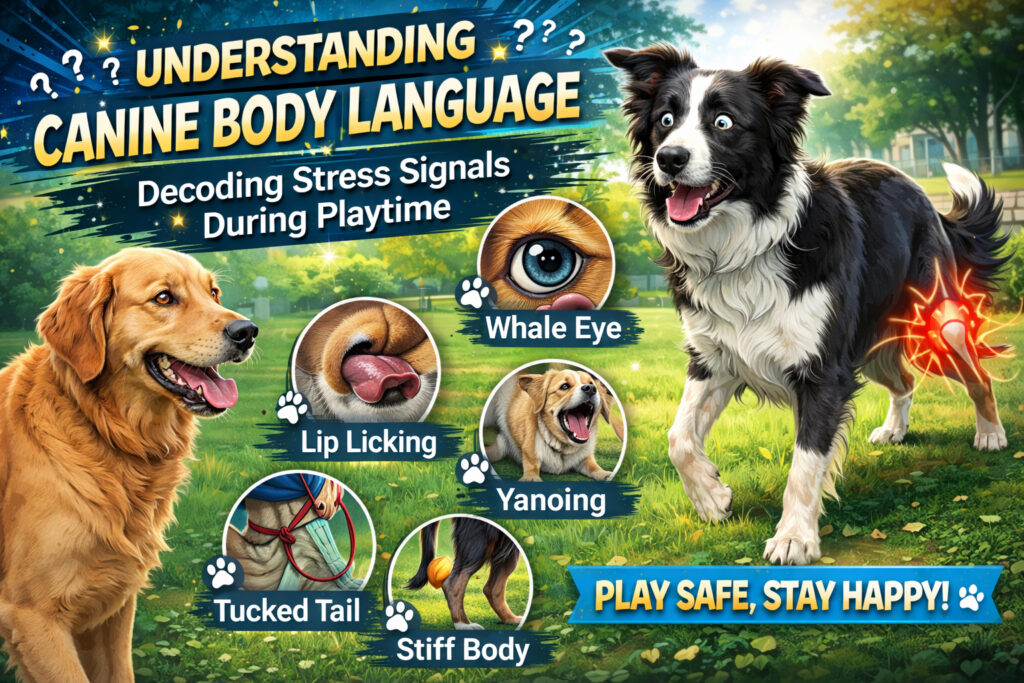
1. Whale Eye (Half Moon Eye) 😳
What it looks like: The whites of your dog’s eyes are visible, usually at the sides, giving them a wide-eyed, crescent-moon appearance.
What it means: Your dog is feeling anxious, threatened, or uncomfortable. They might be trying to monitor a situation without directly turning their head.
During Play: If you see whale eye, the play might be too intense, or they feel cornered by another dog.
2. Lip Licking & Yawning 👅
What it looks like: A quick flick of the tongue out and back, often without food present. Yawning when not tired.
What it means: These are common calming signals used to diffuse tension or show submission.
During Play: If your dog is lip licking or yawning frequently during an interaction, they are likely feeling stressed or trying to tell another dog, “I’m not a threat, please calm down.”
3. Freezing / Stiff Body Posture 🥶
What it looks like: Your dog suddenly stops moving, becomes rigid, and might stand perfectly still. Their tail might be stiff, either high or slightly tucked.
What it means: This is a warning sign. Your dog is uncomfortable and preparing for “fight or flight.” They are trying to make themselves appear smaller or larger, or assessing the next move.
During Play: This often happens when play has become too rough, or another dog is being overly persistent. It’s a precursor to a potential snap or attempt to flee.
4. Tucked Tail 🤫
What it looks like: The tail is held low between the legs, sometimes pressed tightly against the belly.
What it means: Clear sign of fear, anxiety, or submission.
During Play: If a dog’s tail is tucked, they are not enjoying the interaction and are likely feeling intimidated or scared.
5. Head Aversion / Turning Away ↩️
What it looks like: Your dog turns their head away from another dog, avoids eye contact, or even turns their entire body away.
What it means: This is a strong calming signal. Your dog is saying, “I don’t want conflict,” or “I’m uncomfortable, please leave me alone.”
During Play: If one dog repeatedly turns their head away and the other continues to approach or engage, the approaching dog is ignoring a clear request to back off, and stress levels are rising.
6. Piloerection (Raised Hackles) ⚡
What it looks like: The hair along your dog’s spine (usually shoulders to tail) stands on end.
What it means: This indicates arousal, which can be fear, excitement, or aggression. It’s an involuntary response (like goosebumps) that makes them appear larger.
During Play: If hackles are raised, pay close attention. Combined with other stress signals, it indicates a dog feeling very tense and potentially ready to react.
7. Excessive Panting (When Not Overheated) 🥵
What it looks like: Heavy, rapid panting even if the temperature is cool or the physical activity hasn’t been extreme.
What it means: Panting is a physiological response to stress, akin to a human’s racing heart.
During Play: If your dog is panting excessively, they might be mentally or emotionally overwhelmed, even if they aren’t physically exhausted.
Your Role: Intervention and Advocacy
Learning these signals is only half the battle. The other half is knowing when and how to intervene.
Early Intervention: Don’t wait for a growl or a snap. If you see multiple stress signals, especially consistently from one dog, it’s time to step in.
Create Space: Gently call your dog away, or physically (but calmly) separate them. A leash can be helpful to create a temporary “time-out.”
Redirect: Once separated, redirect their attention with a treat or a calming stroke.
Leave if Necessary: If the environment is consistently overwhelming or another dog is persistently ignoring your dog’s signals, it’s okay to leave. Protecting your dog’s mental and physical well-being is always the priority.
By becoming fluent in canine body language, you empower yourself to be your dog’s best advocate, transforming potentially risky playtime into genuinely positive and safe social interactions. This skill not only prevents injuries but also builds a deeper bond of trust and understanding between you and your cherished companion.
If you are inteterested in a Posh Dog Knee Brace you can contact us via our contact form or check us out on Facebook.
Articles from the Posh Dog Knee Brace team — a group effort with our licensed veterinary technicians and brace specialists, sharing 15+ years of experience helping dogs recover from CCL/ACL injuries and mobility challenges.