Today I want to talk about hair length, and if it is necessary to shave your dog for our our brace. For the measurement call, we need to be able to see all the bumps in the knee. The hair needs to be less than 1” in length.
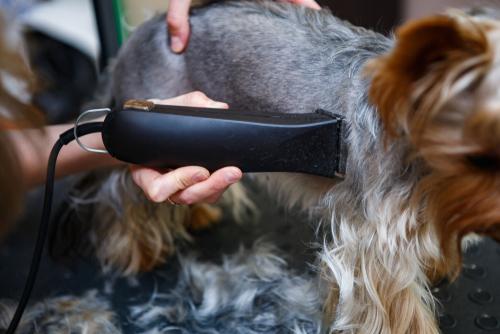
If you have a curly haired dog, you can try wetting down the hair in order to find the bumps. You will also need to make sure you can see those bumps and landmarks clearly for when you are fitting the brace.
If your dog has shorter hair on front of the leg, and feathering behind the thigh, you are probably ok. For dogs that have very long hair, like newfies or Great Pyraneese, they will need legs trimmed/shaved down to the ankle, otherwise we can’t see landmarks to help you measure. Let us know if you have any other questions, you can reach us at our contact page or visit our Facebook page.
Nikki, Posh Lead Veterinary Technician
Read reviews check out our Google Reviews online. Click Here
Articles from the Posh Dog Knee Brace team — a group effort with our licensed veterinary technicians and brace specialists, sharing 15+ years of experience helping dogs recover from CCL/ACL injuries and mobility challenges.
Today I would like to talk about recommended activity levels with a brace or CCL tear. It is still important to remember that this is not a race.
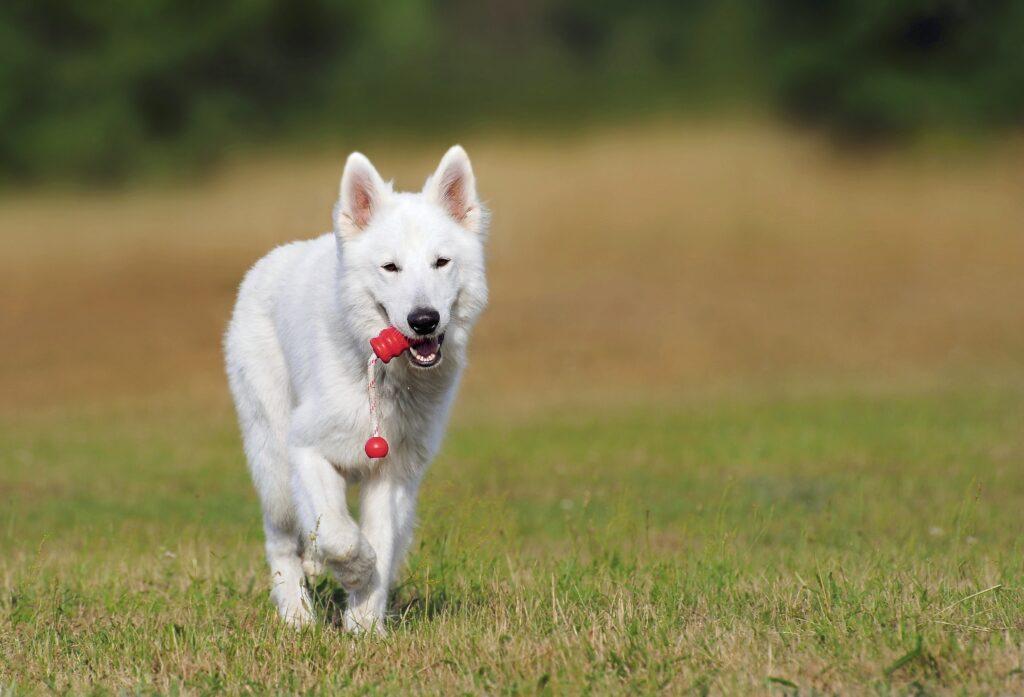
Initially, we start with walks and light physical therapy and massage. Gradually, we can increase activities, such as adding hills or inclines to the walk, sit stands, more muscle building activities.
It is not recommended to let your dog run off leash while in recovery. This can lead to injury of the other leg potentially. Braced walks are meant to be nice and slow, not a jog. The goal is to have your dog placing full weight down on his leg. If you walk or run too fast, they will skip and not place full weight on the leg.
We will get to a point where your pup can play off leash, but ask first, and take things slow. Feel free to email or send in a contact request with any questions about what levels of activity is right for your dog, we are happy to help! You can reach out to use through our contact form or visit us on our Facebook page.
Give Your Dog a Big Hug From Us!
Nikki, Posh Lead Veterinary Technician
Read reviews check out our Google Reviews online. Click Here
Articles from the Posh Dog Knee Brace team — a group effort with our licensed veterinary technicians and brace specialists, sharing 15+ years of experience helping dogs recover from CCL/ACL injuries and mobility challenges.
Hey guys, today let’s talk about what to bring to your vet visit, whether it is the first time bringing your dog in for an injury, or for a second opinion. I suggest that you first think back to when the injury happened. Write down notes about the injury, things that can help your veterinarian correctly diagnose the injury. I don’t know how many times, myself or one of my technicians, has had a patient come to us that purchased a knee brace, and after a few questions we find it is not the dog’s knee that was the issue.
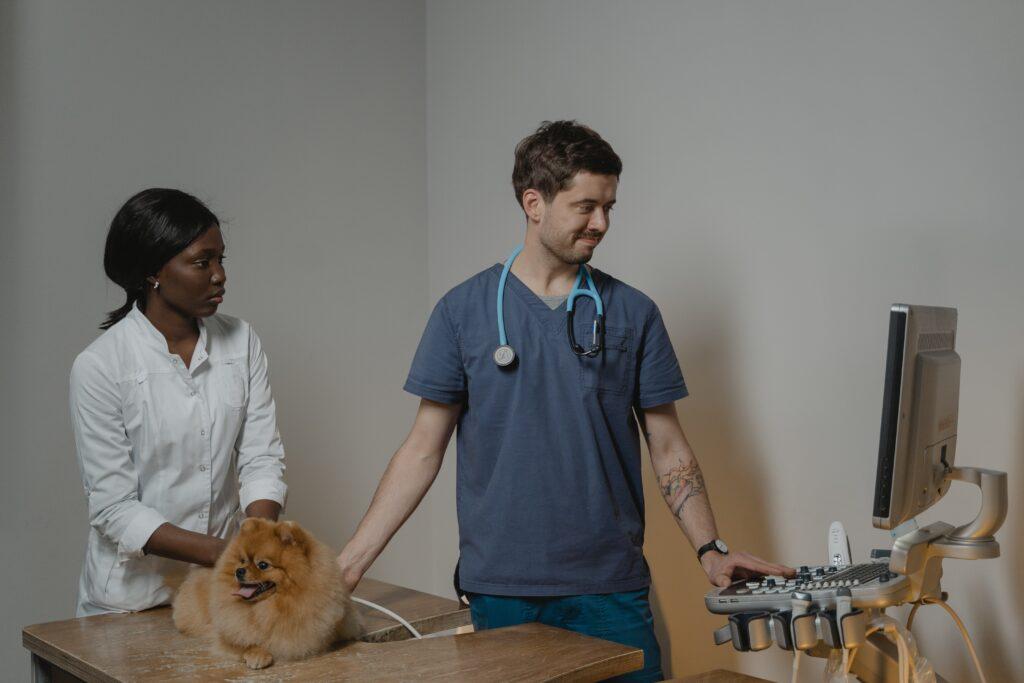
So, it is very important to tell your vet the details. Did your dog slip on the floor? Did they do the splits when they fell? If they slipped on ice, again, did they possibly fall with both back legs or one bent behind them? These are very important to tell your vet, so that he or she can correctly assess the injury. Here is a scenario that we just had occur. The patient had actually slipped, and done the splits. The dog began holding up a hind leg, and would not weight bear.
They thought there may have been a positive drawer test (see that blog if you are unsure what a drawer test is), and diagnosed the dog with a CCL/ACL tear. The owner did not know to tell their vet that the dog had in fact done the splits, which actually had caused a groin sprain and made the hip sore. Note: This can happen, and will show the same signs as a dog that has a CCL tear.
We recommended they go back to the vet immediately, once we realized what happened, and they were correctly diagnosed with a groin sprain, and the patient recovered after several week of rest. Had we braced this patient, the brace would have put pressure on the groin area, causing further distress.
It is also important to note if your dog is using the ankle properly. Ankle injuries and knee injuries can also look the same to an owner. Does your dog normally walk low on the hocks? Does he occasionally knuckle, or drag their toes on the floor? These can indicate neurological issues, and should be told to your Veterinarian, as you may need a hock brace, as well as a knee brace, or just an ankle brace depending on the injury.
With Covid changing how many clinics do exams, resulting in patients being taken into the clinic without their owners, it is even more important to take notes, and give those to your veterinarian. Most dogs, when in clinic, mask pain and do not show the vet the same signs as at home with owners. Just like my car is perfect for the mechanic, but with me acts up😊
So, note taking is important, and it is all in the small details. Please help your veterinarian out, as it has been a difficult time for all of us, and having all of the information will make things much smoother for you and your fur baby. And as always, feel free to check out our site, poshdogkneebrace.com, or send me an email at poshintake1@gmail.com or visit our Facebook Page we look forward for any questions you may have.
If you are interested in purchasing a Posh Dog Knee Brace please visit our store page, if you are looking for our FAQ’s please visit our FAQ’s page. Thank you for reading our article.
Read reviews check out our Google Reviews online. Click Here
Articles from the Posh Dog Knee Brace team — a group effort with our licensed veterinary technicians and brace specialists, sharing 15+ years of experience helping dogs recover from CCL/ACL injuries and mobility challenges.
Today I want to discuss signs that your dog has a CCL tear, and if he or she needs a brace. First, obviously your poor dog is exhibiting signs of hind limb lameness. Now this can happen two ways. First, you hear a yelp, or see the injury, and have sudden onset lameness. This is about 50% of dogs, and is called an acute injury. Your pup will not use his or her leg, and is toe touching.
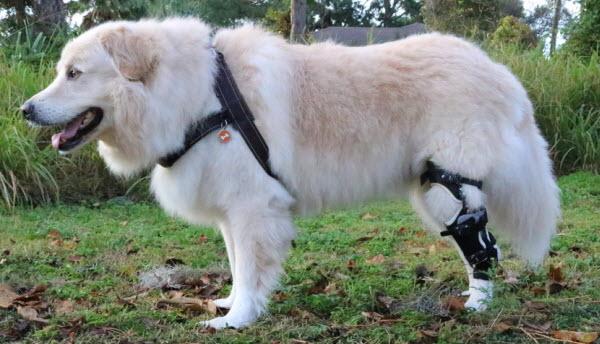
Second, you notice your dog limping on the hind leg after exercise, and after rest seems better. This goes on for a few weeks until you have a veterinarian diagnose the injury as a CCL full or partial tear. Some of these patients go a year or longer before getting to full limping. This is a chronic case, and usually degenerative.
We can help with either situation, as even a partial tear will keep re-injuring over and over until externally supported with a brace.
After a while you may notice a medial buttress, or a hard bump on the inside of the knee. This is a sign of cruciate injury as well.
No matter how long you wait, it is never going to be too late to brace your dog, as bracing will help stop the offloading that is happening, and we can start working on that thigh muscle to reverse the atrophy. Let us know if you have any further questions about this topic, and always feel free to send me a contact request, I am happy to chat with you and answer some of your questions you can reach out to me on our contact form or visit our Facebook Page.
Nikki, Posh Lead Veterinary Technician
Read reviews check out our Google Reviews online. Click Here
Articles from the Posh Dog Knee Brace team — a group effort with our licensed veterinary technicians and brace specialists, sharing 15+ years of experience helping dogs recover from CCL/ACL injuries and mobility challenges.
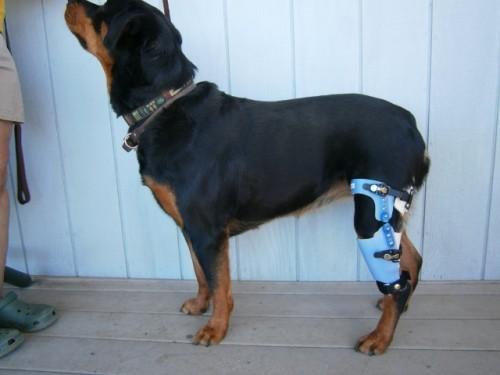
Did you know a Posh Dog Knee Brace can help your Dog recover from a torn knee ligament, CCL injury, or ACL injury – without surgery? Many Dogs are not good candidates for knee surgery due to age, medical issues, and high surgical costs.
Dog knee procedures have a serious complication rate of over one in three, and their overall success rate is far below 40%.
Your dog can recuperate pain-free and without complications with the aid of a bespoke Posh Dog knee brace. By allowing your dog to develop scar tissue, our brace helps the wounded knee area heal in a manner similar to surgery.
Wearing a Posh brace, many Dogs have successfully recovered from a total CCL ACL tear without surgery.
Read reviews check out our Google Reviews online. Click Here
Articles from the Posh Dog Knee Brace team — a group effort with our licensed veterinary technicians and brace specialists, sharing 15+ years of experience helping dogs recover from CCL/ACL injuries and mobility challenges.
Custom-made braces can help your dog after knee surgery – and can sometimes be used in place of surgery.
Ten years have passed since WDJ explored “conservative management” – the nonsurgical treatment – of knee ligament injuries (see “Saying ‘No’ to Surgery,” February 2010). Since then, although surgery remains by far the most widely used knee injury treatment, consumer demand for complementary therapies, including the use of custom-designed knee braces, has grown.
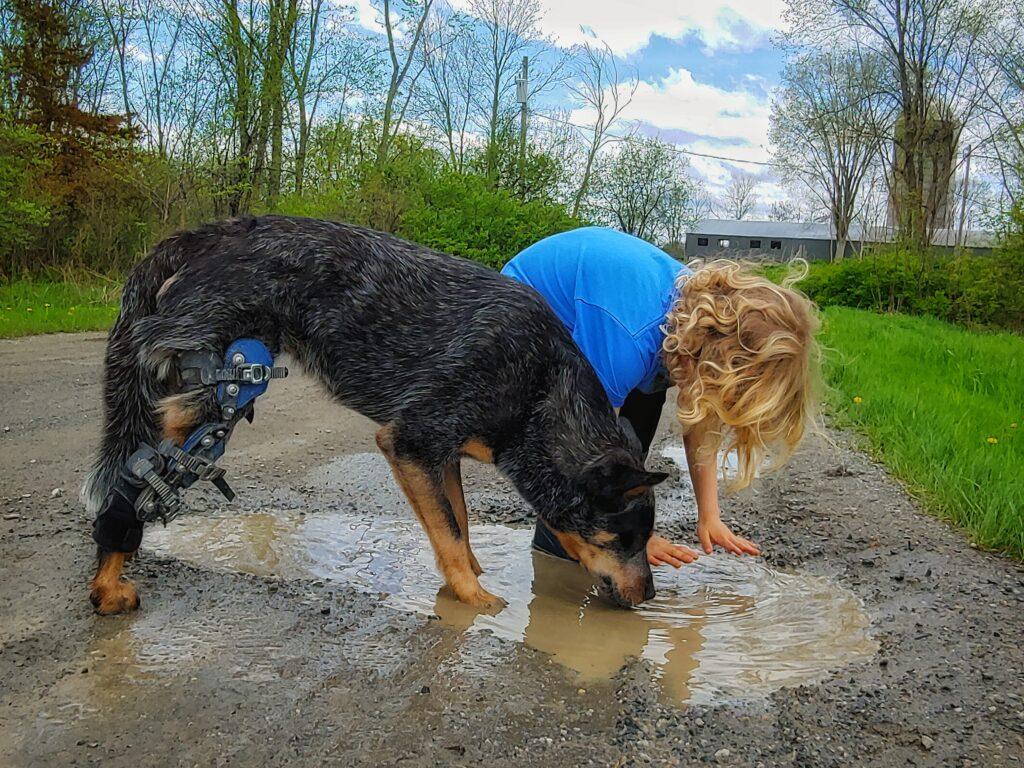
The majority of custom canine braces are made using materials supplied by the brace maker and are based on leg models that were cast in a veterinary office or at the client’s house. The resulting cast and supporting measures are provided so that the brace can be custom-made to suit. Sometimes casting needs to be redone because the cast was improperly created or was damaged during shipping. The appointment raises the price of the brace if done in a veterinary hospital.
The 11-year-old, 77-pound Golden Retriever named Pasha, who inspired the creation of the Posh Dog Knee Brace, had a left hind limb injury. When Pasha’s veterinarian discovered a ruptured cranial cruciate ligament and torn meniscus, he advised emergency surgery, stating that delaying treatment would result in a similar injury to Pasha’s right leg, severe arthritis, and a lifetime of inactivity for the dog.
Although Florida residents Jim Morison and Beth Scanlon, Pasha’s owners, could afford the $5,000 procedure, they were concerned due to Pasha’s age and past health issues, which included a history of anesthesia-related complications. Pasha’s rehabilitation started when they decided against scheduling surgery and purchased a personalized canine knee brace.
Read full article visit: https://www.whole-dog-journal.com/health/canine-knee-injury-brace-yourself/
To purchase a Posh Dog Knee Brace – Click Here
Read reviews check out our Google Reviews online. Click Here
Articles from the Posh Dog Knee Brace team — a group effort with our licensed veterinary technicians and brace specialists, sharing 15+ years of experience helping dogs recover from CCL/ACL injuries and mobility challenges.
In February, we got a lot of snow and cold weather. Which is a perfect scenario to see how well the brace performs under such conditions. The Posh Dog Knee Brace is not a cast. So there are many open spaces. And that made me wonder how well the brace would perform in a Canadian winter with deep snow and cold temperatures.
Please visit: https://www.myboxergirl.com/health/posh-dog-knee-brace-winter-performance-review/
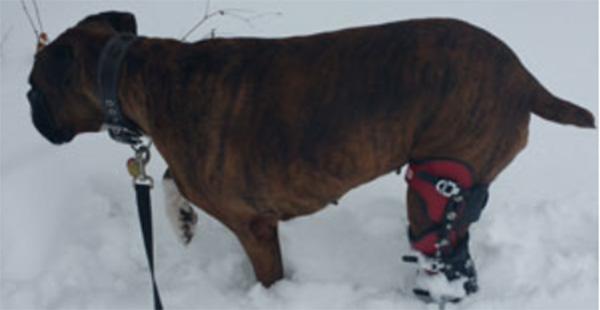
The brace has surprise delivered excellent results during the winter. And over the past five months, Annie’s quality of life has significantly improved thanks to the Posh Dog Knee Brace. Annie used to go on very brief walks—10 to 15 minutes—before we got a brace. Additionally, Annie was limping after those walks. Since we started using the brace, Annie has been out walking for a lot longer, which has given her enough exercise to feel somewhat pleased. With an active Boxer, this task is not simple.
To purchase our brace check out our store.
Read reviews check out our Google Reviews online. Click Here
Articles from the Posh Dog Knee Brace team — a group effort with our licensed veterinary technicians and brace specialists, sharing 15+ years of experience helping dogs recover from CCL/ACL injuries and mobility challenges.
First off, I want to do a bit of anatomy explaining. Dog’s, unlike people, walk on their toes. Cool, right? So coming up from the ground, you can follow their toes to their ankle, which includes the hock bone in the back of the bend. This is their “heel” bone. The next bone, in front of the ankle, and up to the knee, is the Tibia and fibula. The tibia thrust, just like in people, is what makes up the front of our knee. There is a prominent bump in dogs, directly underneath the kneecap, that is called the Tibial Tuberosity.
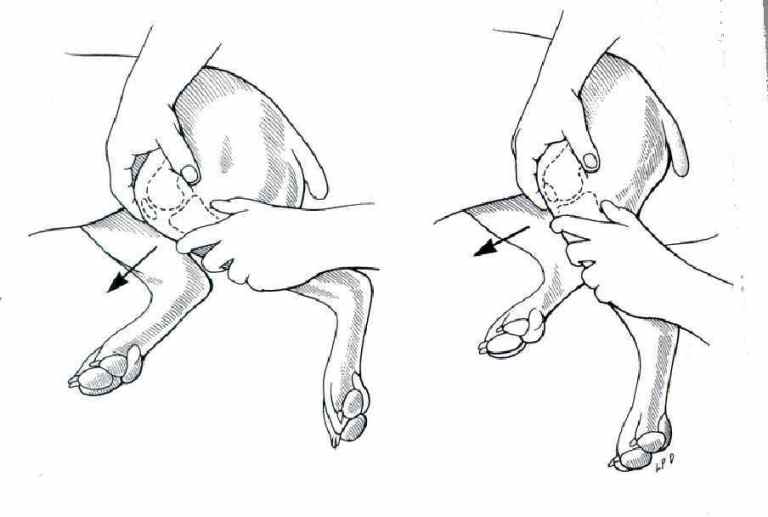
In the videos attached, you will see the kneecap is a small round bone, making up the top of the dog’s knee, then the bottom bone is the tibia. The cruciate ligaments, or CCL in dogs/ACL in humans, are located between the tibia and femur bones, directly in the back of the knee. When a CCL is in tact, there should be no movement, or positive drawer sign, in the dog’s knee. See video one, where there is no movement when palpated/moved.
In the next video, you can see what happens when there is no longer a ligament holding the bones together in the back of the knee. Now, the tibia bone is able to shift forward, or tibial thrust. This is a positive drawer sign, as there is a forward movement now where the tibia is shifting forward. This is obviously bad.
If you choose to do nothing, over time this movement of the bones will potentially cause the meniscus to tear/rupture, and start to form arthritis. It is important to immobilize this joint, to prevent these issues from occurring. Not to mention, that movement is very painful.
After 9-12 months of using a Posh Brace, this movement should be back to the first image, as fibrous tissue has formed and will re-stabilize the joint. Again, check out our website, poshdogkneebrace.com, or feel free to email me any questions to: our contact form or visit us on Facebook.
Read reviews check out our Google Reviews online. Click Here
Articles from the Posh Dog Knee Brace team — a group effort with our licensed veterinary technicians and brace specialists, sharing 15+ years of experience helping dogs recover from CCL/ACL injuries and mobility challenges.
We get asked this question a lot, and wanted to see if we can answer some questions on diagnosing a CCL tear. Is it necessary to have a diagnosis before purchasing a brace? Answer: Yes! There are many other things, like sprains, hip joint pain, spinal issues, tumors, and nerve issues like DM that can cause hind lime lameness other than a ruptured CCL.
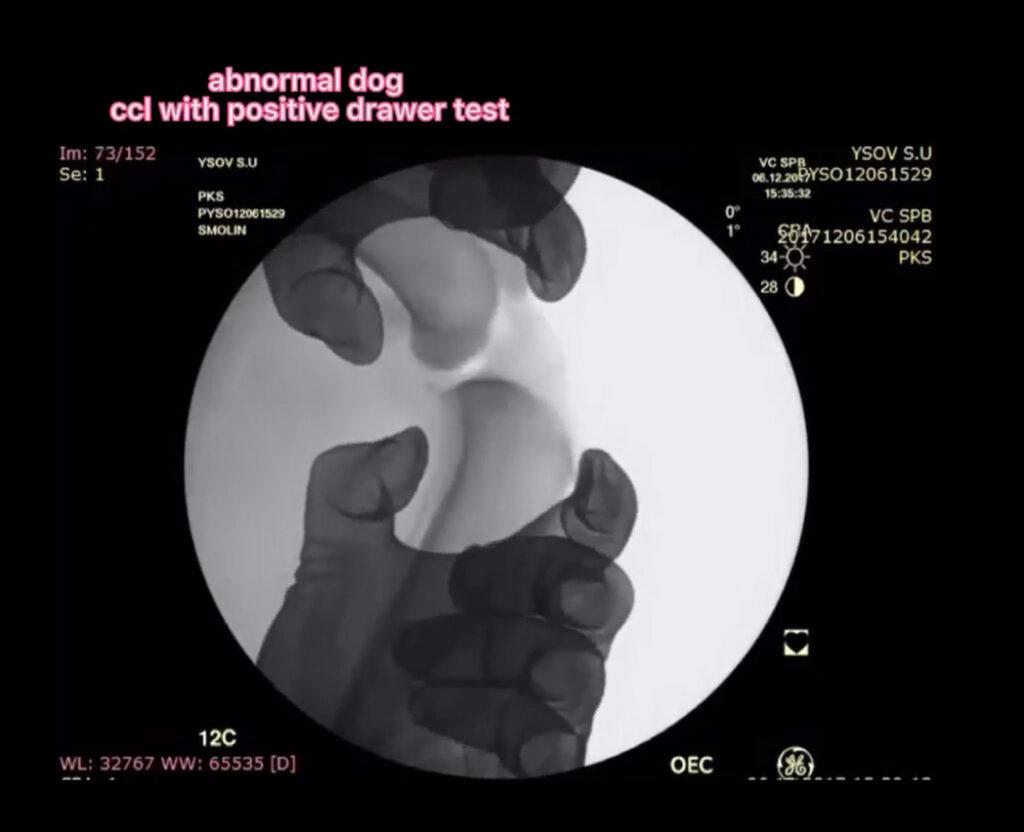
At your appointment with the veterinarian, they will most likely want to do what is called a drawer test. Please note: this could worsen the injury if not done properly, or with sedation, and is very painful. Some patients will let out a yelp, or limp much worse after the examination.
Your veterinarian may also want to do some radiographs during the initial examination. These can show gaps, space, swelling, and rule out tumors in older patients. I do recommend radiographs for any patient over 8 years old.
MRI is the absolute best way to diagnose a CCL tear, however, this can cost upwards of $1,000, and may be hard to find someone to do this.
Find a veterinarian that is gentle, and will do a thorough exam ruling out the other injuries. This is the best method, and least painful for your pup. Also, try taking the last appointment of the afternoon when possible, or the first in the morning, as this is when most veterinarians are less likely to be in a “rush.” Right before lunch break, or in the late morning/afternoon can be rushed due to their surgical load that day, or if they have other patients that have been dropped off to be seen.
We leave the diagnosis up to our clients, it is not required, however, I do recommend at least finding a holistic minded veterinarian to help you! If you need more information on CCL tears you can reach us through our contact form or visit our Facebook Page.
Nikki, Posh Lead Veterinary Technician
Read reviews check out our Google Reviews online. Click Here
Articles from the Posh Dog Knee Brace team — a group effort with our licensed veterinary technicians and brace specialists, sharing 15+ years of experience helping dogs recover from CCL/ACL injuries and mobility challenges.
Hi! Today I would like to talk about muscle atrophy in dogs, especially with CCL injuries. One of the biggest muscles in the body is the thigh muscle, which is needed in order to have full range of motion with the hind legs.
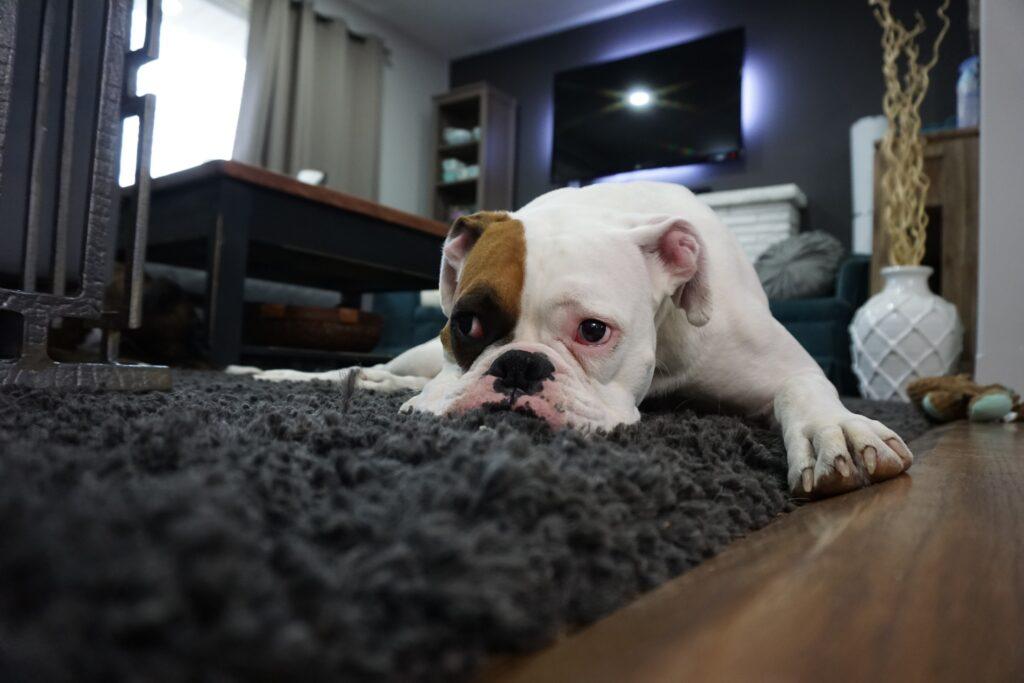
Without this muscle, we would be unable to completely lift our leg up and take a normal step. Dog’s that have an injury atrophy quickly. This is why it is really important to keep our patients active, while still letting the knee injury stabilize. With bracing, we are still able to place full weight on the thigh muscle, which may become sore initially, however, then we can start building this muscle back up, keeping it healthy.
This is another reason bracing can be better for patients than surgery, as with surgery there is a long period where you will need to confine your dog to keep them from hurting the surgical site. In the 8 weeks it takes to recover with surgery, there can be significant atrophy that sets in.
This is another reason that we include physical therapy with our patients, and walking schedules, to keep our dogs active, and using those muscles.
You may also need the help of a sling or a harness that includes handles as well, so that you can help your dog walk initially, until we start getting strength back in the thigh muscle. Our technicians are happy to help you with this, and with time we can get the muscles back. If you need more information you can reach out to us through our contact form or visit us on our Facebook Page.
Read reviews check out our Google Reviews online. Click Here
Articles from the Posh Dog Knee Brace team — a group effort with our licensed veterinary technicians and brace specialists, sharing 15+ years of experience helping dogs recover from CCL/ACL injuries and mobility challenges.
Today I would like to go over what a CCL in a dog is, as well as it’s function. First off, a CCL in a dog is the same as saying ACL in a person.
The CCL is a connective tissue in the knee that stabilizes the lower leg to the upper leg. It connects the tibia to the femur. Without this ligament, there can be partial or complete joint instability, pain, and lameness present.
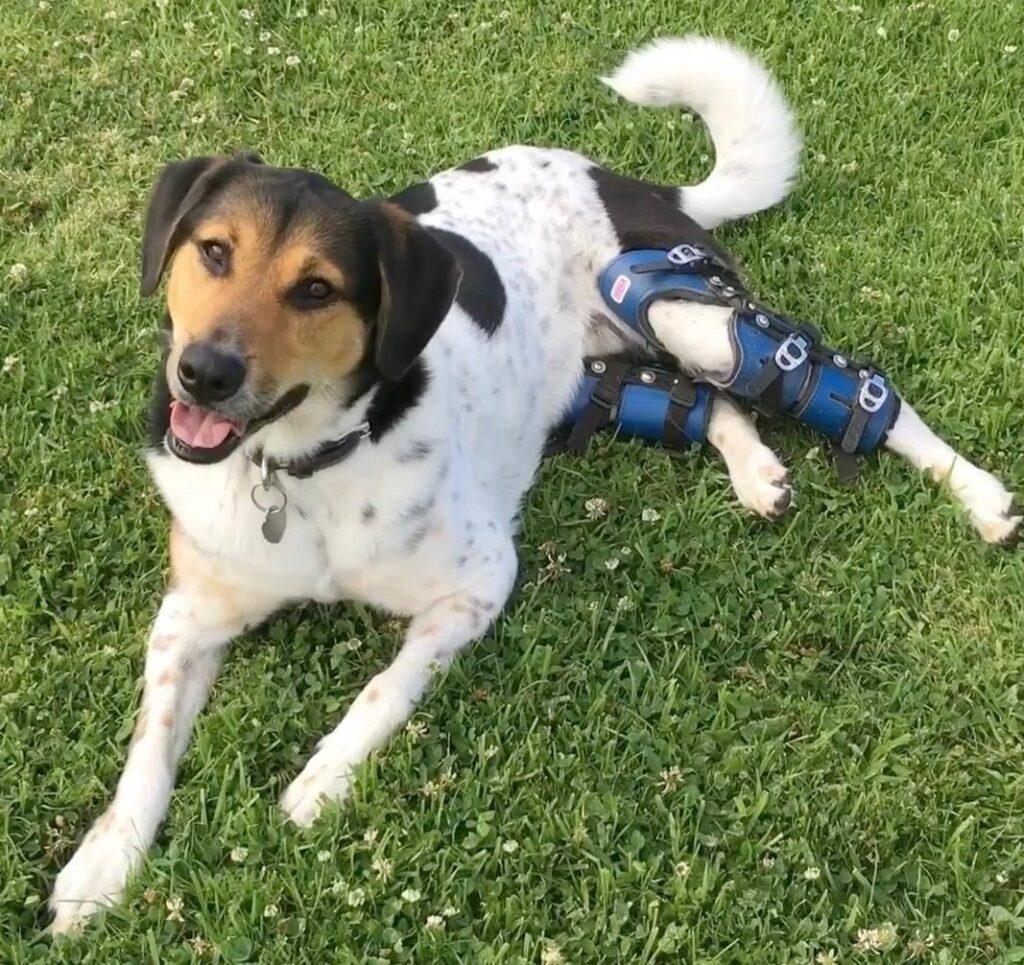
The CCL holds the tibia in place, andprevents internal rotation and hyperextension (which is over stretching the leg). The meniscus (located between the femur and tibia) absorb impact and provide a gliding surface between the femur and tibial plateau/tuberosity. Sometimes the medial meniscus can become torn when the knee is unstable from a CCL tear.
Symptoms of a rupture include crepitus (crackling or popping sound), decreased range of motion, hind leg extended when sitting (when the injured leg is off to one side), pain to the touch, not wanting to move as much, sore after a walk, swelling, and turning the leg out to the side when standing.
Leaving a ruptured ligament alone, without the aid of bracing, can leave misaligned joint causing further damage, inflammation, and pain. This can lead to early joint disease and further meniscus tears.
Bracing helps to hold the tibia in place, while acting as a buffer or shock absorber, preventing further movement and issues from occurring. If you need more information you can contact us through our contact form or visit our Facebook Page.
Read reviews check out our Google Reviews online. Click Here
Articles from the Posh Dog Knee Brace team — a group effort with our licensed veterinary technicians and brace specialists, sharing 15+ years of experience helping dogs recover from CCL/ACL injuries and mobility challenges.
Today let’s talk about how to train your dog to use or walk with the brace. First, I want you to use just the hock wrap, to let your pup get used to having something on his ankle. Do this for 30 minutes on and off the first couple of days.
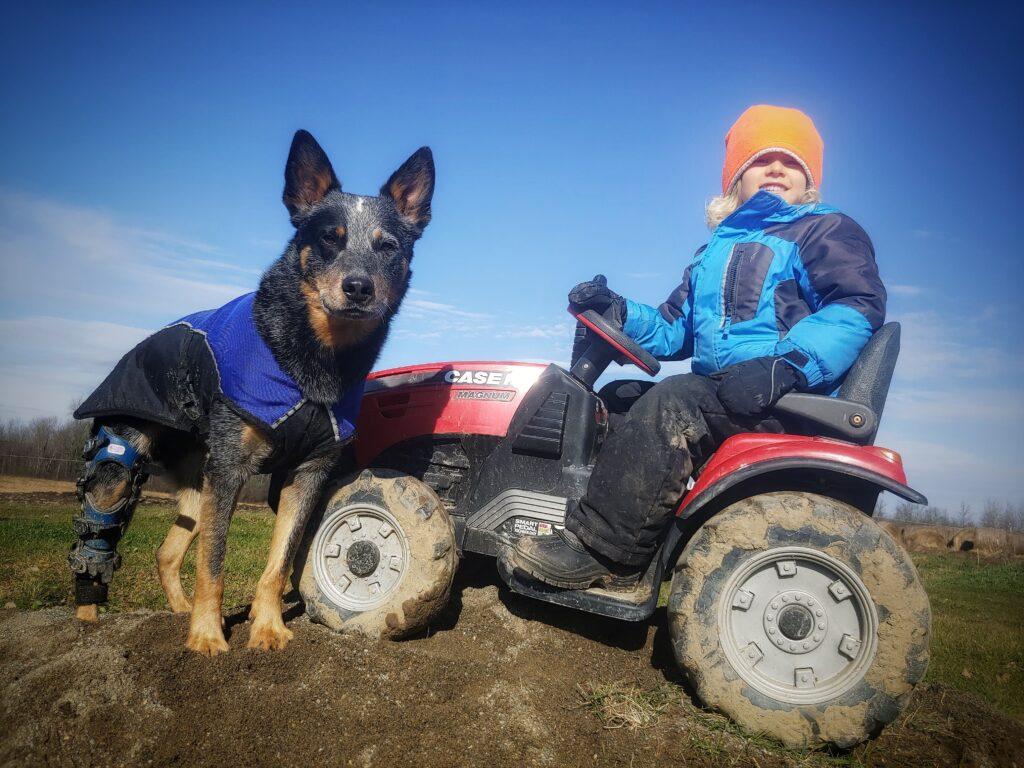
Next, I like to freeze peanut butter in a dish, and distract my dog while fitting the brace on, this will help train your dog to get used to you putting the brace on him.
Once you have a brace on, go directly outside and walk. Then, remove the brace when you come in. Distraction and treats work great while getting your dog used to wearing the brace.
Soon, your dog will link the brace to getting to go out for a W-A-L-K, something really fun.
Then, you can increase the wearing times as stated on our physical therapy handouts. Let me know if you have any questions you can contact us through our contact form or reach out to us on our Facebook Page.
Read reviews check out our Google Reviews online. Click Here
Articles from the Posh Dog Knee Brace team — a group effort with our licensed veterinary technicians and brace specialists, sharing 15+ years of experience helping dogs recover from CCL/ACL injuries and mobility challenges.
Today we want to talk and educate you on Meniscus tears, and what they mean for your dog. Say you just got back from a visit to your vet, to find out your dog has a CCL tear with a meniscal tear as well. Now what? Your vet I am sure has gone over all of the surgical implications for this problem I am sure, but have they explained what the meniscus is?
How important it is to have in our knee, or what the function is? No, most likely they have quoted you for removing the meniscus, and the CCL repair only. Now I do know many Veterinarians that will try conservative management first, and a very huge thank you to those vets!
Well, you are in the right place. Our goal at Posh is to give you, as the dog mom and dad, options. Yes, you heard me, there are options with a Meniscus tear, not just surgery. Think of yourself for a minute. If you go into any orthopedic Doctors office, would they simply take an xray and schedule you for immediate removal of your meniscus? Absolutely not. There would be follow up appointments, probably an MRI to confirm, and then they would go over the options. Yes, there is that word again. Options.
Well, There are actually 2 menisci in each knee. The Menisci is a C shaped component made up of cartilage, and composed of collagen and joint fluid. 70% of the menisci is made of fluid that will compress with normal movement and release synovial fluid into the joint so that the knee can easily move. They act as our shock-absorbers and buffers, like in a car or truck.
With a CCL tear, it is very common to have a meniscal tear. There are several grades of tears, from a small tear, toa complete folding over of the meniscus. In most cases, the patient will have a minor tear. With this you may hear a pop or clicking sound. These tears are minor, and do well with bracing and Physical Therapy and Adequan Injections.
You can see now how it is very important not to completely remove the meniscus, as some vets may suggest prematurely. Now if the meniscus is folded over, usually you will see the knee sticking and unable to bend correctly. This is a surgical issue, and will need corrected.
Removing the meniscus almost always leads to arthritis and chronic lameness, as you just took out the joint’s buffer. Only if the meniscus has folded over, and I have seen this only twice in over 4,000 patients, will you need to consider removal.
It will take several months to heal, but healing is possible! Usually bracing for 12 months during activities, along with supplements and a good diet are enough to let the meniscus recover. Let us know if you have any questions, and we are happy to help your dog!
Nikki, Posh Lead Veterinary Technician
For more informaton please contact us through our contact form or visit our Facebook Page.
Read reviews check out our Google Reviews online. Click Here
Articles from the Posh Dog Knee Brace team — a group effort with our licensed veterinary technicians and brace specialists, sharing 15+ years of experience helping dogs recover from CCL/ACL injuries and mobility challenges.
Today I would like to discuss bilateral injuries with you. First off, once a patient has a CCL injury, there is a 50% chance or greater of the second knee having a tear.
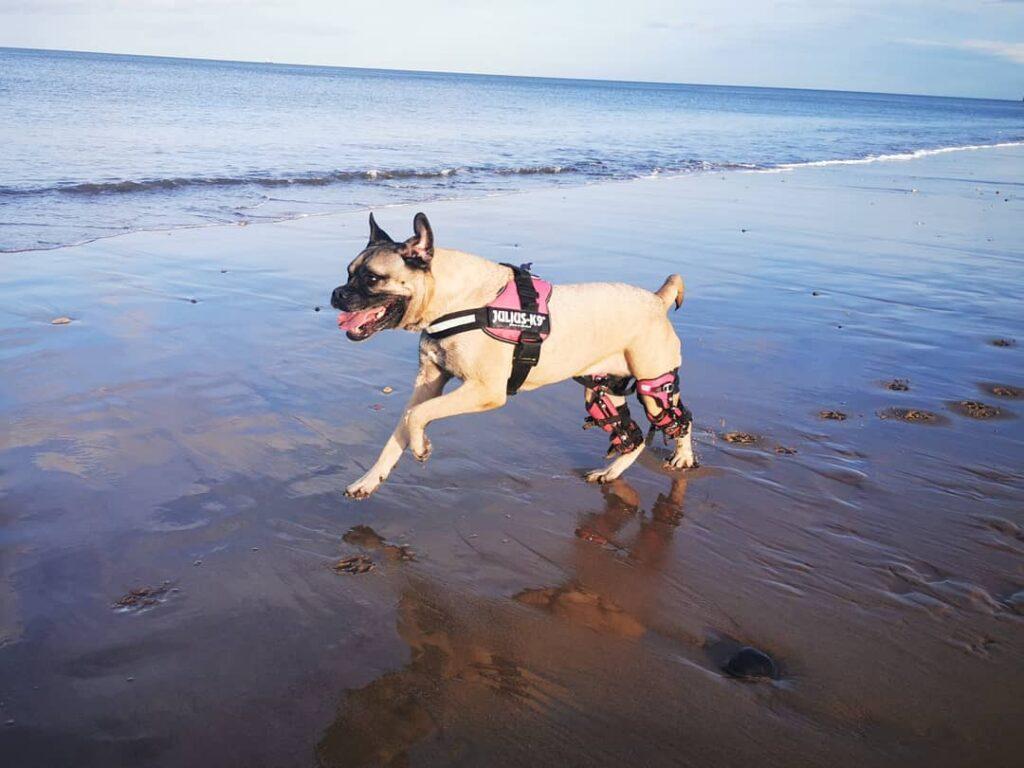
This goes up with surgery, due to the overcompensating and atrophy that develops with post-op patients, and can decrease with bracing.
Lots of things can factor in as to why a patient is now bilateral. Genetics may predispose our pups, such as bully breeds, as well as early spay/neuter, diet, etc.
So, weather your dog had surgery, and now the second knee has gone out, or both were close together, a knee brace would still be the best and most conservative option. Please let me know if you have any questions, and give your dog a Big Hug for us!
Nikki, Posh Lead Veterinary Technician
If you would like more information contact us through our contact form or visit our Facebook Page.
Read reviews check out our Google Reviews online. Click Here
Articles from the Posh Dog Knee Brace team — a group effort with our licensed veterinary technicians and brace specialists, sharing 15+ years of experience helping dogs recover from CCL/ACL injuries and mobility challenges.
Let’s talk about Adequan today, and the many benefits it has! Another name for it is Cartrophen, for those in Canada or other countries.
Adequan is an injection given either in the muscle (most common) or under the skin.
This medication stops cartilage loss in the joint and helps to restore lubrication , relieve inflammation, and renew building blocks of healthy cartilage. It is also one of the only medications that can help slow down arthritis.
I find patients with meniscus tears see results rather quickly with Adequan therapy, especially if they also have arthritis findings.
It is very safe, with basically no side effects in their study groups. Much safer than NSAIDs and anti-inflammatory drugs.
Can be administered at home after a prescription is given.
This can be very helpful when used in conjunction with our brace for CCL tears and meniscus issues.
This is why we, at Posh, recommend this injection for any dog with a knee injury. For more information you can leave a message on our contact form or visit our Facebook Page.
Read reviews check out our Google Reviews online. Click Here
Articles from the Posh Dog Knee Brace team — a group effort with our licensed veterinary technicians and brace specialists, sharing 15+ years of experience helping dogs recover from CCL/ACL injuries and mobility challenges.